

Audio By Carbonatix
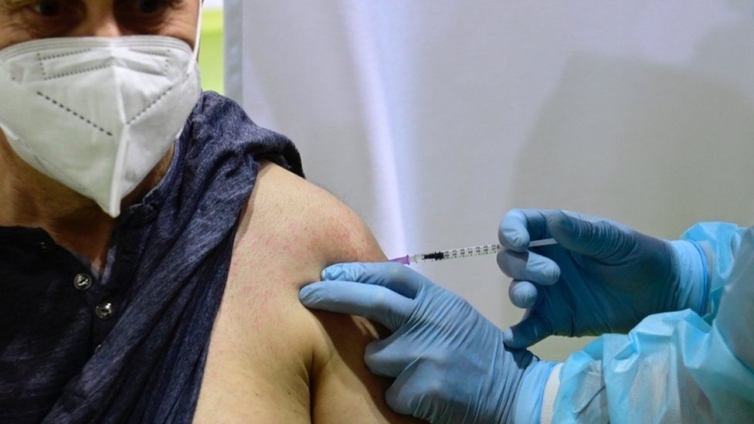
Germany, France and Italy have halted rollouts of the Oxford-AstraZeneca vaccine, after a series of incidents in Europe involving blood clots.
They join several smaller European nations who have halted vaccinations as a precaution while checks are made.
The World Health Organization (WHO) has said there is no evidence that the incidents are caused by the vaccine.
It said it was reviewing reports relating to the jab, but it was important vaccinations continued.
It was good practice to investigate potential adverse events, it added.
There have been a number of cases in Europe of blood clots developing after the vaccine was administered.
However, experts say the number of blood clots reported after the vaccine were no more than those typically reported within the general population.
About 17 million people in the EU and the UK have received a dose of the vaccine, with fewer than 40 cases of blood clots reported as of last week, AstraZeneca said.
What measures are being taken?
Germany's health ministry announced on Monday that it would stop administering the Oxford-AstraZeneca vaccine with immediate effect, on the recommendation of the Paul Ehrlich Institute (PEI), the country's authority on vaccines.
"After new reports of thromboses of the cerebral veins in connection with the vaccination in Germany and Europe, the PEI considers further investigations to be necessary," the ministry said, quoted by AFP news agency.
Shortly afterwards, French President Emmanuel Macron said France was suspending the vaccine until new advice was given by the European Medicines Agency (EMA) on Tuesday afternoon.
And Italy's medicines agency extended a ban introduced on individual batches of the vaccine throughout the country, also pending the EMA decision.
The suspensions came less than a day after the Netherlands did the same. It said its suspension - which will last until at least 29 March - was a precaution.
The Irish Republic, Denmark, Norway, Bulgaria and Iceland have also temporarily halted inoculations with the vaccine, while the Democratic Republic of Congo and Indonesia have postponed the launch of their rollouts. Several European countries, including Austria, have suspended the use of certain batches of the drug as a precautionary measure.
Thailand announced that it would start using the vaccine on Tuesday, following a brief delay to the rollout over safety concerns.
Canadian Prime Minister Justin Trudeau said health experts had assured him all vaccines being administered in the country, including AstraZeneca's, were safe.
What do the WHO and other experts say?
WHO spokesman Christian Lindmeier said the body was investigating the reports.
"As soon as WHO has gained a full understanding of these events, the findings and any unlikely changes to current recommendations will be immediately communicated to the public," he said.
"As of today, there is no evidence that the incidents are caused by the vaccine and it is important that vaccination campaigns continue so that we can save lives and stem severe disease from the virus."
The European Medical Association - which is also currently carrying out a review into incidents of blood clots - said the vaccine could continue to be administered.
The UK medicines regulator also said evidence "does not suggest" the jab causes clots, as it urged people in the country to get the vaccine when asked to do so.
Professor Andrew Pollard, director of the Oxford vaccine group that developed the Oxford-AstraZeneca jab, told the BBC's Today programme there was "very reassuring evidence that there is no increase in a blood clot phenomenon here in the UK, where most of the doses in Europe [have] been given so far".
Latest Stories
-
Government identifies payment discrepancy holding up teachers’ strike resolution
11 minutes -
BoG signals no FX intermediation for October as GoldBod plans $1bn support for banks
14 minutes -
When share ownership becomes personal: The African mindset of the Dangote IPO
24 minutes -
Why MFWA Legal Fund matters to Ghana’s democracy
24 minutes -
Fuel prices to rise from October 1; diesel could hit GH¢19.60 – COMAC
25 minutes -
Parliament must investigate how 3.9 tonnes of cocaine left Ghana undetected – Samuel Jinapor
26 minutes -
Government pledges to pay striking teachers as payment dispute is resolved
40 minutes -
Government cannot investigate drug exports under its own watch – Abu Jinapor
42 minutes -
Government extends GH¢2 diesel subsidy for two more months
49 minutes -
GTEC flags over 100 tertiary institutions as unrecognised
51 minutes -
Agric Committee chair commends NAFCO for turnaround from GH¢20m debt to GH¢96m profit
56 minutes -
NPP: Judicial office requires judges to surrender some personal freedoms
1 hour -
Senyo Hosi: Ghana missed its chance to end galamsey under Akufo-Addo
1 hour -
Okaikwei Central MP alleges Ghana was close to settling Tullow tax dispute for $150m
1 hour -
Patrick Boamah credits Godfred Dame for Ghana’s victory in $400m Tullow tax arbitration
1 hour