

Audio By Carbonatix
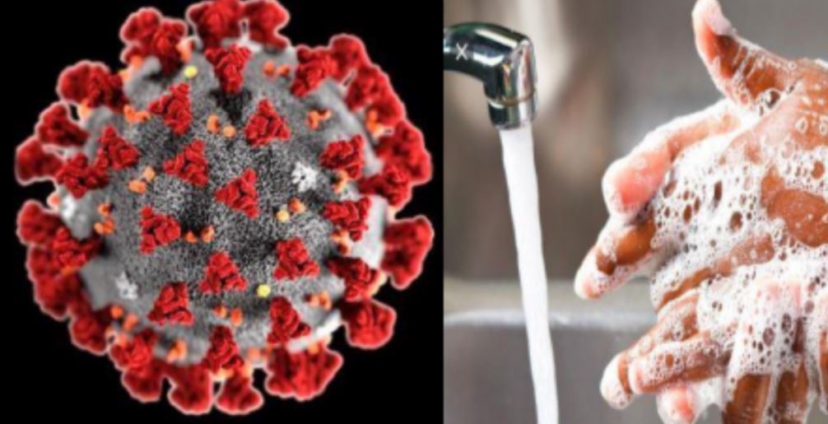
A study across the country has revealed lots of Ghanaians are not washing their hands frequently for more than twenty seconds as recommended by the World Health Organisation to prevent spread of Covid-19.
The study showed 46.1% of the respondents practised handwashing for more than 20 seconds, 35.7% did that for 10-20 seconds while 18.2% also did so for less than ten seconds.
“It was found in the study that most people do not wash their hands in accordance with the WHO’s standard of not less than 20 seconds per handwash,” the study by PhD student at the Kwame Nkrumah University of Science and Technology (KNUST) Francis Dadzie Mintah and seven other researchers from the University of Cape Coast, University of Ghana and the University of Education – Winneba, noted.
Questionnaires were administered to over one thousand people who were sampled across the country using a simple random sampling technique.
The study observes a lot of people are practicing frequent handwashing with soap under running water in this Covid-19 era more than before the pandemic hit.
However, a decline in the frequent washing of hands in a day is likely to be observed in the country after the Covid-19 pandemic period.
If this trend continues, there is the likelihood of Ghanaians and non-Ghanaians becoming more exposed to not only Covid-19 disease but also to all diseases associated with personal hygiene.
“This may result in high fatalities in diseases pertaining to personal hygiene,” the study said.
It recommended that education on handwashing for personal hygiene should be intensified across the entire country. Moreover, the attitude of Ghanaians toward personal hygiene and handwashing to be precise should change for the better.
“Again, the government of Ghana should put in measures to ensure availability of running water in the communities across the country,” the study recommended.
The study found that females are 79% more likely to engage in frequent handwashing as compared to males.
Moreover, non-Ghanaians are 81% more likely to frequently wash their hands than Ghanaians. Individuals with no formal education are 19% less likely to engage in frequent handwashing per day as compared with those with tertiary education.
“Therefore, education on frequent handwashing should be intensified across the entire country,” the study added.
Latest Stories
-
Dutch authorities enlist Ghana in hunt for fugitive drug lord Bolle Jos
20 minutes -
Ghana housing finance conference adopts communiqué to improve affordable housing access
5 hours -
Special Initiatives Minister urges Wa Technical Institute to enrol more girls as EU-backed solar training lab opens
5 hours -
In the matter of my first year at the Bar
5 hours -
ActionAid Ghana calls for an end to child marriage, greater investment in girls’ rights
5 hours -
Newsfile to tackle World Cup visa scandal, beach demolitions, education strikes, BRICS bid
6 hours -
UK-Ghana Trade & Investment Summit: Trade Resource Centre to help businesses maximise UK-Ghana trade opportunities
6 hours -
Embassy of Denmark celebrates World Maritime Day
6 hours -
Linking LEAP to productive inclusion could cut extreme poverty by 2030 – UNICEF
7 hours -
Trade Ministry backs use of creative arts to rehabilitate prison inmates
7 hours -
Negotiations with government to continue despite strike suspension – GNAT
7 hours -
‘Ghana cannot afford to waste public resources; every cedi has a job’ – Ato Forson
8 hours -
Ghana expects economic boost as World Assemblies of God Congress brings 10,000 delegates to Accra
8 hours -
Joy in Nayilifong as Farouk Aliu Mahama donates 100kVA transformer to improve power supply
8 hours -
Chief Justice urges employers to tackle mental health stigma in workplaces
9 hours