

Audio By Carbonatix
The Real Estate Agency Council is preparing to intensify its crackdown on unlicensed agents and brokers across Ghana, following growing concerns about illegal practices in the sector.
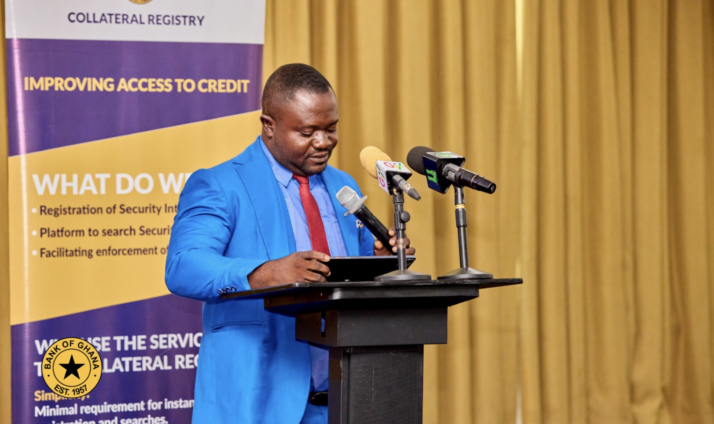
Jacob Adofo-Ansong, President of the Ghana Association of Real Estate Brokers (GARIB) and a Board Member of the Council, made the disclosure at a stakeholder engagement with the Bank of Ghana on the collateral registry system, in Accra, on Thursday.
He noted that stricter enforcement would protect consumers and restore confidence in the industry, and urged industry professionals to make illegal practices difficult and unattractive.
“While concerns about the sector may exist, the public must also be told that there is now a regulator, there are licensed professionals, and there is a lawful structure in place to deal with misconduct and protect consumers,” he said.
Mr Adofo-Ansong acknowledged that many unlicensed operators were in the market, urging professionals to help protect the sector by speaking up and reporting such illegal practices.
“In the coming days, the Council will intensify its monitoring and enforcement activities. There will be inspections of offices and operations, and individuals or firms found operating without licences will be dealt with according to the law,” he said.
While real estate brokerage has long operated informally, the passage of the Real Estate Agency Act, 2020 (Act 1047) has transformed the profession into a regulated business with clear standards, licensing requirements, and disciplinary processes.
He expressed concerns about some individuals operating outside the law and presenting themselves as agents without registration or accountability, undermining the credibility of licensed professionals and exposing the public to fraud and disputes.
The GARIB President said the engagement highlighted the role of the Bank of Ghana’s Collateral Registry system in preventing property-related fraud, urging brokers to familiarise themselves with the system to avoid marketing or selling properties already pledged as collateral for loans.
He stated that professionalism in real estate was not only about closing deals but also about responsibility in protecting clients from avoidable problems and ensuring due diligence in transactions.
He said institutions across Ghana were beginning to support a regulatory push, with banks now requiring proof of licensing before opening business accounts for real estate firms, while local assemblies checked licences before approving signboards and billboards.
“Even members of the diplomatic and international community are becoming more intentional about engaging licensed practitioners. That is the direction we want the industry to move towards,” the Council Member said.
Mr Adofo-Ansong said the Council was working to increase visibility for licensed professionals, making it easier for the public to identify who is operating legally, which would gradually make illegal practice unattractive.
He urged the media to play a constructive role by guiding the public towards licensed agents and brokers, rather than generalising misconduct across the profession.
As the industry grows, greater responsibility falls on all stakeholders, he said, noting that stronger enforcement, collaboration, and education would make Ghana’s real estate sector become safer, more reliable, and more respected.
Mr Fred Asiamah-Koranteng, Head of the Collateral Registry Department at the Bank of Ghana, in a speech on his behalf, underscored the importance of sound regulation in protecting both the industry and people.
“The Borrowers and Lenders Act 2020, Act 1052, together with the establishment of the Collateral Registry, stand out as key innovations introduced to transform Ghana’s credit landscape by reducing risk and promoting a sound, secure lending environment,” he said.
He called for transparency not only in financial transactions but in fostering trust and upholding the confidence of every stakeholder in the real estate industry.
Conducting searches and understanding hindrances could not be overemphasised, he added.
Despite reforms over the past 15 years, he noted that limited public awareness remains a major challenge, so the Central Bank has intensified its financial literacy and outreach programmes to build trust in the credit system.
“You are at the forefront of property transactions and investment and, therefore, serve as key enablers responsible for ensuring transparency, due diligence, and trust within the industry,” Mr Asiamah-Koranteng told the professionals, urging sector players to obey the laws.
Latest Stories
-
Top-Up Pharmacy wins Community Pharmacy Chain of the Year at 2026 PSGH Pharma Excellence Awards
7 seconds -
Nigeria military aircraft with 32 on board crashes
3 minutes -
Black Stars need a coach who can inspire players to perform – Ignatius Osei Fosu
4 minutes -
Revenue collector crushed to death on Kasoa-Winneba highway
8 minutes -
GPL Week 5: Stephen Amankona, 8 other outstanding players win NASCO awards
10 minutes -
NPP’s new leadership team has experience to deliver – Dr Asah-Asante
10 minutes -
Mahama committed to developing Volta Region – Chief of Staff
11 minutes -
NPP’s new leadership offers no renewal after ‘micro minority’ defeat – NDC’s Abeiku Hayford
13 minutes -
Blackstar Experience to hold fashion show and summit in November
13 minutes -
Prof Mike Oquaye backs Kojo Bamba’s call for stronger ballot protection
23 minutes -
If police won’t protect you, you’ll protect yourself – Prof Mike Oquaye backs Kojo Bamba’s election
24 minutes -
Spotify makes fandom the ticket with debut Surround Sound experience in Lagos
34 minutes -
Deputy Interior Minister calls for joint action to strengthen Ghana’s cybercrime response
44 minutes -
Gov’t announces plans to create 20,000 jobs in waste management, circular economy
49 minutes -
T-bills auction: Government exceeds target by 30%, but demand to remain relatively soft at next auction
51 minutes