

Audio By Carbonatix
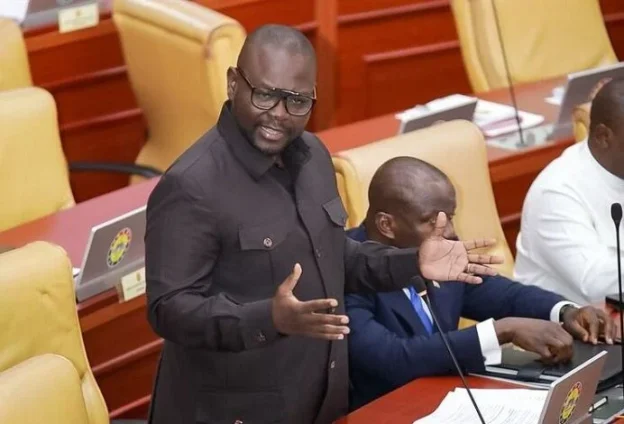
The Minority in Parliament has mounted a strong defence of Ghana’s decentralisation policy, rejecting recent remarks by former Local Government Minister, Prof. Kwamena Ahwoi, that questioned the creation of new regions and districts.
In a response, the Minority said Prof. Ahwoi’s position “fails to appreciate the essence of decentralisation itself,” insisting that expanding administrative boundaries was never about survival but about inclusion and growth.
“Decentralisation is not merely about maintaining existing structures; it is about bringing government closer to the people and ensuring equitable development,” the statement signed by Ranking Member on the Committee on Local Government and Decentralisation, Francis Asenso-Boakye, stressed.
The Minority dismissed as inaccurate Prof. Ahwoi’s claim that the six new regions created between 2018 and 2019 were unnecessary because Ghana had functioned with ten regions for decades.
“The creation of new districts and regions was a deliberate policy choice to empower local structures and enable previously underserved areas to directly receive attention and resources,” the statement read.
It further rejected suggestions that population thresholds were ignored in creating metropolitan, municipal, and district assemblies (MMDAs).
According to the Minority, “every MMDA created under the NPP administration satisfied the population thresholds and economic viability requirements enshrined in the Local Governance Act, 2016 (Act 936).
The process was undertaken with due regard to the law, not partisan convenience.”
Highlighting tangible gains, the Minority pointed to what it described as monumental developments in the new regions.
These include Regional Coordinating Councils with full departmental structures in education, health, agriculture, and highways, as well as permanent offices for security agencies such as the police, fire service, immigration, and prisons.
In total, the statement said, more than 60 major projects were completed “in record time” under the Akufo-Addo administration.
“These projects are not theoretical; they are functional, operational, and in daily use by citizens across the new regions,” the Minority insisted.
The caucus also took aim at the framing of the platform where Prof. Ahwoi made his comments, describing the so-called national dialogue as “politically motivated” and tilted in favour of the ruling party.
“Decentralisation is too important to be reduced to partisan talking points,” the statement cautioned.
“The creation of new districts and regions is not an overreach; it is an investment in inclusion and nation-building.”
Latest Stories
-
The 7-foot giant of Ngleshie Amanfro: Seven-foot Ghanaian Ephraim Saawa dreams of joining the national basketball team
32 minutes -
Government promises support for Kumasi Central Market fire victims
39 minutes -
Vibes The Movie: Big Ghun’s Ghanaian film earns five nominations at 2026 REFFA
1 hour -
MamaCare CEO warns unresolved conflicts among health workers could undermine maternal and neonatal care
2 hours -
Health professionals urged to translate medical knowledge into practice to save mothers
2 hours -
Conflicts among care providers linked to maternal, neonatal deaths – Expert
3 hours -
GIS marks 10th TIME conference, champions improved teaching practices
3 hours -
BRICS Or Balance? What Ghana’s bid really means
4 hours -
GPRTU wants full TRAFFITECH-GH implementation to start in 2027
4 hours -
Mahama announces plans to import electric wheelchairs for PWDs
4 hours -
KGL U17 Colts 2026: Western beat Prempeh Elite Academy to set up final final with Greater Accra Region
4 hours -
Late Solanke strike salvages 10-man Spurs draw at Man United
5 hours -
Gender Ministry to monitor welfare of Nana Akua Addo’s children amid domestic violence case
5 hours -
Benedict Okyere Yeboah: Ghana’s football problem goes beyond sacking a coach
5 hours -
GPL 2026/27: Darkwah Wiafe’s winner sees All Blacks beat Kotoko
5 hours