
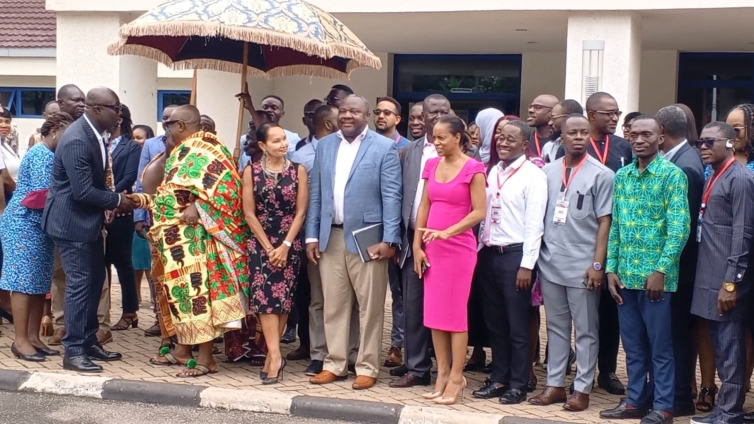

Audio By Carbonatix
Young women of African descent risk a more aggressive form of breast cancer disease, known as triple-negative breast cancer.
According to medical experts, genetics play a key role in the higher rates of this deadly subtype, especially among women in West African countries like Ghana and Nigeria.
This was revealed in a symposium of the International Center for the Study of Breast Cancer Subtypes (ICSBCS), exploring cancer treatment disparities in low and middle-income countries.
Breast cancer was the most frequently diagnosed cancer in women worldwide in 2020, accounting for 29.5% of cancer incidence and 22.1% of cancer deaths in Africa.
In Ghana, breast cancer made up 31.8% of cancer incidence.
Experts’ investigations and concluded research have revealed triple-negative breast cancer, a difficult-to-treat subtype of cancer prevalent among younger women of African descent diagnosed with cancer.
The triple-negative breast cancer type is unresponsive to hormonal therapies or medications making its treatment more challenging and aggressive.
Professor of Surgery, Lisa Newman is the Founder and Executive Director of the International Center for the Study of Breast Cancer Subtypes (ICSBCS).
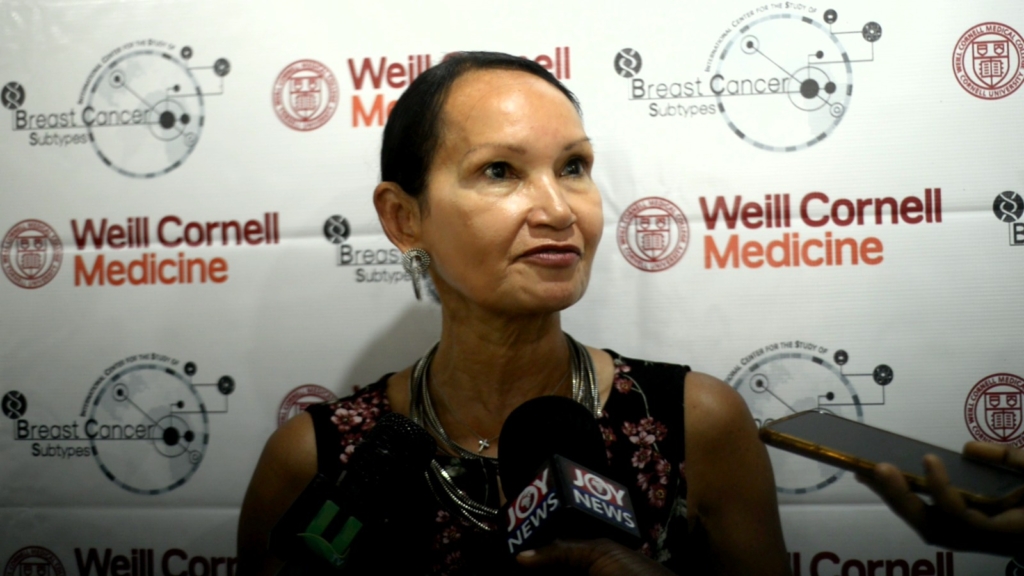
She admonished women in prevalent areas like West Africa to pay attention to early diagnostics.
“Our findings and observations revealed African Americans diagnosed with breast cancer at younger ages are most likely to be diagnosed with aggressive cancers, the triple-negative breast cancer, that are more difficult to treat. The cause and the contributing factor is the genetics of black people, with African genetics. What we have learned is that women in West Africa, including Ghana and Nigeria also have a high rate of triple-negative breast cancer. And our works have been exploring the genetics to ascertain why,” she said.
Professor Lisa Newman was speaking at the ICSBCS 8th Annual Symposium and 20th anniversary celebrations in Kumasi.
The five-day annual international symposium put together by Weill Cornell Medicine (WCM) and the Komfo Anokye Teaching Hospital (KATH), assembled experts and researchers under the theme, “Improving Breast & Gynecological Cancers Management and Outcomes in Low- and Middle-Income Countries (LMIC)”.
The medical experts engaged in robust multidisciplinary discussion and interaction aimed at addressing gabs of cancer treatment in relatively deprived countries.
General and Breast Surgeon at the Directorate of Surgery at the Komfo Anokye Teaching Hospital, Dr. Ishmael Kyei, indicated that medical professionals will introduce innovative treatment methods to avoid mastectomy.
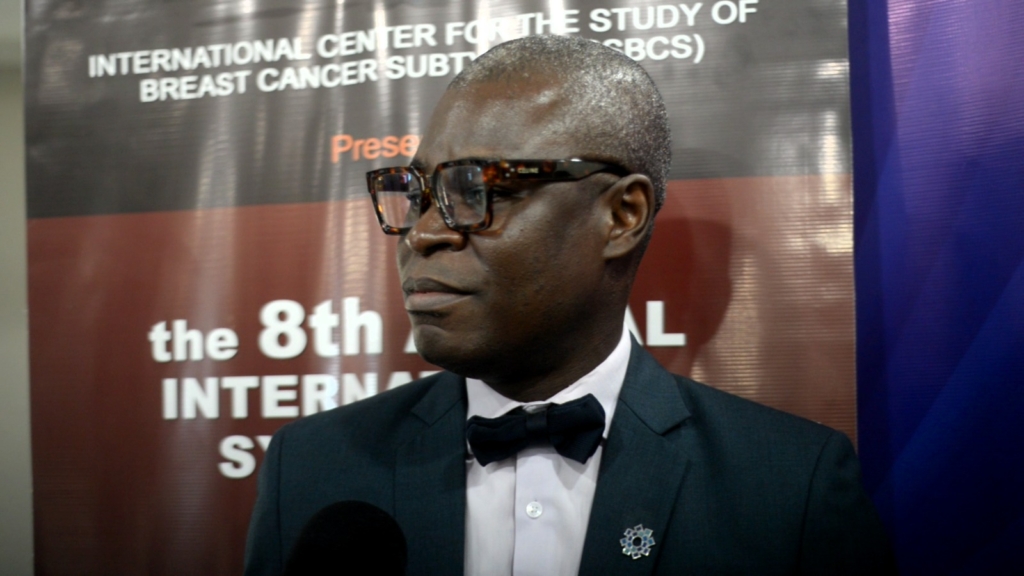
“As experts, our international collaborators and local surgeons have worked together to see how we can do things to reconstruct the breasts of Ghanaian women. Surgeons have developed new technologies to be able to use humans' own body fats to plant new ones for them. This will reduce the stigma of body image that women have when they seek treatment.
“As we do more of the reconstruction, the fewer of mastectomy, the fear of breast removal will go down. And we can save more their lives with early medical treatment. However, not every woman will undergo such. It all depends on the time. Early treatment will make it easier.
The enhanced methods are effects of collaborative efforts of the oncology professionals that are affiliated with the International Center for the Study of Breast Cancer Subtypes (ICSBCS) network.
The mission of the ICSBCS is to reduce the global breast and gynecological cancer burden through advances in research and delivery of care to diverse populations worldwide.
Professor of Surgery, University of Nigeria Teaching Hospital, Prof. Emmanuel Ezeome, provided an overview of breast cancer in Nigeria and the ICSBCS network.
Chief Executive Officer (CEO) of the Komfo Anokye Teaching Hospital (KATH), Prof. Dr. Otchere Addai-Mensah lauded the interventions by the network.
Latest Stories
-
Epstein survivors’ calls to meet King Charles and Queen harder to ignore as US visit approaches
5 minutes -
UN Secretary-General names Ghana’s Anita Kiki Gbeho as South Sudan envoy
7 minutes -
Mali withdraws recognition of Sahrawi Republic, backs Morocco’s autonomy plan
11 minutes -
Gov’t distributes over 8,500 laptops to One Million Coders project
12 minutes -
Julius Debrah, ‘man to beat’ as NDC’s James Agbey dismisses Musah Dankwah’s polls
19 minutes -
GPRTU in Savannah Region to protest alleged eviction in Damongo
48 minutes -
Re: Reinsurance does not replace process — A response to the SIGA–SIC defence
1 hour -
Gender Ministry supports Harriet Amuzu in ongoing abuse case
1 hour -
AG joins plaintiff to scrap OSP ?: We should be mindful of the mischief in this – Bobby Banson
1 hour -
Samson Lardy Anyenini questions willingness of Attorneys-General to prosecute political colleagues
1 hour -
It is only fair the OSP is heard in Supreme Court case – Bobby Banson
1 hour -
Asiedu Nketia resumes Ashanti tour, second leg kicks off on Sunday
2 hours -
NLA denies salary cut claims, threatens legal action over reports
2 hours -
BoG Governor honoured for stabilising cedi, improve inflation
2 hours -
Kyebi Easter Homecoming 2026: A resounding success!
2 hours