

Audio By Carbonatix
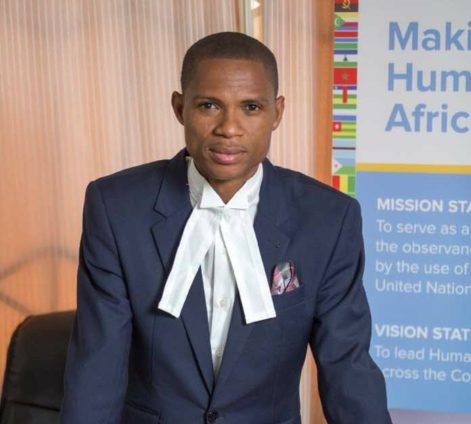
Proponent of the bill seeking to repeal the death penalty, Francis-Xavier Sosu, says the death penalty is mostly weaponised for political vindictiveness thus its need to be abolished.
According to him, in countries where the death penalty is an active component of their legal jurisprudence, the capital punishment is used to silence political opponents, activists and other dissidents.
He noted that just because Ghana has not activated the death penalty in 30 years does not mean the death penalty may never be used, thus to prevent any future eventualities the law must be revoked.
Citing statistics on Ghana’s use of the death penalty, he stated that Ghana has only activated the death penalty during military regimes and never during civil regimes thus evidencing the country’s aversion towards the law.
Speaking on JoyNews’ PM Express, he said, “Since independence, when you check the statistic in Ghana, since independence until the 1992 constitution, Ghana has executed 37 people including a head of state. And when you check the 37 people who were killed it was mostly during military regimes.
“In all civil regimes, the need for the use of the death penalty has never been invoked as much as it has been used during military regimes. And the very last time there was an execution in Ghana which was 17th July 1993, and since that time within this fourth republic no government has ever been able to use the death penalty.
“What I’m saying is that the death penalty generally for the countries you mentioned where they’re used, they’re mostly weaponised tools for political vindictiveness,” he said.
He noted that to avoid situations as has happened in Myanmar, where the death penalty which had been dormant for 42 years was activated following a military takeover, the law should be repealed now.
“In fact you can check it, recently, you know Myanmar, they kept those laws on their statute books for 42 years they never used the death penalty but just last year when there was a military takeover in Myanmar four of the leaders were killed including activists.
“And that’s why in Burkina Faso when there was a coup, recently there were two coups in Burkina Faso, you know why they could not activate death penalty provisions in 2022? Because in 2018 they had abolished the death penalty.”
Latest Stories
-
Imprisonment should be rehabilitative, not punitive – Ghana Prisons boss at UNGA
9 seconds -
Ga Adangbe traditional priests petition Mahama over McDan aviation licence revocation
11 minutes -
Anti-LGBTQ Bill: NDC’s arrogance is worrying – Hassan Tampuli
22 minutes -
Let’s give OSP time to mature, not to scrap it – Hassan Tampuli
26 minutes -
Nigeria convicts 386 Islamist militants in mass trials
31 minutes -
Djibouti president wins election with 97.8% of vote, state media says
35 minutes -
We don’t have mandate to deduct tax from rent allowance of security services personnel – Interior Ministry clarifies
50 minutes -
Ablakwa receives Presidential Special Envoy on Reparations to advance global agenda
1 hour -
Christina Koch becomes first woman to travel around the moon on Artemis II
1 hour -
Epstein survivors’ calls to meet King Charles and Queen harder to ignore as US visit approaches
1 hour -
UN Secretary-General names Ghana’s Anita Kiki Gbeho as South Sudan envoy
1 hour -
Mali withdraws recognition of Sahrawi Republic, backs Morocco’s autonomy plan
1 hour -
Gov’t distributes over 8,500 laptops to One Million Coders project
2 hours -
Julius Debrah, ‘man to beat’ as NDC’s James Agbey dismisses Musah Dankwah’s polls
2 hours -
GPRTU in Savannah Region to protest alleged eviction in Damongo
2 hours