

Audio By Carbonatix
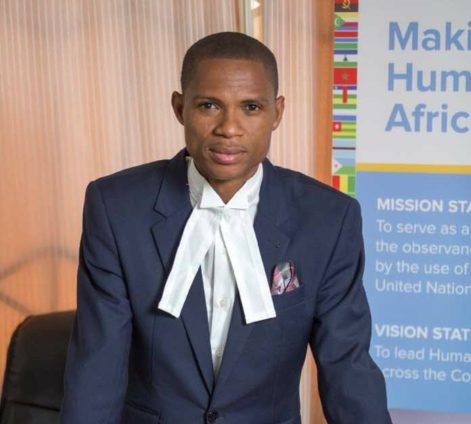
Proponent of the bill seeking to repeal the death penalty, Francis-Xavier Sosu, says the death penalty is mostly weaponised for political vindictiveness thus its need to be abolished.
According to him, in countries where the death penalty is an active component of their legal jurisprudence, the capital punishment is used to silence political opponents, activists and other dissidents.
He noted that just because Ghana has not activated the death penalty in 30 years does not mean the death penalty may never be used, thus to prevent any future eventualities the law must be revoked.
Citing statistics on Ghana’s use of the death penalty, he stated that Ghana has only activated the death penalty during military regimes and never during civil regimes thus evidencing the country’s aversion towards the law.
Speaking on JoyNews’ PM Express, he said, “Since independence, when you check the statistic in Ghana, since independence until the 1992 constitution, Ghana has executed 37 people including a head of state. And when you check the 37 people who were killed it was mostly during military regimes.
“In all civil regimes, the need for the use of the death penalty has never been invoked as much as it has been used during military regimes. And the very last time there was an execution in Ghana which was 17th July 1993, and since that time within this fourth republic no government has ever been able to use the death penalty.
“What I’m saying is that the death penalty generally for the countries you mentioned where they’re used, they’re mostly weaponised tools for political vindictiveness,” he said.
He noted that to avoid situations as has happened in Myanmar, where the death penalty which had been dormant for 42 years was activated following a military takeover, the law should be repealed now.
“In fact you can check it, recently, you know Myanmar, they kept those laws on their statute books for 42 years they never used the death penalty but just last year when there was a military takeover in Myanmar four of the leaders were killed including activists.
“And that’s why in Burkina Faso when there was a coup, recently there were two coups in Burkina Faso, you know why they could not activate death penalty provisions in 2022? Because in 2018 they had abolished the death penalty.”
Latest Stories
-
Mahama urges African governments to treat healthcare as an investment, not budget cost
19 minutes -
Bawumia congratulates John Boadu and new NPP executives, pledges support ahead of 2028
21 minutes -
‘No talent should be left out’ – Bawumia pledges inclusive NPP campaign for 2028
27 minutes -
Prof. Mike Oquaye recounts how he blocked Special Prosecutor’s attempt to arrest Bawku Central MP
42 minutes -
Make health sovereignty a priority for Africa – Mahama
54 minutes -
Dorimon Naa, Wa West DCE lead massive clean-up exercise; threaten sanctions against recalcitrant residents
1 hour -
Photos From Adom FM Y2K Jam
1 hour -
Praye Tiatia steals the show at Adom FM Y2K Jam [Watch]
1 hour -
Boakye Agyarko congratulates John Boadu, pledges support for NPP leadership
2 hours -
Antwi HiMight thrills fans with Antwi ne Antwi hits at Adom FM’s Y2K Jam [Video]
2 hours -
Amb. Edward Boateng congratulates Boadu, Kodua on election wins
2 hours -
John Boadu pledges to rebuild NPP from grassroots and restore ‘winning machinery’
2 hours -
Ashaiman Assembly deploys monitoring system to curb dumping in storm drain
2 hours -
John Boadu must rebuild, unite NPP for 2028 – Edward Boateng
2 hours -
Executive intimidation of opposition undermines separation of powers – Prof Oquaye
3 hours