


Audio By Carbonatix
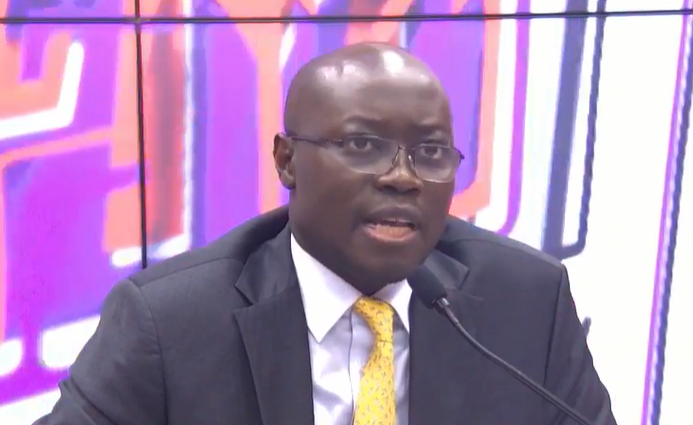
Former Deputy Finance Minister, Dr Cassiel Ato Forson says the Electronic Transfer Levy (e-levy) was bound to fail before its implementation.
According to him, all indicators pointed to failure, so he warned government about the policy's estimated ambition.
“They failed to recognise that mobile money is a choice and there are some elasticities, and it is important that when coming out with the revenue estimation, they would have to factor in the behaviour of customers when taxes are imposed at that high level,” he explained.
The controversial revenue measure was introduced by government in the 2022 budget, with some ¢4.9 billion expected to be collected by the end of the first year.
It was expected to replenish government’s revenue sack and shield the country from a possible IMF bailout.
But close to two months of implementation, the levy has generated less than ¢60 million, according to a leading member of the New Patriotic Party (NPP), Gabby Otchere-Darko.
He said the levy has failed to live up to the expectations of the government.
“What options are open to the government? The question should be: what option, if adopted, will re-inject investor confidence in our economy?
"Even if we find the $3 to 5 billion required, will that help? E-levy, which was to have given us some ¢600 million by now, has done less than ¢60 million,” he said in a tweet on Monday, June 27.
In an interview on Joy FM’s Top Story on Monday, he said that the structural design of the levy is very ‘problematic’ and, therefore, not surprised at the outcome.
Dr Forson added that he had questioned the policy from its initial stage, and “I have said that e-levy in itself was bound to fail from the beginning.”
The Ranking Member on Parliament's Finance Committee urged government to embrace the economic support from the International Monetary Fund (IMF).
Meanwhile, Associate Professor at the University of Ghana Business School (UGBS), Prof. Lord Mensah, has said it is too early for anyone to rate the Electronic Transactions Levy (E-levy) performance.
He argued that government should wait till the end of the year to decide on the performance of the levy.
“Probably it might be too early because normally when you issue a levy of that form, you are going to get reactions from the market, so we may have to give ourselves some time before we can decide that we want to go to the IMF or not.
“Not making up to the expected revenue of the E-levy, I would say that is too early. Let us wait; we have more time. If we think E-levy is the ultimate, let us hold on and then make sure that by the end of the year, we come out to say whether it is performing or not,” he said.
Latest Stories
-
Sinner beats Alcaraz to return to world top spot
39 minutes -
An inappropriate joke nearly ended his career. Now he’s back with more humour
48 minutes -
GPL 2025/26: Dreams FC stage stunning comeback to hammer Eleven Wonders
2 hours -
Livestream: The Probe examines Kumasi’s looming water crisis
2 hours -
MTN Ghana gears up to lead Africa’s AI revolution
2 hours -
Philanthropist Alhaji FuZak donates Da’wah bus to Ambariya Sunni community
2 hours -
GUTA calls for suspension of Publican AI system over trade disruptions
2 hours -
TTAG raises alarm over proposed recruitment of 7,000 teachers, demands national posting roadmap
3 hours -
Civilians feared killed after reports of air strike on Nigerian market
3 hours -
Bishop Simon Kofi Appiah installed as new Jasikan Diocese Bishop
3 hours -
Trump’s Strait of Hormuz blockade threat raises risks and leaves predicaments unchanged
3 hours -
US Court backs extradition of former MASLOC CEO Sedina Tamakloe-Attionu to Ghana
3 hours -
Seven arrested as NAIMOS dismantles illegal mining camp, seizes firearms at Boin River
3 hours -
Fire erupts at Madina Ritz Junction, destroys multiple wooden structures and containers
4 hours -
Daniel-Kofi Kyereh returns from long-term injury, registers assist for Freiburg U23
4 hours