

Audio By Carbonatix
In a world where the empowerment of women is at the forefront of societal progress, it is imperative that we address one of the most fundamental aspects of their well-being: sexual and reproductive health rights.
These rights encompass the autonomy to make informed decisions about one's body, the right to access comprehensive healthcare, and the freedom from discrimination or coercion. To champion these rights effectively, an evidence-based approach is not only beneficial but essential.
Evidence-based advocacy is a methodology rooted in rigorous research and data analysis. It relies on the best available evidence to inform policies, programs, and interventions, ensuring they are effective, efficient, and tailored to the specific needs of the target population.
When applied to women's sexual and reproductive health rights, this approach carries immense significance.
In a recent study by Children and Youth In Broadcasting (CYIB - Curious Minds Ghana) and non-profit organization Swedish Association for Sexuality Education (RFSU) titled ‘A situational analysis of young women’s access to sexual and reproductive health services including abortion in Cape Coast and Elmina in the Central region of Ghana’ focused on the lack of access to sexual and reproductive health services such as abortion as a major contributor of maternal morbidity and mortality in Ghana despite the existence of programmes and policies such as Comprehensive Abortion Care (CAC) and other pro-poor maternal health interventions.
The incidence of unsafe abortions varies across Ghana with data suggesting an increase in this practice and its associated adverse public health consequences. Despite efforts to increase access and options to safe abortion care through enhanced information, policy interventions and systemic changes, awareness of legitimate abortion care and options remains low among women, girls and certain health professionals.
This is further compounded by the continued stigmatisation and negative attitudes towards sexual and reproductive health issues due to socio-cultural and religious beliefs which influence the delivery and utilisation of safe options.
Researchers, Dr. Abena Kyere and Dr. Nii Adjei Sowah conducted a community survey of 1301 respondents aged 15 – 45, 10 focus group discussions made up of males and females as well as 72 key informant interviews in the Komenda Edina Aguafo Abrem district and the Cape Coast municipal of the Central region of Ghana.

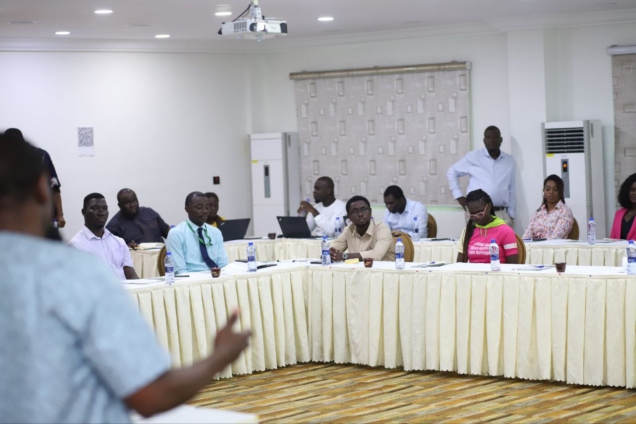
On August 30, 2023, Curious Minds Ghana and its partners organised a research communication colloquium to disseminate the findings from the research study conducted in the Central region.
In an address, the Executive Coordinator of CYIB Curious Minds Ghana, Kingsley Obeng-Kyereh highlighted how religion has been a hindrance to access sexual and reproductive health services.
He added that child trafficking is on the increase because parents are not able to care for their wards, hence being forced to exchange their children for some form of financial reward to make ends meet.

Furthermore, the Executive Director of African Institute for Population and Development, Archibald Adams reiterated the need to include boys and men in the championing of Sexual and Reproductive Rights (SRHR) even though past efforts have focused on women and girls because they bear a lot of the consequences.
He indicated the importance of targeting men and boys in family planning because “A woman can get pregnant once in 9 months but a man can impregnate many women in 9 minutes”, therefore focusing all interventions towards women and girls is counterproductive as SRHR is a developmental issue and not a health issue as seen some years ago.

Dr. Abena Kyere in a Q&A session made an astonishing revelation of how family planning efforts have been counter-effective.
From their findings, “Some women have many children not because they want them but it stabilises their marriage as they’re in competition with other women, a key informant disclosed in an interview during the research”.
In addition, the Programmes Manager of CYIB Curious Minds Ghana, Samuel Quaye remarked that indeed SRHR is a developmental issue and no more a health issue, hence, we must rather target the boys and not the men because it may be too late for such target group.
Some key recommendations were put forth by the researchers to policy makers, organizations and development partners within the SRHR space to help in improving socio-economic conditions, providing community education and effective communication between community and health care providers, expanding peer educator concepts and encouraging the participation of traditional and community leaders and leveraging their influence to transform stifling cultural or normative attitudes.

In conclusion, advocating for women's sexual and reproductive health rights through an evidence-based approach is not merely an option, but a necessity.
By grounding our efforts in solid research and data, we can dismantle barriers, effect meaningful change, and create a world where every woman is empowered to make informed decisions about her own body.
Together, let us champion this cause and pave the way for a future of equality, dignity and autonomy for women everywhere.
Latest Stories
-
Knights and Ladies of Marshall group backs Catholic Bishops’ stance on anti-LGBTQ+
21 minutes -
Bright Simons writes: All the Filla in the Ibrahim Mahama/E&P – Gold Fields Saga
46 minutes -
Monetise Idiocy In Ghana
53 minutes -
The Ghanaian prophet and the mysterious death of his scottish wife Charmain Speirs
2 hours -
Nearly 400 sentenced in Nigeria for links to militant Islamists
2 hours -
Ghana’s recovery supported by gold strength despite global oil price pressures – Standard Bank Research
2 hours -
Methodist Church hails Mfantsipim@150; calls for “fresh consecration” to excellence
2 hours -
‘Excellence is our inheritance’ – Nana Sam Brew-Butler hails Mfantsipim’s 150-year reign in leadership
3 hours -
Kwaku Azar writes: A-G vs OSP
3 hours -
Mfantsipim–Adisadel rivalry built excellence, not division – Sam Jonah
3 hours -
Vice President launches Mfantsipim’s 150 years of shaping Ghana’s greatest mind
3 hours -
I assure Otumfuo, Mahama will join him to commission KNUST Teaching Hospital by end of this year – Haruna Iddrisu
4 hours -
Barcelona dominate derby to extend La Liga lead
4 hours -
Gov’t to roll out free special education for persons with disabilities from July 1 – Education Minister
4 hours -
Importers and Exporters Association declares full support for Publican AI port system
5 hours