

Audio By Carbonatix
An international coalition of human rights organizations and public experts have petitioned the UN Committee on the Elimination of Racial Discrimination (CERD) on vaccine inequity and racism by the United States, United Kingdom, Germany, Switzerland and Norway.
Minority Rights Group International (MRG) together with the African Alliance, Center for Economic and Social Rights, Centro de Estudios Legales y Sociales, Oxfam International and Treatment Action Campaign are parties to the petition.
The appeal wants CERD to compel the United States, United Kingdom, Germany, Switzerland and Norway to temporarily provide waivers on intellectual property barriers on Covid-19 vaccines, tests and treatments currently imposed by the World Trade Organization’s Trade-Related Intellectual Property Rights Agreement (TRIPS), and to direct big pharmaceutical corporations in their countries to share technology and knowledge.
The is because the swift move by countries in the global north to procure even more vaccine doses in the face of the new Omicron Covid-19 variant is symbolic of the injustices meted on African countries throughout this pandemic.
As wealthier countries in the global north prioritise profits and vaccine hoarding, African countries are struggling to access enough vaccines against the deadly virus that keeps mutating.
Global Network of Movement Lawyers (of Movement Law Lab) and ESCR-Net coordinated the petition and is supported by SECTION27 and other organizations within the People's Vaccine Alliance.
Executive Director of Minority Rights Group International, Joshua Castellino, says the time is now for rich nations to be brought to order.
‘COVID-19 has hit people of colour, women, indigenous peoples, and other minority and discriminated groups harder in terms of infections, deaths, lack of access to healthcare, resultant poverty, and even violence and emotional trauma. The discrimination of the virus is being revisited by vaccine discrimination, as rich nations deliberately withhold and deny these same groups of people equitable access to it,’ he says.
At the beginning of the pandemic, African countries struggled to access reagents for Covid-19 test kits due to proprietary restrictions on both machines and chemicals.
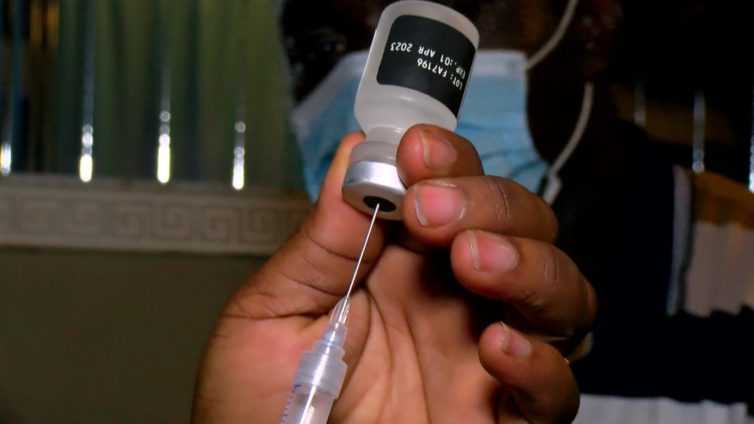
Then when the vaccines started rolling out, African countries could not get their hands on enough vaccines as their counterparts in the global north resorted to holding and denying technology transfer to protect the profit margins of their own big pharmaceuticals.
Seventy-three (73) per cent of all Covid-19 vaccine doses have gone to just 10 countries globally, while only 5.8 per cent of Africans have received a Covid-19 jab.
Latest Stories
-
Government rejects ‘Cocaine Coast’ label, says drug busts show security agencies are working
1 hour -
Banks NPL ratio of 16.1% is still too high – S&P
1 hour -
US death row inmate Christa Pike taken to hospital after surviving two lethal injections, says lawyer
2 hours -
Japan raises residency fee for foreign nationals by twenty-fold
2 hours -
Nollywood actor CJay Nwoks dies in Lagos hospital
2 hours -
Guidelines, regulations of cryptocurrency in Ghana fall short of comprehensive oversight – IMF
2 hours -
Don’t stand and just criticise, propose solutions – RMD urges Nigerians
2 hours -
I didn’t want to be in the spotlight – Tems
2 hours -
COCOBOD’S GH¢16.3bn SPV: Real progress toward a sustainable cocoa sector
2 hours -
Morocco appoints first woman head of government, El Mansouri vows to meet citizens’ expectations
4 hours -
King Mohammed VI appoints Fatima Ezzahra El Mansouri as Morocco’s new head of government
4 hours -
Impossible for England to find another Kane – Tuchel
4 hours -
Ghana lose Morocco friendly as Atlas Lions turn to Mali
4 hours -
Burnham ‘really concerned’ if Man City owners sell up after rule breaches
4 hours -
2026/2027 GPL: Kelvin Nkrumah strike sends Medeama top of league table
4 hours