

Audio By Carbonatix
Russia's announcement that it was withdrawing from a pact that allowed Ukrainian grains to leave Black Sea ports sent a shiver through poorer countries, many of which are already reeling from inflation, climate shocks and conflict.
The Black Sea grains deal, brokered by the United Nations and Turkey in July 2022, helped bring down global food prices and allowed aid agencies to access hundreds of thousands of tonnes of food at a time of rising needs and scarce funding.
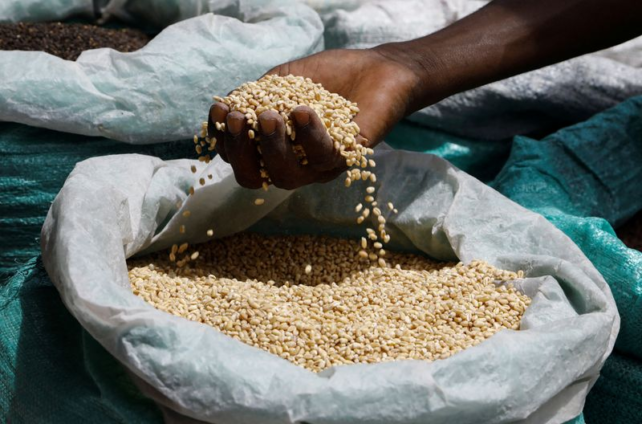
In Somalia's capital Mogadishu, wheat prices that had doubled when Russia invaded Ukraine fell by a quarter after the deal was signed. In the wake of Moscow's announcement, everyone from traders to bakers to victims of the country's armed conflicts and droughts was feeling a sense of dread.
"I don’t know how we will survive," said Halima Hussein, a mother of five children who lives in a crowded Mogadishu camp for people displaced by years of failed rains and violence by Islamist militants.
"Aid agencies try their best to sustain our lives. They have very little to give," she said.
Some traders in Mogadishu projected that a 50 kg bag of wheat grain could rise from the current $20 to nearly $30.
Korir Sing'Oei, the permanent secretary at the foreign affairs ministry in Kenya, which has also been contending with the Horn of Africa's worst drought in decades, said food prices that are already at historic highs would rise further.
"Commodities that used to cost say a pound or two will now cost four, the prices will just double," he told Reuters.
Somalia received 84,000 tonnes of wheat from Ukraine in 2022, up from 31,000 tonnes in 2021, according to U.N. trade data, as donors stepped up assistance to fend off a looming famine in certain areas.
Better-off countries could feel the pinch too. The deal benefited Egypt, typically the world's largest wheat importer, as rising global wheat prices after the war piled financial pressure on the government, which provides subsidised bread for millions of people.
It also caused a spike in prices of unsubsidised bread, stretching the pockets of families who had already endured years of austerity.
The supply ministry told Reuters last month that it hoped the agreement would be extended "because of its importance in calming global markets".

PRICE RISES
The Kremlin said on Monday that Russia was quitting the pact because its demands to improve its own grain and fertilizer exports had not been met.
Russia has also complained that not enough grain has reached poor countries. The United Nations, which brokered the deal along with Turkey, has argued the arrangement benefited those states by helping lower food prices more than 20% globally.
The U.N. World Food Programme has also turned heavily to Ukrainian grains to feed people in countries suffering from conflicts and extreme weather, including Somalia, Yemen and Afghanistan.
Analysts say prices for some staple foods will likely rise as a result of Russia's decision, although global grain availability has improved since the war started due to greater supplies from producers like Russia and Brazil.
Shashwat Saraf, the emergency director in East Africa for the International Rescue Committee (IRC), said the impacts would be far-reaching in Somalia, Ethiopia and Kenya, which have been facing the Horn of Africa's worst drought in decades.
Beyond the direct impact of reduced supply from Ukraine, one of the world's largest grains suppliers, instability in global markets would likely lead countries with modest surpluses to hold back exports, said Saraf.
With higher food prices, aid agencies like the IRC would have to increase the value of the cash transfers they provide hungry people to buy food, thus forcing them to reduce the number of beneficiaries, Shashwat added.
In Mogadishu on Monday, the rush to stock up was already on.
"I have to buy now more wheat grain sacks before the biggest merchants jack up the price. Otherwise, our poor customers cannot afford to buy expensive food like wheat," shopkeeper Mohamed Osman told Reuters.
Latest Stories
-
Journalists look back on a decade of breast cancer reporting in Ghana
25 minutes -
President Mahama ends Resetting Ghana tour of Ahafo Region
2 hours -
African negotiators seek delivery of climate commitments at COP31
2 hours -
BoG develops AI rules for financial sector
2 hours -
‘Big Push’: Government assures contractors of prompt payments
2 hours -
Court fines miner for breaking into gold buying shop
3 hours -
Tarkwa court jails labourer for three years over GH¢123,000 theft
4 hours -
GAEC must retain nuclear scientists for Ghana’s nuclear ambitions – Minister
4 hours -
Man reportedly mistaken for game and shot by hunter dead in forest
4 hours -
19-year-old mason jailed 15 years for defiling seven-year-old pupil
4 hours -
Ghana’s banking sector assets rise 20.47% to GH¢500.2bn – BoG Governor
4 hours -
22 injured as Sprinter bus overturns at Sege after tyre burst
4 hours -
UN housing expert urges Ghana to strengthen Rent Control Department amid housing affordability concerns
4 hours -
Delta-BCI partnership reaches 166,000 people with breast cancer education
5 hours -
Power restoration fault suspected in Kumasi Central Market fire
10 hours