

Audio By Carbonatix
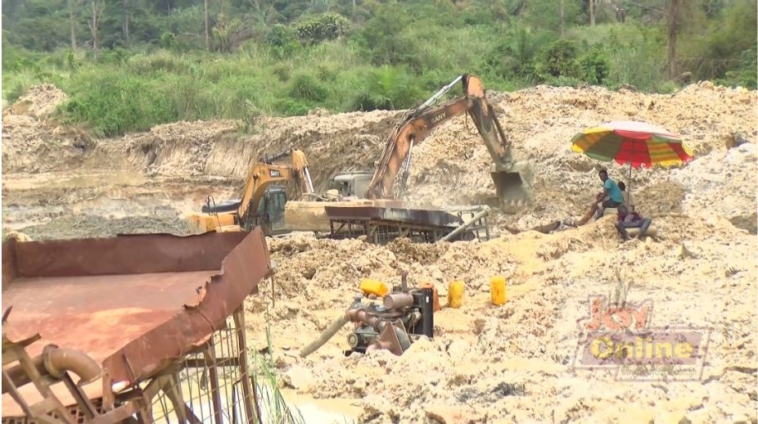
The Environmental Protection Authority (EPA) has cautioned communities against entering abandoned and inactive mine sites.
It said unauthorised entry posed severe risks, including underground collapses and exposure to toxic air.
The Director of Mining at the EPA, Michael Sandow Ali, gave the caution at a three-day training for editors and reporters on green mining and responsible reporting at Peduase in the Eastern Region.
He said many community members entered abandoned mines in search of high-grade ore but were unaware of the dangers beneath the surface.
Mr Ali explained that in several abandoned underground mines, key support structures known as pillars were intentionally left to hold the rock mass together.
He said illegal miners often removed those pillars and replaced them with makeshift wooden props, a practice known in mining as “robbing the pillars.”
“When these wooden structures get soaked by water underground, they rot and collapse.
“That is when you have ground collapse, because once the pillar fails, the entire section of the mine can cave in,” he said.
Mr Ali said beyond structural failures, unauthorised entry also damaged critical ventilation systems, exposing intruders and workers in nearby legal concessions to unsafe air.
“Once they break openings into an abandoned mine, the ventilation system in a legitimate mine nearby begins to leak,” he said, adding: “Your workers will not get fresh air to breathe, and no mine can operate safely under such conditions.”
Mr. Ali said that some intruders were former mineworkers who knew where high-grade ore was located and deliberately targeted those zones, increasing the likelihood of accidents.
The training, organised by the Ghana News Agency in partnership with the Association of China-Ghana Mining, brought together journalists to strengthen their understanding of green mining standards, environmental laws, and the dangers associated with unsafe mining practices.
In his presentation, Mr Ali outlined Ghana’s mineral resources, key environmental regulations, and the EPA’s monitoring tools, ranging from field inspections to drones and satellite imagery.
He said responsible mining required adherence to environmental management, waste handling, water quality protection, reclamation, and transparent community engagement.
“Environmental management is a shared responsibility. When communities understand the dangers and the laws, they are better able to protect themselves and the environment,” he said.
The workshop seeks to strengthen the ability of journalists to report on mining issues with depth, competence, and balance, while bridging the knowledge gap between journalists, regulators, environmental experts and industry actors.
Latest Stories
-
Two-week strike will not derail academic calendar – GNAT President
4 minutes -
Headmaster detained after BBC investigation into alleged sexual abuse of students
14 minutes -
GNAT pushes for clear implementation procedures of teachers’ conditions of service
33 minutes -
Recurrent strikes threaten quality of education and academic calendars – Prof Bokpin
37 minutes -
‘Cockroach’ group leaders among hundreds detained in Delhi protest
40 minutes -
Don’t let speed of information become your judgement – CJ tells new lawyers
1 hour -
World Cup visa scandal: People have leveraged public office to facilitate fraud – Senyo Hosi
1 hour -
Glut! Farmers count losses as prices crash, customers happy
2 hours -
GSA postpones auction of unserviceable vehicles
2 hours -
Man charged with attempted murder after stabbing
2 hours -
World Cup visa scandal: Senyo Hosi says issue goes beyond calls for Sports Minister’s resignation
2 hours -
Yaw Ampofo Ankrah hasn’t taken or received any money to facilitate visas – Lawyer insists
2 hours -
World Cup visa scandal: Senyo Hosi urges focus on constitutional accountability
2 hours -
La Beach demolition: Senyo Hosi condemns lack of consultation
3 hours -
Russian glide bomb attack on Zaporizhzhia kills at least 15 people
3 hours