

Audio By Carbonatix
EU leaders agreed to help support Ukraine's "financial needs" for the next two years on Thursday night - but stopped short of releasing billions of euros in frozen Russian cash to help fund the country's defence.
A decision to use €140bn (£122bn) in Russian assets held in a Belgian clearing house was pushed back until December after concerns were raised by Belgium.
The controversial move would be on top of sanctions the bloc has imposed on Russia - the latest on Thursday targeting the Kremlin's oil revenues.
The Brussels meeting came ahead of a London summit on Friday, where Prime Minister Sir Keir Starmer will urge European leaders to boost long-range missile supplies to Kyiv.
Ukrainian President Volodymyr Zelensky is set to attend the meeting of the so-called "coalition of the willing", along with Nato Secretary General Mark Rutte, Denmark's Prime Minister Mette Frederiksen and the Netherlands' Dick Schoof. Other leaders, including French President Emmanuel Macron, will join virtually.
On Thursday, European ministers held talks in Brussels about how billions of euros worth of frozen Russian cash could be made available to Ukraine as a so-called "reparations loan".
Many EU governments had hoped the leaders would back the plan and request the European Commission, the EU's executive body, to work out a formal legal proposal in the coming weeks.
But the final text, adopted after marathon talks, stopped short of greenlighting plans. Instead, it asked the Commission for "options for financial support based on an assessment of Ukraine's financing needs".
"Russia's assets should remain immobilised until Russia ceases its war of aggression against Ukraine and compensates it for the damage caused by its war," the declaration added.
The aim is now for EU leaders to reach a deal in December.
"This is a topic that is certainly not trivial. It's very complex," European Commission President Ursula von der Leyen said after the summit. "It was also very clear there are points to be clarified."
Antonio Costa, European Council President, sounded a positive note, saying the bloc had "committed to ensure that Ukraine's financial needs will be covered for the next two years".
"Russia should take good note of this: Ukraine will have the financial resources it needs to defend itself," he told a news conference.
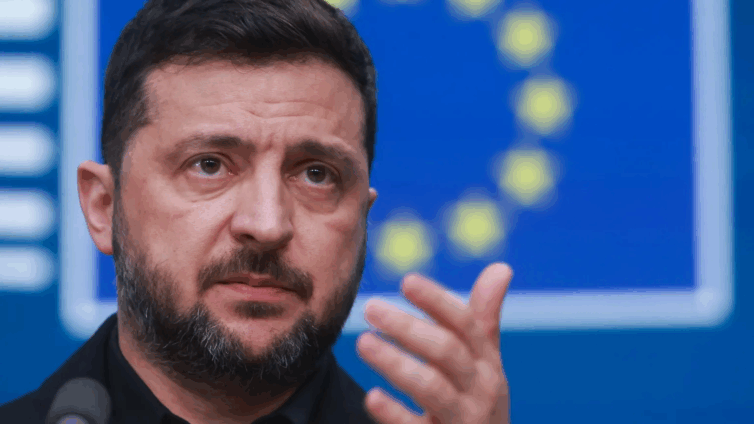
Zelensky, who was in Brussels for the summit, welcomed the outcome as a signal of "political support" for the notion of using Russian assets to keep Kyiv in the fight.
There are a number of legal complexities surrounding using Russia's money.
Belgium, in particular, has been reluctant to back using the frozen assets, as it is nervous about having to shoulder any potential consequences should Russia legally challenge Euroclear, the clearing house where the money is located.
Belgian Prime Minister Bart De Wever said his country needed concrete and solid guarantees before supporting the plan, pointing out the plan was "unchartered territory".
The Belgian government has argued it could expose Euroclear to litigation and ultimately create a major financial crisis.
"Can this (plan) be legal? That is a very good question ... There are no clear answers," De Wever said.
"We will in any case be buried in litigation. That seems like a certainty."
Russia has criticised the EU's proposals.
"Any confiscatory initiatives from Brussels will inevitably result in a painful response," said Russian foreign ministry spokeswoman Maria Zakharova.
The EU's latest sanctions followed US measures against Russia's oil industry - the first time Donald Trump has sanctioned Moscow as he grows frustrated over Vladimir Putin's refusal to end the war.
After the US sanctions were announced on Wednesday evening, Trump confirmed that a planned meeting with the Russian president in Budapest had been shelved indefinitely.
"Every time I speak to Vladimir, I have good conversations and then they don't go anywhere," he said.
The US sanctions targeted Russia's oil giants Rosneft and Lukoil. In response, Putin said the "unfriendly" US measures "will have certain consequences, but they will not significantly affect our economic well-being".
Oil is one of Russia's biggest exports. Ukraine wants to use long-range missiles to target Russian oil and energy plants.
Zelensky had hoped to secure Tomahawk cruise missiles from the US but last week Trump refused the request because the weapons are "highly complex" and take a year of intense training to use.
The EU's latest punitive measures against Russia targeted three Chinese businesses, including two oil refineries and an energy trader, that are "significant buyers of Russian crude oil".
The measures are "meant to deprive Russia of the means to fund this war," said Kallas as well as send a message, specifically that "Russia can't outlast us," she said.
China condemned the decision, which a commerce ministry spokesperson said "seriously undermined the overall framework of China–EU economic and trade co-operation".
Latest Stories
-
At least 30 feared dead in crush at Haitian tourist site
4 hours -
Four arrested over murder of Scottish businessman in Kenya
4 hours -
New Mainoo deal closer, says Man Utd boss Carrick
4 hours -
Sinner beats Alcaraz to return to world top spot
4 hours -
An inappropriate joke nearly ended his career. Now he’s back with more humour
4 hours -
GPL 2025/26: Dreams FC stage stunning comeback to hammer Eleven Wonders
6 hours -
Livestream: The Probe examines Kumasi’s looming water crisis
6 hours -
MTN Ghana gears up to lead Africa’s AI revolution
6 hours -
Philanthropist Alhaji FuZak donates Da’wah bus to Ambariya Sunni community
6 hours -
GUTA calls for suspension of Publican AI system over trade disruptions
6 hours -
TTAG raises alarm over proposed recruitment of 7,000 teachers, demands national posting roadmap
6 hours -
Civilians feared killed after reports of air strike on Nigerian market
7 hours -
Bishop Simon Kofi Appiah installed as new Jasikan Diocese Bishop
7 hours -
Trump’s Strait of Hormuz blockade threat raises risks and leaves predicaments unchanged
7 hours -
US Court backs extradition of former MASLOC CEO Sedina Tamakloe-Attionu to Ghana
7 hours