

Audio By Carbonatix
The European Union has issued a warning to the public and the government regarding the targeted recruitment of African nationals into the Russia-Ukraine conflict, describing the phenomenon as a predatory and unethical exploitation of economic vulnerability.
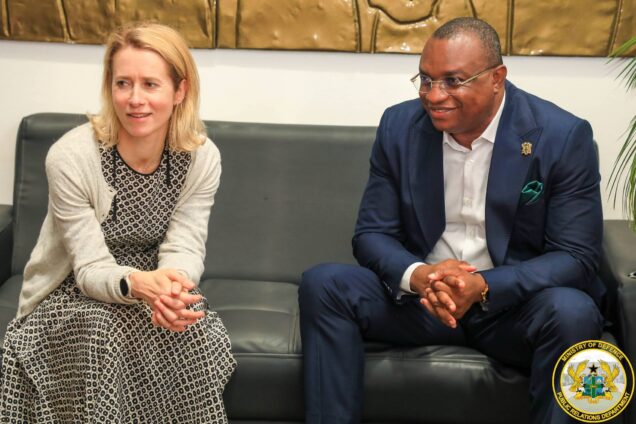
The caution was delivered by the High Representative and Vice President of the European Commission, Kaja Kallas, during the formal signing of a landmark EU-Ghana Security and Defence Partnership in Accra on Tuesday, 24th March 2026.
The partnership comes at a critical time as Ghana grapples with the devastating human cost of a war thousands of miles away. Ms Kallas emphasised that while the kinetic battle remains in Europe, the shockwaves, both economic and social, are being felt acutely across West Africa.
“Russia’s war is a threat to Europe and also has consequences beyond its borders, including in Ghana. Beyond Russia’s unethical recruitment of African nationals, it places economic hardship on citizens. Your people should not be lured into a war that is not theirs,” Kallas declared.
The grim tally: 55 Ghanaians killed
The scale of the crisis was brought into focus by the Minister for Foreign Affairs, Samuel Okudzeto Ablakwa, who provided the most detailed briefing to date on the number of citizens caught in the crossfire.
According to Mr Ablakwa, criminal recruitment networks have successfully trafficked an estimated 272 Ghanaians to the conflict zone since the invasion began in 2022.
Of that number, 55 are now confirmed dead. Furthermore, two Ghanaians are currently being held as Prisoners of War (POWs).
Minister Ablakwa’s disclosures pointed to a massive, coordinated human trafficking operation targeting the continent.
It is estimated that 1,780 individuals have been trafficked to the frontlines from Africa.
Victims hail from 36 different African countries.
Criminal syndicates often lure victims with promises of high-paying security jobs or "lucrative" overseas opportunities, only to force them into active combat roles upon arrival.
Strengthening the EU-Ghana shield
The new security agreement aims to tackle these very networks. The partnership will focus on intelligence sharing to dismantle trafficking syndicates, maritime security, and cyber-defence, all areas where foreign interference has sought to exploit local gaps.
By formalising this defence tie, the EU and Ghana aim to protect citizens from being weaponised in a geopolitical struggle that offers no benefit to the Ghanaian people, while simultaneously addressing the inflation and supply chain disruptions triggered by the ongoing hostilities.
Latest Stories
-
Court premises too volatile for Baffour Awuah’s attempted arrest by EOCO – Inusah Fuseini
3 minutes -
Drug bust: Under no circumstances will NACOC leadership be compromised – Twum-Barimah
4 minutes -
EOCO’s attempted arrest of Baffour Awuah was flawed beyond saving – Law Lecturer
4 minutes -
Genuine Ghanaian exporters may face heightened foreign inspections over drug busts – Lawyer
4 minutes -
Stakeholders demand action against foreign-led illegal mining in Ahafo Region
2 hours -
Ghana handed tricky draw at 2026 Amputee World Cup
2 hours -
2024 Nyankpala election violence: Youth group petitions authorities over slow probe
2 hours -
Ghana, UNICEF strengthen partnership to advance child protection
2 hours -
Day Two of 3rd Republic Bank-JoyNews Habitat Fair ends with great homeownership offers and financing solutions
2 hours -
Guinness Ghana DJ Awards 2026 Pub Fest celebrates Ghana’s DJ culture as Accra turns up the energy
3 hours -
10th woman found dead in South Africa’s string of killings
3 hours -
French Embassy trains Ghana Police CTU in counter-terrorism operations
3 hours -
UPSA uncovers mass results manipulation involving 178 students, over 500 results compromised
4 hours -
ECG announces planned power outages in parts of Tema from Sept. 29 to October 1
4 hours -
Sylvester Mensah urges Latenu FM to promote trade, export opportunities in Ga
4 hours