

Audio By Carbonatix
In Ghana, politicians make many promises during campaigns, unlike in Western countries where they focus on a few key policies. This is due to Ghana's numerous developmental needs, political culture, lack of policy continuity, and limited institutional capacity. Voters must critically evaluate these promises, and politicians should prioritise transparency and realistic goal-setting.
Identifying the NPP's upgrade agenda involves enhancing existing infrastructure, institutions, and systems in Ghana like upgrading roads and transportation networks, expanding and modernising healthcare facilities, improving educational institutions and resources, enhancing digital infrastructure and technology, strengthening governance and institutional frameworks. The focus is on building upon and improving what already exists making it more efficient, effective and modern but could that be irrespective of the crucial question of whether the NPP is upgrading irrespective of the non-prioritised and unwarranted policies that are currently in operation?
On the other hand, the NDC's reset agenda suggests a more fundamental transformation which could involve reassessing and redefining Ghana's development priorities, re-examining past policies and decisions that may have hindered progress restarting, or revising initiatives that were abandoned or poorly implemented, rebuilding or replacing inadequate or inefficient systems. The how far back is the crucial question. Is the resetting from a specific point in Ghana's history, eg pre 2017, correcting recent mistakes and getting back on track?
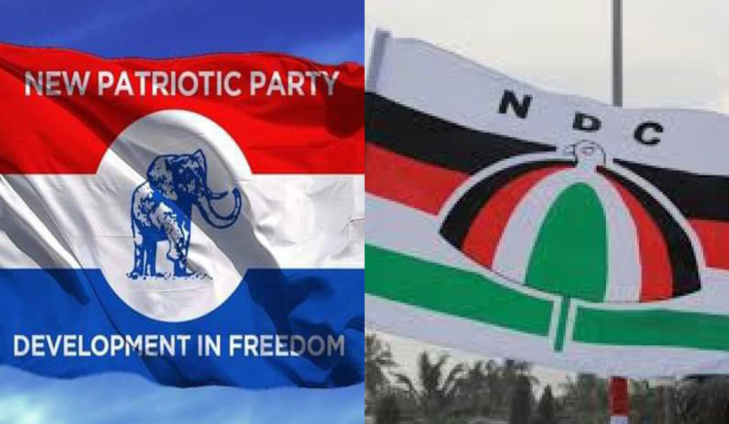
The manifestos of the New Patriotic Party (NPP) and National Democratic Congress (NDC) present distinct visions for Ghana's future. The NPP's approach is characterised by gradual improvement and building upon existing frameworks, while the NDC proposes a more radical overhaul of current policies.
Economically, the NPP focuses on public-private partnerships, reducing government expenditure, and promoting digitalisation. In contrast, the NDC takes a more interventionist stance, pledging to reinstate banking licenses, support local businesses, and combat illegal shipping fees.
In education, the NPP promises to expand free senior high school and technical education, while the NDC proposes reviewing the existing policy and focusing on infrastructure development.
Healthcare priorities differ, with the NPP emphasising the completion of the Agenda 111 hospitals project and digital healthcare initiatives, whereas the NDC focuses on critical care, cancer, and kidney disease treatment.
Youth employment strategies also diverge, with the NPP stressing digital skills training and the NDC promising to create skilled digital jobs and establish a fintech growth fund.
Infrastructure development approaches vary, with the NPP focusing on completing and expanding current projects, while the NDC prioritizes completing abandoned projects and launching a $10 billion infrastructure investment.
Agriculture and food security proposals differ, with the NPP aiming to stabilise food prices and the NDC seeking to revive the Operation Feed Yourself initiative.
Corruption and governance strategies also contrast, with the NPP promoting digitalisation and the NDC proposing a comprehensive anti-corruption strategy.
Security and defense policies differ significantly, with the NPP committing to enhance border protection and the NDC promising a decentralised approach to security.
Women's empowerment and gender equality proposals vary, with the NPP planning to expand social protection schemes and the NDC promising to pass the Social Protection and Aged Persons Bill.
Foreign policy and international relations approaches diverge, with the NPP seeking to optimies diplomatic missions and the NDC aiming to leverage Ghana's hosting of the AfCFTA Secretariat.
In conclusion, both manifestos present distinct strengths and weaknesses. The NPP's gradual approach may ensure stability, while the NDC's radical overhaul may address pressing issues. However, the NDC's manifesto appears more comprehensive and feasible, addressing critical areas like healthcare, education, and corruption. Ultimately, Ghanaians should welcome the NDC's manifesto for its potential to drive meaningful change.
Evans Mawunyo Tsikata
Latest Stories
-
Total expenditure as of July 2026 amounted to GH¢147.07bn, 16% below target – BoG
1 hour -
Total revenue & grants stood at GH¢144.5bn in July 2026, slightly below target – BoG
2 hours -
Ghana Sports Fund urges sports federations to submit credible proposals and measurable targets
2 hours -
Sally Rooney books withdrawn in UK over Palestine Action support
2 hours -
Musk says US government may be behind slowdown of Ukraine drone speeds
2 hours -
Picking Chief Justices nearing retirement could give Mahama immense power – Bentil
2 hours -
Netflix to shed 1,000 jobs in steepest cuts since 2022
2 hours -
Burnham had two hospitality dinners with Man City chairman, deleted records show
3 hours -
Semenyo ‘froze’ after alleged racist abuse, court told
3 hours -
‘Shameless’ – Mourinho critical of Vinicius Jr ban timing
3 hours -
Loyalty can outweigh competence in Chief Justice selection – Bentil
3 hours -
Man City suffer as PSG masterclass sets up Champions League win
3 hours -
Customer Service Africa CEO urges business leaders to observe staff and customer interactions
4 hours -
On night of mayhem for Liverpool, Barcola arrives in style
4 hours -
Muzic Mensah finds healing and renewed love in new single ‘WayƐ Late’
4 hours