

Audio By Carbonatix
The Criminal Investigation Department (CID) has warned of a growing trend of digital-enabled human trafficking, with criminals increasingly using social media, smartphones and encrypted messaging platforms to identify, recruit and exploit victims.
Director-General of the CID, Yaako Donkor, said traffickers were adopting sophisticated methods beyond traditional physical recruitment, using online platforms to lure unsuspecting individuals with false promises of better opportunities.
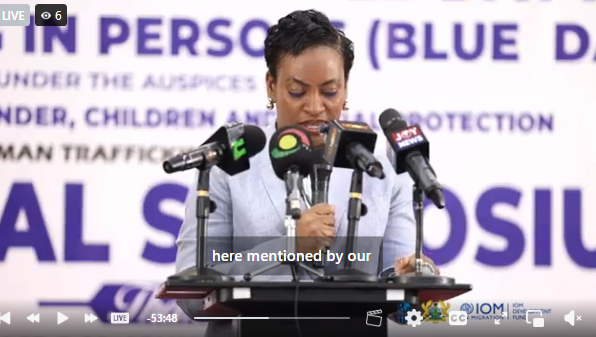
Speaking during the Commemoration of World Day to mark 20 years of Ghana’s Human Trafficking Act, DCOP Donkor said traffickers now rely on fake job offers, scholarships, educational programmes, entertainment opportunities, domestic work and travel arrangements as bait to trap victims.
"Traffickers are no longer relying only on physical means. They are using social media, smartphones, digital platforms and encrypted messaging services to identify, recruit and exploit victims," he said.
According to him, many victims are deceived into surrendering their passports, personal information and savings after believing they have secured genuine opportunities, only to end up in forced labour, domestic servitude, sexual exploitation and other forms of modern slavery.
DCOP Donkor noted that the CID had recorded cases where individuals were recruited through employment opportunities advertised for destinations in the Middle East and Asia but were instead taken elsewhere and subjected to exploitation.
He further highlighted the emergence of cyber-enabled trafficking activities involving online investment schemes, digital recruitment platforms, romance scams and transnational online marketing networks.
“These criminal networks exploit unemployment, economic hardship and the desire of young people for better opportunities,” he stated.
The CID Director-General said the changing nature of trafficking required a new approach to law enforcement, combining traditional policing with digital intelligence, cyber investigations, financial investigations, data analytics, digital forensics, artificial intelligence and international information sharing.
He assured that the Ghana Police Service was strengthening its capacity to identify victims, track offenders, preserve digital evidence and dismantle organised trafficking networks.
DCOP Donkor, however, stressed that enforcement alone was not enough, explaining that rescued victims require support services such as shelter, healthcare, counselling, vocational training and reintegration assistance.
"The rescue is only the beginning," he said, adding that the fight against human trafficking requires cooperation among government institutions, security agencies, civil society organisations, development partners, schools, parents, traditional leaders, religious bodies and the media.
He urged the public to remain vigilant online and ensure that awareness campaigns keep pace with the changing tactics used by traffickers.
DCOP Donkor reaffirmed the CID’s commitment to enforcing Ghana’s Human Trafficking Act and making the country increasingly hostile to trafficking networks.
He said the 20th anniversary of the legislation should renew national efforts towards prevention, protection, prosecution and partnership in the fight against modern slavery.
Latest Stories
-
Okai Mintah outlines vision for NDC Youth Wing as he engages MMDCEs
3 minutes -
Mahama Ayariga leads renewed push for stronger local governance through partnerships
7 minutes -
NDC youth organiser aspirant Okai Mintah consults MMDCEs ahead of elections
8 minutes -
PHOTOS: Ayikuma Methodist Basic School wins National Juniors Challenge
10 minutes -
Silence has entered our homes : Salomey Awiti Bafoh and the chilling effect of free expression in Ghana
11 minutes -
UG Pro-VC calls for stronger research funding to curb brain drain
13 minutes -
Woman in critical condition after shooting at funeral grounds in Yeji
15 minutes -
Breast Cancer awareness must lead to action – Deputy Health Minister
18 minutes -
UK identified as leading destination for Ghana’s illicit cannabis exports – Report
20 minutes -
Drug money allegedly finances Ghana’s political parties and real estate – Global Organised Crime Index
25 minutes -
NSA outlines seven steps for successful posting and validation of national service personnel
26 minutes -
GPRTU taskforce clamps down on unapproved fares at Kasoa
27 minutes -
Prime Insight: Making room for meaningful national conversations on Joy Prime
38 minutes -
FABAG commends Ato Forson’s over removal of 20% excise duty on locally manufactured fruit juices
45 minutes -
HIV stigma discourages testing, prevention and treatment in Ghana – Ghana AIDS Commission
47 minutes