

Audio By Carbonatix
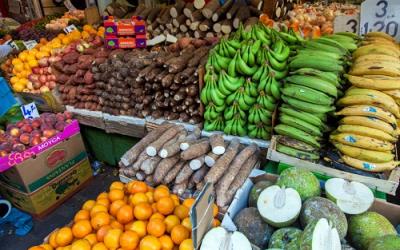
As the coronavirus tears the global economy into a recession, one grave concern for millions of households has been the impact this will have on food prices security especially in Ghana and across Africa.
FAO Assistant Director-General and Regional Representative for Africa Abebe Haile-Gabriel in an online interview with JoyBusiness explained that building resilience is the solution to increased vulnerability in food supply chains due to coronavirus.
“Covid-19 strikes at the centre of Africa's unique vulnerability. There are mechanisms to mitigate the pandemic’s impacts on Africa's most vulnerable people. Building the resilience of vulnerable communities and agricultural systems is the sustainable solution,” he stated.
Already, there has been a national debate over the cost of foodstuff at various market centres amid the Coronavirus pandemic with the Agric Minister, Owusu Afriyie Akoto insisting “cost of food is so far the lowest even in cities like Accra”.
Meanwhile, some Ghanaians, speaking to JoyBusiness say the cost of foodstuff is worryingly high across some markets.
Of the 135 million people globally who are estimated to be experiencing crisis levels of acute food insecurity, more than half live in Africa.
According to recent FAO analysis, in the absence of timely and effective policies, millions of more people around the world are likely to join the ranks of the hungry as a result of the Covid-19-triggered recession.
Overlapping crises testing communities
Haile-Gabriel set out the main challenges facing governments and humanitarian and development partners in supporting vulnerable communities to weather this latest crisis.
The region’s agriculture sector has been hit by three shocks in three years: Fall Armyworm beginning in 2018, Desert Locust swarms that began in 2019, and now Covid-19. At the same time, already-fragile communities are grappling with conflict, drought and floods.
Nationwide lockdowns and movement restrictions are impeding trade and livelihoods. The fisheries sector, for example, is one of the hardest hit due to Covid-19.
Food preservation capacities in Africa are low, including for fresh fish, and therefore losses have been significant, he said. The lockdown in urban areas meant fish markets closed, so fish value chain actors were negatively affected, and restaurant closures reduced demand.
The self-employed and wage workers in the informal economy are particularly vulnerable to the pandemic’s effects.
They include women, youth and migrant workers and, without effective social protection measures, they disproportionately bear the brunt of the pandemic’s resulting underemployment, unemployment and loss of livelihoods.
Africa also has a heavy reliance on food imports, and border closures and other restrictions have meant people’s access to healthy diets has been reduced, especially in countries already affected by high levels of food insecurity.
Overcoming Covid-19 challenges
Turning to solutions, the Assistant Director-General said FAO’s enhanced advocacy at all levels helped to reopen or keep food and agriculture supply chains alive.
“The concerted actions of FAO, together with other like-minded partners, have contributed towards exempting food supply chains from the lockdowns through defining them as essential services,” he said.
He also said FAO’s advocacy helped keep supply chains open so that measures to control the Desert Locust outbreak in East Africa - “a crisis within a crisis” - could continue.
FAO Africa is focusing not only on short-term measures but medium- and long-term responses as well. Technical assistance for socio-economic assessments, and data and knowledge sharing are supporting evidence-based policy formulation and implementation.
Countries and partners must plan now for a better recovery, to steer Africa towards a more resilient and sustainable path. Otherwise, hard-won gains to reduce hunger and poverty are at risk.
Latest Stories
-
Philanthropist Alhaji FuZak donates Da’wah bus to Ambariya Sunni community
4 minutes -
GUTA calls for suspension of Publican AI system over trade disruptions, demands temporary halt in import activities
7 minutes -
TTAG raises alarm over proposed recruitment of 7,000 teachers, demands national posting roadmap
40 minutes -
Civilians feared killed after reports of air strike on Nigerian market
50 minutes -
Bishop Simon Kofi Appiah installed as new Jasikan Diocese Bishop
51 minutes -
Trump’s Strait of Hormuz blockade threat raises risks and leaves predicaments unchanged
53 minutes -
US Court backs extradiction of former MASLOC CEO Sedina Tamakloe-Attionu’s to Ghana
1 hour -
Seven arrested as NAIMOS dismantles illegal mining camp, seizes firearms at Boin River
1 hour -
Fire erupts at Madina Ritz Junction, destroys multiple wooden structures and containers
1 hour -
Daniel-Kofi Kyereh returns from long-term injury, registers assist for Freiburg U23
2 hours -
Knifeman calling himself ‘Lucifer’ slashes three at NYC’s Grand Central
2 hours -
Brands are built from within to without
2 hours -
Matriculants urged to pursue excellence as gov’t reaffirms support for Maritime education
2 hours -
See the areas that will be affected by ECG’s planned maintenance on Monday, April 13, 2026
2 hours -
GPL 2025/26: Salim Adams double fires Medeama back to summit after Kotoko rout
2 hours