

Audio By Carbonatix
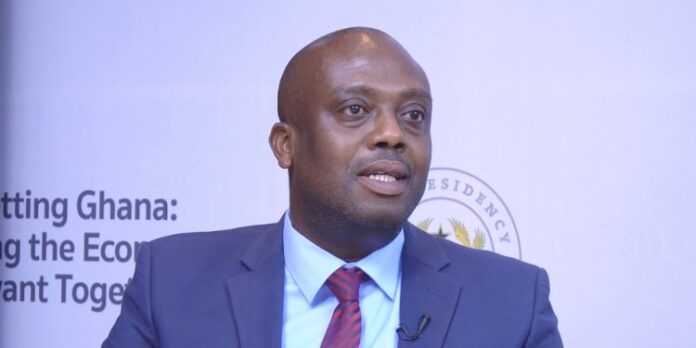
Ghana’s drive towards fiscal discipline and public accountability has recorded a major milestone following a 62.9 per cent reduction in financial irregularities across five key audited sectors of the economy, Deputy Minister for Finance, Thomas Nyarko Ampem, has revealed.
Total financial infractions plunged from approximately GH¢20.72 billion in 2024 to GH¢7.69 billion in 2025, representing a significant absolute drop of about GH¢13.03 billion.
The reduction surpassed the government's internal performance target of cutting public sector financial irregularities by 50 per cent in 2025, exceeding the benchmark by 12.9 percentage points.
Disclosing the figures during a high-level consultative engagement on the 2025 Auditor-General’s Reports, Mr Ampem described the sharp decline as concrete evidence of effective public financial management (PFM) reforms.
Addressing Chief Directors, Chief Executive Officers, and Heads of Covered Entities in Accra, the Deputy Minister praised the collective efforts of public institutions while emphasising the need for sustained vigilance.
“I am pleased to report that, taken together, financial irregularities across these five sectors declined from approximately GH¢20.72 billion in 2024 to GH¢7.69 billion in 2025,” he said.
“This represents a reduction of approximately GH¢13.03 billion, or 62.9 per cent. This is a significant achievement.”
Institutional accountability
Mr Nyarko Ampem attributed the progress to deliberate administrative measures aimed at closing systemic loopholes, enforcing internal audit mechanisms, and insisting on compliance across government ministries, departments, and agencies.
“This improvement demonstrates that when there is deliberate attention to public financial management, stronger controls and greater accountability, measurable results can be achieved,” he stated.
The stakeholder engagement focused on dissecting recurring systemic weaknesses highlighted in the Auditor-General’s annual reports and defining clear compliance responsibilities for administrative heads.
Institutional leaders were urged to aggressively implement the Auditor-General's recommendations, rectify existing internal control gaps, and enforce zero-tolerance measures to prevent the recurrence of financial infractions in subsequent audit cycles.
Latest Stories
-
Power restoration fault suspected in Kumasi Central Market fire
4 hours -
The 7-foot giant of Ngleshie Amanfro: Seven-foot Ghanaian Ephraim Saawa dreams of joining the national basketball team
5 hours -
Government promises support for Kumasi Central Market fire victims
5 hours -
Vibes The Movie: Big Ghun’s Ghanaian film earns five nominations at 2026 REFFA
5 hours -
MamaCare CEO warns unresolved conflicts among health workers could undermine maternal and neonatal care
6 hours -
Health professionals urged to translate medical knowledge into practice to save mothers
6 hours -
Conflicts among care providers linked to maternal, neonatal deaths – Expert
7 hours -
GIS marks 10th TIME conference, champions improved teaching practices
7 hours -
BRICS Or Balance? What Ghana’s bid really means
8 hours -
GPRTU wants full TRAFFITECH-GH implementation to start in 2027
8 hours -
How 10-mile walks for basic education birthed a 50-year legal career for Justice Korbieh
8 hours -
Mahama announces plans to import electric wheelchairs for PWDs
8 hours -
KGL U17 Colts 2026: Western beat Prempeh Elite Academy to set up final final with Greater Accra Region
8 hours -
Late Solanke strike salvages 10-man Spurs draw at Man United
9 hours -
Gender Ministry to monitor welfare of Nana Akua Addo’s children amid domestic violence case
9 hours