

Audio By Carbonatix
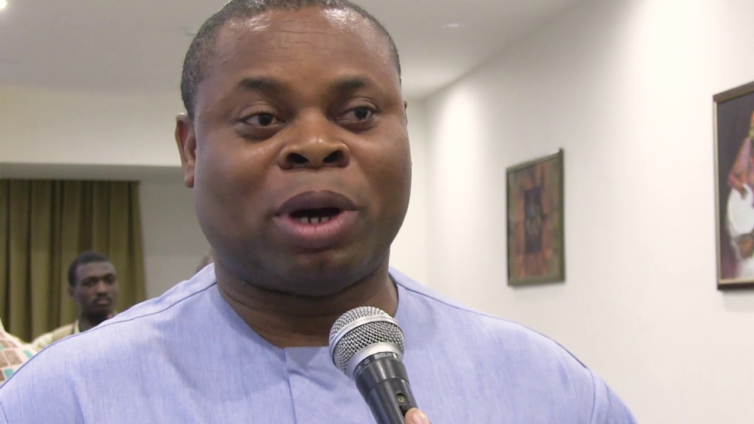
IMANI Africa’s Franklin Cudjoe has called for a radical shift in Ghana’s governance approach, warning that traditional bureaucratic controls have failed and are, in fact, part of the problem.
Speaking at the National Economic Dialogue in Accra, he questioned whether Ghana’s public financial management system has become more about maintaining power than serving the public good.
“For decades, we have built layer upon layer of controls and restraints, thinking that this will prevent the abuse of the public purse,” he said.
“Yet, the more we add, the more convoluted and opaque the system becomes. What we now have is a governance albatross.”
Mr Cudjoe argued that Ghana’s political and bureaucratic elite have mastered the art of using public sector complexities to shield corruption and inefficiency.
“We have so many institutions meant to check corruption and mismanagement—yet nothing is clear. Everything has become murky,” he stated.
“We keep applying the same failed logic, expecting different results.”
Read also: The governance albatross in public financial management: Time to consider the stewardship model?
Instead of simply tightening bureaucratic controls, he proposed a stewardship model that incentivizes ethical leadership and transparency.
“We need to amplify the behavior of public officials who have a strong vision for Ghana’s prosperity,” he said.
“We must move away from transactionally coercing accountability and focus on building a culture where public officials take genuine pride in their work.”
Franklin Cudjoe outlined IMANI’s proposed RESET framework - Revitalising the Economy through Stewardship & Ethical Transformation - which aims to promote openness and accountability.
“Ministers and Chief Directors should voluntarily sign onto a framework of openness and stakeholder co-creation of their sector’s vision,” he suggested.
“They should commit to open data, radical transparency, and regular public engagement.”
His model includes bi-weekly town halls where procurement details, project performance, and policy decisions are openly discussed.
“Citizens should be able to tune in, ask questions, and join the stakeholder group monitoring these leaders,” he said.
“At the six-month mark, we celebrate progress and provide feedback for improvement.”
Mr Cudjoe believes this approach would complement, rather than replace, existing financial oversight mechanisms.
“Naturally, RESET will not substitute formal audits and public financial controls,” he clarified. “But it will invigorate them—bring their essence to the fore and make them more meaningful to citizens.”
As part of broader reforms, he called for bold policy changes, including:
• A strict rule that ministerial vehicles be procured only once every ten years, with no luxury purchases.
• Direct taxation to fully fund key programs like NHIS, GETFund, and Free SHS, preventing misallocation of funds.
• Reforming the appointment process of the Auditor-General to ensure impartiality, with opposition parties selecting the candidate.
• Strengthening the Office of the Special Prosecutor (OSP) to handle all criminal prosecutions, while a separate Solicitor General manages civil cases.
He warned that Ghana’s governance culture is dangerously close to institutionalized failure.
“When bureaucratic systems become tools for aligning the narrow interests of public officials with the parochial interests of certain voter blocs, the national interest is lost,” he said.
“We have seen it happen—politicians and their cronies lobby for public resources in ways that undermine the country.”
Franklin Cudjoe challenged Ghanaians to rethink their expectations of governance and demand more from leaders.
“If we continue to operate on the same broken logic, we will keep getting the same broken results,” he said. “The question is, are we ready for real change, or are we just playing with hellfire?”
Latest Stories
-
AFCON 2027Q: ‘Our Black Stars team is gone’ – Former Sports Minister
9 minutes -
Prof. Prempeh calls for public review of draft constitutional reform bills
22 minutes -
AFCON 2027Q: ‘I have never seen a poor performance from Black Stars like against Gambia’ – Nii Lante Vanderpuye
26 minutes -
Nigeria set to launch National Digital Address System 9 years after Ghana showed the way
49 minutes -
Policy rate decision takes time to reflect in lower lending rates – BoG
59 minutes -
Western Regional Minister applauds Karpowership’s role in Ghana’s power sector
1 hour -
Livestream: Road safety crises: Where are we getting it wrong?
1 hour -
Enterprise Life celebrates 25 years of protecting families and building trust
2 hours -
ICC London rules in favor of Ghana against Tullow over $400m tax charge
2 hours -
We are disappointed in ICC’s ruling over our corporate income tax assessment in Ghana – Tullow Oil
2 hours -
Cost of building inflation for August 2026 increases to 4.6% – GSS
2 hours -
Today’s front pages: Wednesday, September 30, 2026
2 hours -
Bawumia highlights agricultural, compulsory insurance reforms in IBAG engagement
2 hours -
Ghana will secure Tullow tax revenues while protecting Jubilee, TEN investments – Ato Forson
3 hours -
Ghana wins $393m Tullow tax arbitration as tribunal upholds GRA assessment
3 hours