

Audio By Carbonatix
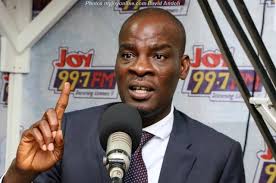
The Minister of Education, Haruna Iddrisu, has rejected claims that 5.1 million students had benefited from the Free Senior High School (SHS) policy, as reported by the previous government. He warned that these inflated figures could lead to financial mismanagement and resource wastage.
He clarified that the actual number of beneficiaries is 3.9 million, emphasising that using inflated figures for planning and expenditure has significant implications for government spending.
Mr Iddrisu made these comments during his first official meeting with the ministry’s development partners on Wednesday. The meeting, attended by around 17 development partners, focused on strengthening collaboration to enhance the country’s education sector.
Inflated Figures
"Someone may have been using the inflated 5.1 million figure for other purposes because, based on my assessment of the statistics, this number is inaccurate. The actual number of Ghanaian students benefiting from the policy stands at 3.9 million," Mr Iddrisu said.
He added, “If someone planned and allocated resources, especially for food, based on the 5.1 million figure, imagine the harm it has caused to the state and the Republic."
Mr Iddrisu further called for a review of the policy's sustainability, expressing concerns over its impact on the fair allocation of resources to other critical areas, particularly Free Compulsory Universal Basic Education (FCUBE). He revealed that over GH¢7 billion had been spent on the initiative since its inception in 2017.
While acknowledging the significant increase in access to secondary education, he noted that the policy had also placed a financial strain on the overall education budget. “The constitution imposes a burden on us to provide progressive free secondary education; however, the current expenditure on Free SHS has limited the fair allocation of resources to other areas,” he said.
Infrastructure Challenges
Mr Iddrisu warned of a looming infrastructure crisis due to the rapid expansion of SHS enrolment without corresponding investments to accommodate graduates at the tertiary level. "If we do not prepare adequately, we may face a major infrastructure crisis in the coming years. We need significant investment in infrastructure to accommodate the increasing number of students," he said.
To address these challenges, Mr Iddrisu proposed a strategic reallocation of resources from the Ghana Education Trust Fund (GETFund). He suggested a 40-20-20-20 formula, where 40% of GETFund resources would be allocated to its core mandate, 20% to FCUBE, 20% to administrative expenditures, and 20% to complementary education initiatives. “This formula ensures that every component of the education sector benefits from GETFund interventions,” he explained.
Uncapping GETFund
Mr Iddrisu also advocated for uncapping the GETFund, arguing that this could free up between GH¢3.2 billion and GH¢4 billion, potentially increasing the fund’s total resources to GH¢7.9 billion. “Uncapping GETFund will provide the necessary resources to address the infrastructure deficit and other pressing needs in the education sector,” he stated.
Food Procurement
To improve food supply in schools, Mr Iddrisu announced a shift to decentralised procurement, with headmasters and headteachers becoming the focal points. He revealed that the government plans to leverage the Ghana Commodity Exchange and the Buffer Stock Company for better food distribution.
He disclosed that GH¢100 million had already been released to address immediate food shortages, with another GH¢100 million required for the next month. “We are working with the World Food Programme to ensure timely and nutritious food supplies for schools,” he added.
Ending Double-Track
To phase out the double-track system, the minister proposed integrating private schools into the Computerised School Selection and Placement System (CSSPS), which would allow them to absorb up to 150,000 students. “The private sector can play a key role in alleviating pressure on public schools. With the right training and support, they can help us transition out of the double-track system,” he said.
Mr Iddrisu reiterated the need for a national debate on the future of Free SHS and the broader education system. He stressed the importance of sustainable financing, equitable resource allocation, and strategic planning to ensure the long-term success of Ghana’s education policies.
Source: Graphic.com.gh
Latest Stories
-
High Court sets November 4 for ruling on Wontumi’s bail application
12 minutes -
Tetteh Kwetey files nomination for NDC Greater Accra Regional Chairmanship
21 minutes -
Korle Bu appeals for more doctors, nurses as A&E Centre struggles under pressure
33 minutes -
AFCON 2027Q: ‘I’m optimistic Black Stars can turn things around’ – Agyemang-Badu
35 minutes -
Digital innovation could widen Africa’s inequalities if people are left out – Sam Jonah
37 minutes -
Galamsey is an economic, health and moral problem – Sam Jonah
40 minutes -
Africa must create AI technology instead of paying to use it – Sam Jonah
42 minutes -
2026 U-17 WWC: Black Maidens to face Norway, Brazil and Canada in Group C
47 minutes -
Agbodza, Sam George move to curb fibre optic cable cuts during road works
53 minutes -
2026 U-17 WWC: Black Maidens unveil 21-player squad for competition in Morocco
55 minutes -
South Africa evacuation and the minority’s half-truth
1 hour -
‘You never know tomorrow’ – Anthony Baffoe on contesting for GFA Presidency
1 hour -
Obuasi SHTS head accused of sexually abusing students is NDC Juaben secretary seeking chairmanship
1 hour -
Cedi depreciates by 7.11% against dollar in August 2026 – BoG report
2 hours -
Put women and youth at the centre of mineral resource governance — ActionAid
2 hours