

Audio By Carbonatix
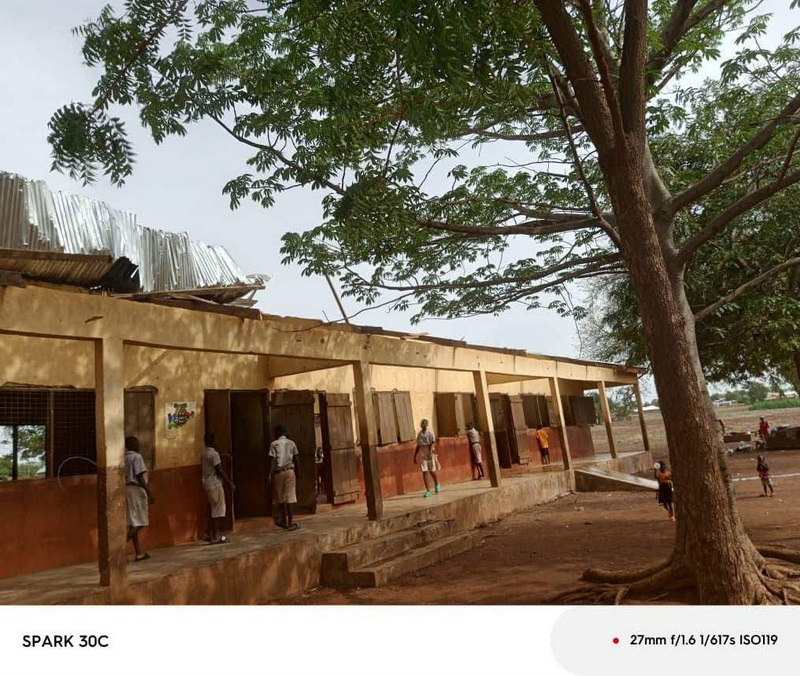
On the morning of May 23, 2025, the Sawaliga Basic School in the Talensi District resembled a scene from a disaster movie. A devastating rainstorm the night before had reduced the once vibrant school block—filled with eager young minds—into a wreckage of mangled roofing sheets, broken wooden beams, and scattered debris.
The storm had not only destroyed access to education for the children; its aftermath posed a grave danger to their lives. One man, however, could not bear to look away.
When philanthropist and businessman Alhaji Seidu Agongo saw viral photos of the damaged school and the desperate conditions the students were enduring, he said he felt something break inside him.
“Those were not just pictures,” he said in an interview. “Those were my own children, Ghana’s future, sitting and loitering in the dirt among scattered nails.”
Within hours, Agongo was on the phone with contractors. There were no committees, no bureaucracy—just a father figure moved by compassion who could not sleep knowing that children were studying under trees, with examinations just weeks away.
A Miracle in Three Weeks
The transformation brought tears to the eyes of Assistant Headteacher Jonas Mbazoyinbil.
“I watched my students lose hope every day. It was impossible to have meaningful classes; the children were loitering about,” he said.
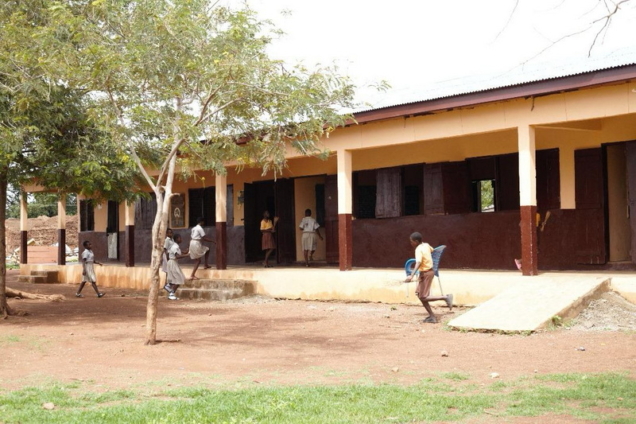
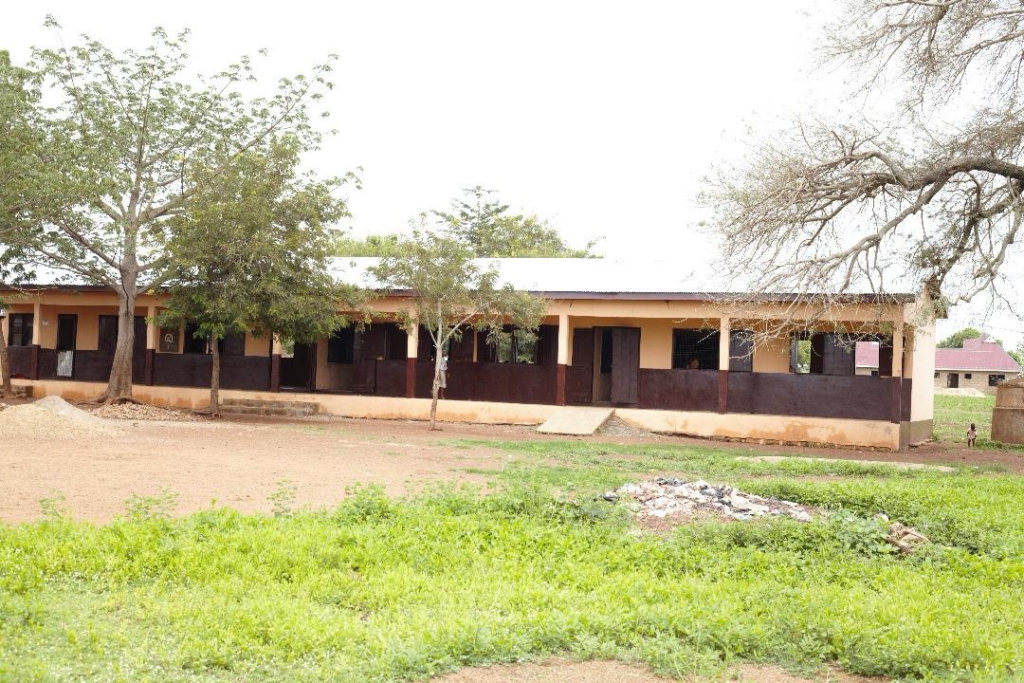
But just three weeks later, students walked into a classroom that gleamed like a palace. The roof had been replaced with new materials, and the walls were freshly painted, creating a more welcoming and comfortable environment for learning.
The Devastation
Community elders recalled watching the roof of the school being completely ripped away during the storm, leaving students and teachers exposed to the open sky. For the students of Sawaliga Basic School, education had suddenly become a luxury they could no longer afford.
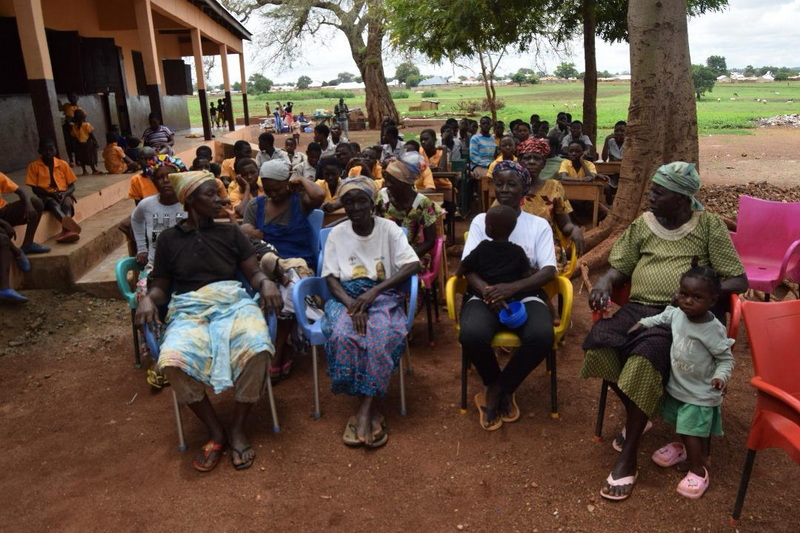
With the Basic Education Certificate Examination (BECE) only two weeks away, final-year students found themselves without a functional classroom. It was a heartbreaking sight—children who should have been preparing for their future sat on broken concrete blocks, trying to read from water-damaged textbooks.
Teachers attempted to teach outdoors, but their voices were lost to the wind as students squinted under the harsh sun, struggling to focus.
A Plea on Social Media
The plight of the school came to Alhaji Agongo’s attention through a heartfelt social media post by a local youth leader, Solomon Zinekena, who shared images of the destruction across platforms and appealed for help.
His message was simple yet powerful: "Our children need your help."
Agongo responded without delay or publicity. Contractors were dispatched immediately, and what followed was nothing short of miraculous.
Within three weeks, the ruined school had been transformed into a modern, safe, and beautiful structure. The new roof gleamed under the sun, fresh paint brightened the walls, and sturdy floors replaced the debris-covered ground. Students who had been studying under trees now walked through hallways filled with hope.
“Education is the foundation of our nation’s future. If we can help, we must,” Agongo said.
Mr Mbazoyinbil could barely contain his emotions as he watched his students settle into their renewed classroom.
“We had lost all hope,” he said. “But this man restored our faith in humanity.”

Honouring a True Philanthropist
The community’s appreciation was overwhelming. In a traditional ceremony, the elders enskinned Alhaji Seidu Agongo as their development chief, despite his absence. They presented a citation, a sheep, and a smock—symbols of deep respect and gratitude.
For eyewitnesses, Sawaliga Basic School now stands as a symbol of what compassion and swift action can achieve. While challenges remain—three classes still share one room due to limited space—the foundation for learning has been restored.
Students once again have hope. Teachers have renewed purpose. And a community has learned that sometimes, help comes from the most unexpected places.
Latest Stories
-
Teachers must not be blamed for maintaining strike; the gov’t failed to act earlier – IFEST
2 minutes -
Attijariwafa’s acquisition of Societe Generale likely to be ratings neutral; Ghana’s banking environment healthy – Fitch
11 minutes -
Mahama’s Reset Agenda will make resource wealth benefit citizens – Dr Djokoto
16 minutes -
La Pleasure Beach to reopen after demolition exercise
20 minutes -
La Pleasure Beach demolition victims to receive compensation
33 minutes -
NPP Germany congratulates new national executives, calls for unity ahead of 2028 elections
35 minutes -
Avaricious elitism and intellectualism
37 minutes -
Speeding tipper truck kills 2 basic school students at Ekumfi
40 minutes -
‘I’m 16, passed my BECE and want to become a lawyer’ – Adanwomase ‘smallish’ SHS boy
58 minutes -
Ghanaians in their 30s and 50s dying from heart disease without knowing – Cardiothoracic Centre
1 hour -
Emeritus Professor Kwame Akon Ninsin: The man who mentored a department
1 hour -
BoG orders banks to give fraud units direct access to CEOs
1 hour -
Government must clarify fate of 29,000 teachers awaiting promotion – NAGRAT
1 hour -
Paramount takes over Warner Bros in $110bn Hollywood merger
2 hours -
Human resource practitioners asked to embrace digital revolution for efficiency in service delivery
2 hours