

Audio By Carbonatix
In an era where global trade patterns are being reshaped by changing supply chains, geopolitical shifts and the pursuit of economic resilience, the strength of international partnerships is increasingly measured not only by the volume of trade, but by their ability to transform economies, create industries and improve livelihoods.
For Ghana and China, a relationship built over decades of diplomatic and economic cooperation is now facing a critical question: how can trade ties evolve from a model centred on the exchange of goods into a partnership that drives industrial growth, technology transfer and sustainable development?
Over the past two decades, China has emerged as one of Ghana’s most significant economic partners, particularly as the country’s leading source of imported goods. The relationship has influenced Ghana’s consumption patterns, infrastructure development and industrial supply chains.
Trade figures highlight the depth of the economic connection between the two countries. Ghana’s imports from China reached approximately US$3.07 billion in 2023, with machinery, electrical equipment, steel products, plastics and vehicles accounting for a significant portion of the imports, Trading Economics reported.
During the same period, Ghana’s exports to China were valued at about US$1.38 billion, largely driven by crude petroleum, minerals and other raw materials.
Further data indicate that China’s exports to Ghana increased significantly, reaching approximately US$9.84 billion in 2024, reinforcing Beijing’s position as a dominant supplier of manufactured goods and industrial inputs to the Ghanaian market.
While one may argue about the trade imbalance between the two countries, Ghana exports mainly raw materials while importing finished products; it can also be argued that Chinese engagement has contributed significantly to economic activity, infrastructure expansion and business opportunities for many Ghanaians.
Beyond trade figures, China’s footprint in Ghana is highly visible through infrastructure projects that have supported development across various sectors.
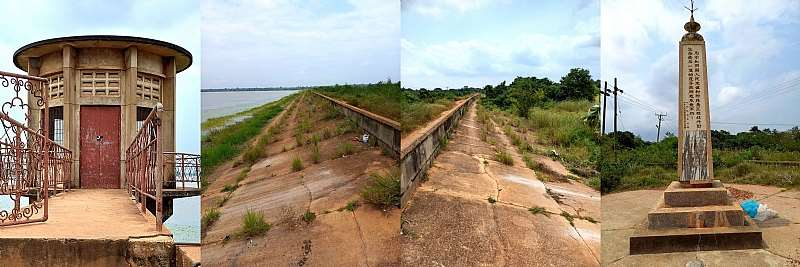
In Afife in the Ketu North Municipality of Ghana’s Volta Region, a China-funded irrigation facility established in 1983 continues to support rice production, contributing to both local consumption and export opportunities.
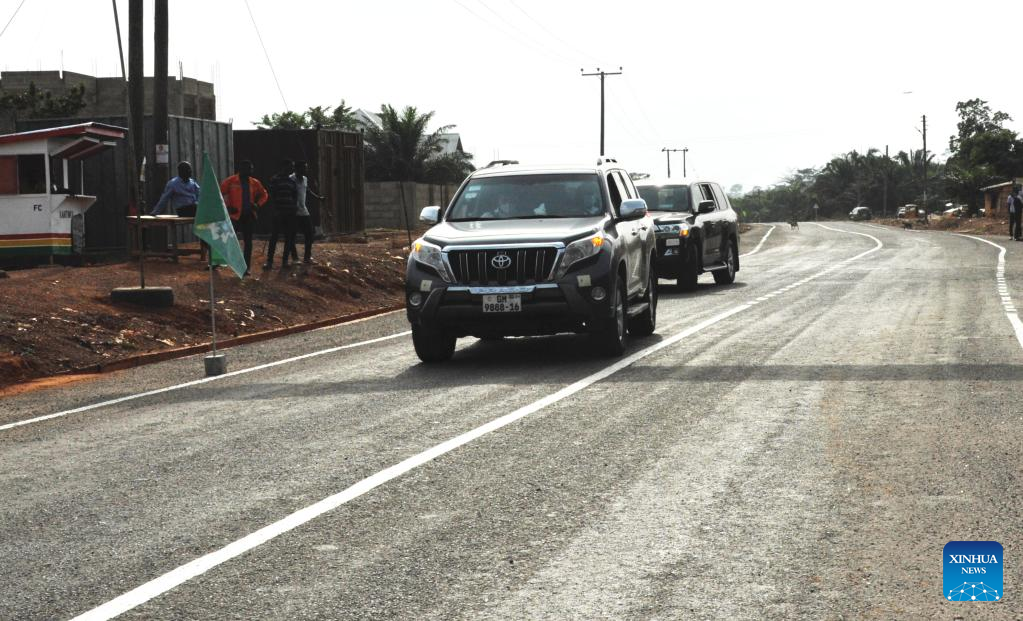
Chinese companies have also participated in road construction, energy projects, education infrastructure and other public development initiatives.
Sinohydro Corporation Limited, a Chinese construction firm, has undertaken several road projects across Ghana, contributing to the expansion and improvement of the country’s transport infrastructure.
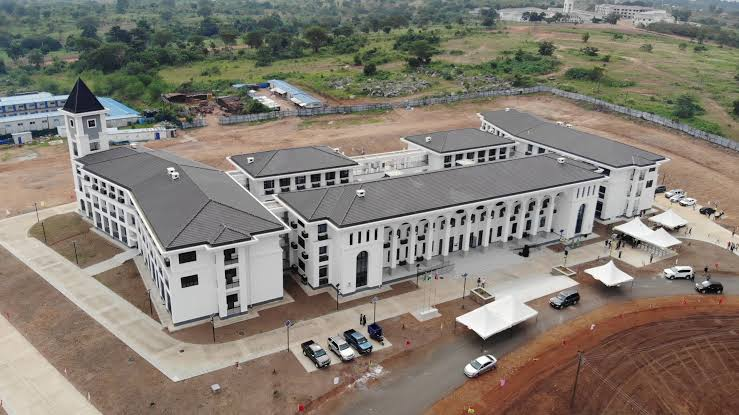
In the education and health sectors, a US$60 million China-aided Phase Two expansion project at the University of Health and Allied Sciences (UHAS) in Ho, Volta Region, was commissioned on July 29, 2024.
Across Africa, similar Chinese-backed investments have been supported through institutions such as the China Export-Import Bank and initiatives including the Belt and Road Initiative, financing projects in railways, ports and industrial parks.
Chinese trade opportunities empowering local businesses
For some Ghanaian entrepreneurs, China’s manufacturing capacity has created new opportunities to access affordable goods and expand businesses.
David Aziago, an award-winning entrepreneur who imports building materials from China's Guangzhou to his warehouse in Afienya, a suburb of Accra, believes the country has made international trade more accessible for African businesses.
“China has made trade flexible and profitable,” he said.
For young entrepreneurs such as Ella Anku, an online trader based in Ho, China has opened new avenues for small-scale businesses.
Ms Anku imports cooking utensils from China and sells them through online platforms, including WhatsApp. She explained that purchasing goods wholesale from China is more affordable than sourcing similar products locally.
According to her, she works with a group of traders who place bulk orders through a contact in China. Within three weeks, the goods arrive at the Tema Port of Ghana, where they are cleared before being introduced into the Ghanaian market.
She described the process as flexible and business-friendly, adding that her ambition is to expand her import business by introducing more products from China.
Emmanuel Tetteh, a young graduate who is studying the Chinese language in Accra, said he has seen the need to study Chinese after his first degree from Winneba. He aspires to be an entrepreneur, and for him, learning the language is the first step.
The future measure of the relationship may not only be found in the volume of goods crossing borders, but in the industries created, skills developed and opportunities generated within Ghana.
For Ghana, the challenge is clear, leveraging its partnership with China to move beyond trade dependency towards a future defined by industrialisation, innovation and shared prosperity.
Latest Stories
-
Walter Mosley visits W.E.B. Du Bois Centre in Accra: A New York Secretary’s homecoming story on where Du Bois spent his final years.
2 hours -
MTN set to deploy 5G services after winning spectrum licenses worth US$202m
4 hours -
NPP national elections: 3,000–4,000 police to handle security, traffic in Kumasi – Karbo
6 hours -
Atta Akyea fumes as Manhyia MP is to spend another night in EOCO custody
7 hours -
SSNIT says La Beach clearance was to protect hotel investments, beaches to remain public
8 hours -
APSU congratulates St Augustine’s College after back-to-back National Investment Quiz wins
8 hours -
Renewed flood intervention at Mallam Junction raises hopes among residents, businesses
8 hours -
St Augustine’s College retain National Investment Quiz title after nail-biting grand finale
9 hours -
Education infrastructure investment will drive Banda’s development – Ahmed Ibrahim
9 hours -
Teacher unions strike: Gov’t presents fresh proposals as talks end inconclusively
9 hours -
51,000 teachers’ promotion arrears to be validated for October payment – Education Minister
10 hours -
Kwabena Boamah appointed Board Chair for Impact Investing Ghana
10 hours -
Striking teacher unions to meet Fair Wages and Salaries Commission on October 6
10 hours -
EOCO working with AG to arraign Nana Baffour Awuah before weekend court
10 hours -
Duraplast reassures customers after fire, announces October 5 reopening
10 hours