

Audio By Carbonatix
Ghana has recorded the most severe decline in environmental sustainability across Africa over the past decade, according to the 2024 Ibrahim Index of African Governance (IIAG) report.
The report, which assesses governance performance across African countries on a ten-year scale, ranks countries based on their scores out of 100, with a focus on both the direction and pace of governance changes.
The Sustainable Environment sub-category, which measures factors such as Environmental Policy Enforcement, Air Quality, Sustainable Use of Land & Forests, and Biodiversity Protection, revealed significant drops in Ghana’s performance.
In 2014, Ghana scored 41.9 on sustainable land and forest use, a figure that has since dropped to 37.6—indicating a 4.3-point decline.
Land and water biodiversity protection showed an even steeper drop from 37 points in 2014 to 24 points in 2023, marking a 12.1-point decrease.

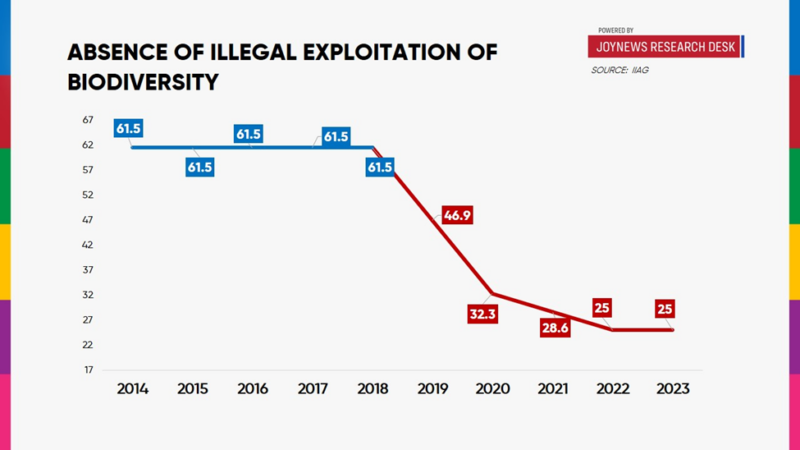
An additional indicator, Absence of Illegal Exploitation of Biodiversity, revealed a concerning decline in Ghana’s score, from 61.5 in 2014 to 25.0 in 2023—a 59.35% reduction over the decade.
“The country’s worst-ranked indicators are Sustainable Use of Land & Forests (50th) and Land & Water Biodiversity Protection (44th), leading Ghana to register the largest decline in the Sustainable Environment sub-category across the continent (-2.5 points),” the report stated.
Currently, Ghana ranks 39th out of 54 African countries in sustainable environment, with a score of -2.5 points, in stark contrast to neighboring Togo, which ranks 12th with a leading score of 20 points on the continent.

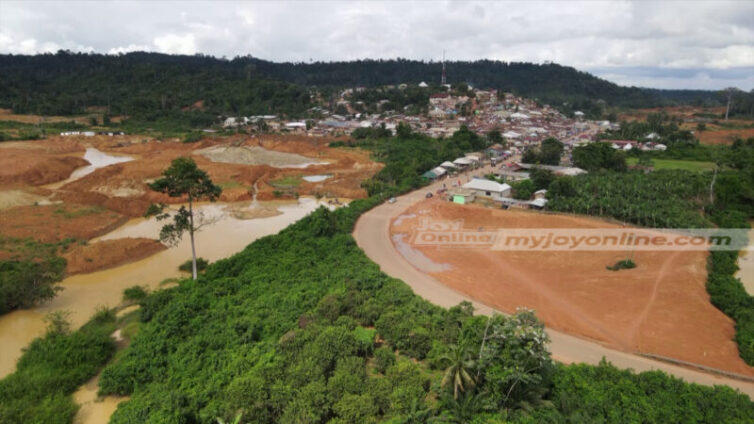
This report was published amid rising public concerns over the detrimental effects of illegal mining, or “galamsey,” on Ghana’s natural resources.
Polluted rivers, deforestation, and loss of potable water have prompted youth groups, media, labour unions, and religious organisations to rally against illegal mining activities.
Demonstrations have taken place in Accra, calling on the government to take stronger action, and labor unions have held strikes to amplify these demands.
In response, the government has deployed military and police forces to illegal mining sites, seizing equipment and arresting offenders.
Read also: Emotional vigil climaxes 3-day anti-galamsey protest as demand to #FreeTheCitizens intensifies
Parliament is also expected to address demands from recent protests to repeal the Environmental Protection (Mining in Forest Reserves) Regulation 2022 (L.I. 2462).
Ghana’s declining rank and low scores underscore the urgent need for decisive actions to tackle the illegal mining crisis and restore the nation’s environmental sustainability.
Meanwhile, President Akufo-Addo has reaffirmed his commitment to end the menace.
Latest Stories
-
Moody’s maintains Ghana’s rating at Caa1, revises outlook to positive
6 minutes -
Zambia elevates tourism education to national priority as President Hichilema backs continental summit
55 minutes -
Activa promotes credit insurance to boost SME export growth
56 minutes -
ILTM Africa 2026 opens doors to inbound and outbound luxury travel in Cape Town
1 hour -
“BP Soul Travel and Tours scored the highest marks” – Sports Minister Kofi Adams endorses agency for World Cup travel
1 hour -
‘At the age of 12, I was teaching people and collecting money from them’ – Forty Under 40 Awards
2 hours -
I broke my virginity at the age of 26 after university – Richard Abbey Jnr.
3 hours -
Sacked for fees, saved by faith: The untold story of Forty Under 40 Awards founder Richard Abbey Jnr
4 hours -
GCB Bank surges GH¢0.45, ETI gains GH¢0.06 as GSE ends week higher
4 hours -
Two teens jailed 55 years for robbery
5 hours -
UDS demands apology for MPhil student wrongly branded as Tamale robber
5 hours -
“We don’t sell fish!” – Tema Shipyard CEO hits back over dead fish discovery
6 hours -
Sam George defends anti-LGBTQ+ Bill as ‘national priority’ amid debate over gov’t focus
7 hours -
Artemis II astronauts safely back on Earth after trip around moon
7 hours -
Sam George unveils massive 1,150-cell site rollout to end network woes
7 hours