

Audio By Carbonatix
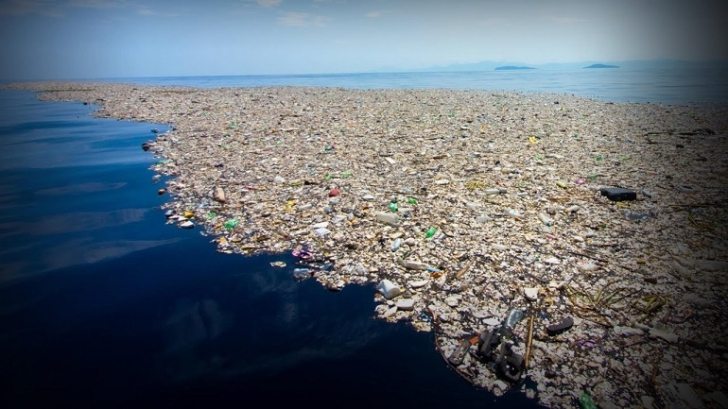
Leading research institutes have sounded a clarion call for a cohesive national strategy to tackle Ghana’s escalating plastic pollution crisis, which is severely damaging marine ecosystems and livelihoods.
The Centre for Environmental Management and Sustainable Energy (CEMSE) and the Institute of Statistical, Social and Economic Research (ISSER) hosted a pivotal stakeholder engagement on September 3, 2025, at the University of Ghana, Legon, under the theme “Understanding the Challenges and Policy Dynamics on Plastic Pollution and Marine Litter Management in Ghana.”
In an exclusive interview on the sidelines of the engagement, the Executive Director of CEMSE, Benjamin Nsiah, outlined the alarming situation and the intended path forward.
“In recent times, we realized that plastic pollution is becoming very hazardous to our environment, especially our marine ecosystem, and this is causing certain disadvantages to livelihoods and also causing certain havoc within the environmental space, especially flooding and other areas,” he stated.
Mr. Nsiah lamented the lack of substantial discourse on the issue “within the policy level, within the advocacy level, and also within the environment space or civil society space.”
He revealed that the engagement was a first step to “identify the major challenges within the space and also prefer appropriate solutions to this particular problem once and for all.”
A key outcome of the dialogue will be a comprehensive report to be presented to the Ministry of Environment, Science, and Technology and the Ministry of Energy and Green Transition by October.
“We are doing so because we think that we can also, in the future, convert this waste into energy. And that also informs using one stone to kill two birds,” Mr. Nsiah explained, highlighting the potential for job creation in the waste collection value chain and promoting sustainable cities.
A central policy proposal involves using fiscal measures to change consumer behaviour. “We think that plastic is very cheap in Ghana. And because it's cheap, everyone gets it at zero cost, and so people just give it anyhow,” he noted. “So we can use a fiscal policy to also address… if you make plastic very expensive, it can become a single-use thing whereby at any time we don't even get it free… it will change behavior.”
Echoing the need for a strategic approach, he emphasised the necessity of a clear roadmap over an outright ban.
“It is important to not just talk about banning, but to talk about a way of ensuring that if that material is in the system, it is controlled so that it does not cause any pollution,” the expert advised.
Mr. Nsiah advocated for a phased transition: “So gradually we phase out plastic so it should be a phasing-out process… give a time frame to phase it out and bring in biodegradable, you know, materials into the system… And I think when we use such language, it gives more confidence, which means it's a process that we are going to go through to get there.”
Professor Simon Bawakyillenuo, Head of the Social Division at ISSER, provided a stark assessment of the current state of Ghana’s waters.
“Statistically, we really don't have enough information yet. We can see anecdotally that the water bodies are no longer like what we need,” he said. “Fishermen are actually now catching… plastics in their nets, rather than fish? And they are not only that, but they also have very low fish stocks. And so it's really something that is an alarming situation.”
Prof. Bawakyillenuo also called for policy consistency across political administrations, criticising the reversal of effective policies for political gain.
“For me, governance is in continuum… what the citizens of Ghana actually need is the very good sort of policies and laws that are in place by one regime and another one can continue with,” he argued. “You don't need to reverse it to score a point, but just continue and make sure that you can even show the evidence of how you have sustained that policy.”
The consensus among stakeholders is that Ghana requires a multi-faceted strategy combining economic incentives, command-and-control measures, and a clear, phased roadmap to replace conventional plastics with biodegradable alternatives, all while developing the capacity to convert existing waste into energy.
The findings from the engagement are expected to critically inform the nation’s approach to overcoming this environmental emergency.
Latest Stories
-
80–90% of gold purchased and exported is now refined in Ghana– Sammy Gyamfi
12 minutes -
Dichemso M/A teachers go house-to-house to get absent pupils back to class after strike suspension
15 minutes -
Meet Dr Hazel and Nhyira: Mother and daughter called to the Ghana Bar
18 minutes -
Black Star Fashion Week: Can Ghana turn the runway into a tourism attraction?
19 minutes -
Ghana sends 61 health workers to Grenada under Labour Export Programme
31 minutes -
Central banks should avoid reacting too strongly to headline inflation – IMF
37 minutes -
Kumasi: One injured, shops destroyed in Atasemanso fire in Kumasi
50 minutes -
Global economy proving resilient, growth projected at 3.1% in 2026 – IMF
54 minutes -
NDC targets all 6 parliamentary seats in Ahafo Region for 2028
58 minutes -
Ghana targets thousands of overseas nursing jobs under Labour Export Programme
60 minutes -
Pius Hadzide explains why Sports Ministry always attracts scandals
1 hour -
APL says GoldBod terminated US$1bn Goldstream deal over failure to meet obligations
1 hour -
Daily Insight for CEOs: Making better decisions under pressure
1 hour -
Weta rice farmers seek urgent support after floods destroy crops
1 hour -
Mahama commits GH¢200m in 2027 Budget to complete Police Hospital expansion
1 hour