

Audio By Carbonatix
A researcher with the Kumasi Centre for Collaborative Research (KCCR) has defended the claim by the Ghana Health Service (GHS) that the country has reached its peak of Covid-19 infections.
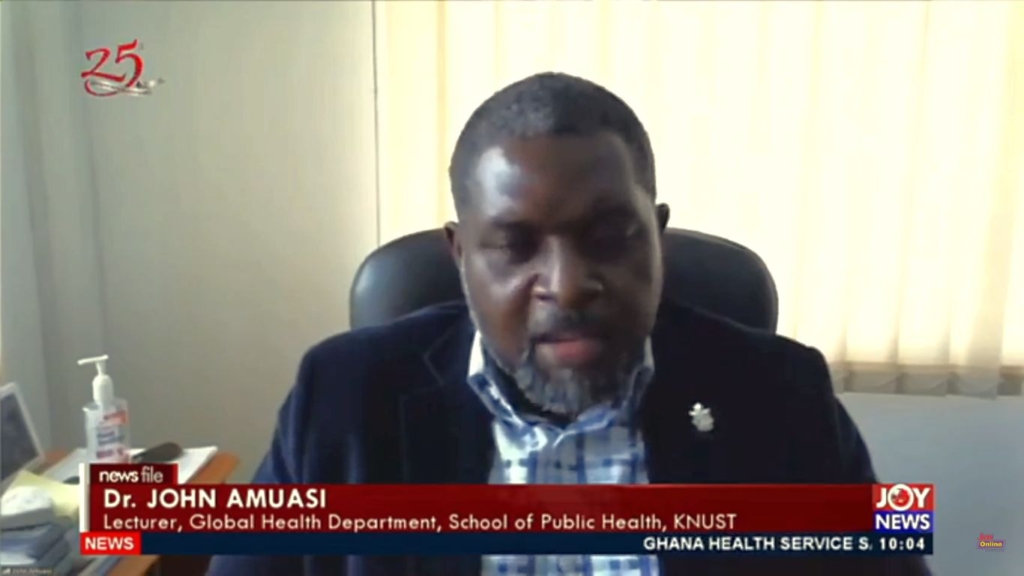
Dr John Amuasi explained that the pronouncement is accurate since it is sourced from the data of targeted surveillance which are available to them from contact tracing.
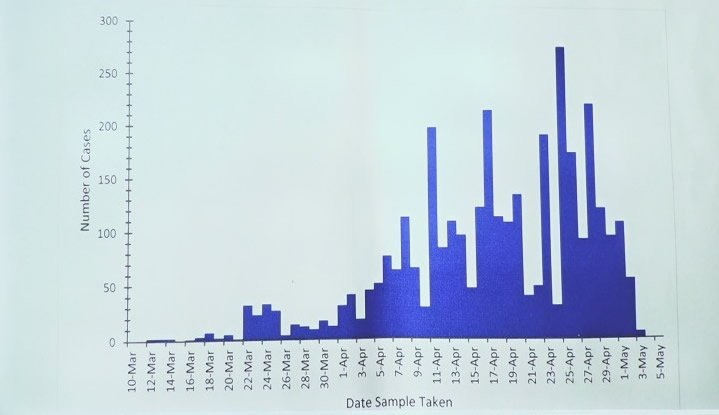
“What has been provided is a certain type of peak but it is only a peak of the picture from our expanded surveillance.
"We are not measuring the spread of the disease, therefore, we cannot tell what the peak of the spread is and where we will be going from there,” he told host Samson Lardy Anyenini on Newsfile, Saturday.
According to him, there are different types of peaks which depend on that actual rate of spread of coronavirus is not being measured in the country.
The researcher's comments come after the Health Service assured the public that the country’s cases of coronavirus are at their peak.
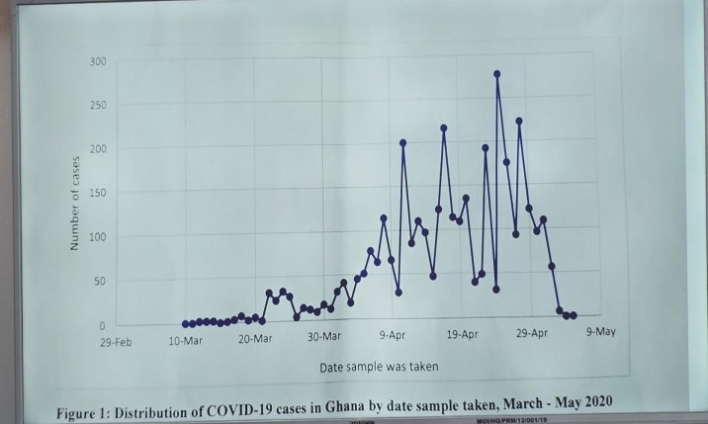
Meanwhile, he stated that the most reliable graph that can back assertions of a possible decline in infections must be in relation to the rate of spread of the disease which is not present in the graph from the GHS.
“When that is sustained, then eventually you have a reproductive number (R nought) dropping below one. That is when you would eventually have a decline,” Dr Amuasi said on Joy News current affairs analysis show.”
He commended the mode of testing adopted by the GHS noting that it is bound to reveal a lot of positive cases which is not the case in other countries.
However, the researcher advised that the testing must be ramped up to ensure more people who are exposed to the virus are detected soon to avoid ‘playing catch up’.
“It is the best approach in the interim but moving forward, we need to change gears and we need to change fast because we have limited testing capacity.”
“The fact that we are seeing much less deaths in Ghana than even our neighbouring countries prove that we are doing something right,” he stated.
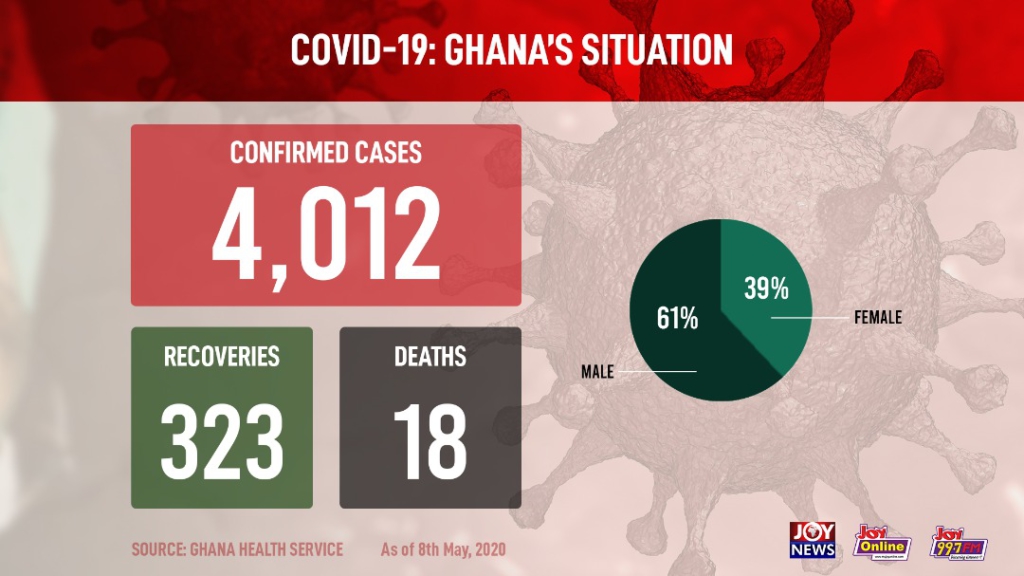
He appealed to the general public not to concentrate so much on the rising number of cases as it is a good sign since they are results from surveillance and not the spread of Covid-19.
“This is where as an academic am not uncomfortable because we are in fact just showing one part of the picture which is true but we do not know what the other side of the picture looks like. The painful thing is time will always reveal the true picture,” he lamented.
The claims by the GHS has been countered strongly by some scientists who have
Latest Stories
-
GAEC must retain nuclear scientists for Ghana’s nuclear ambitions – Minister
19 minutes -
Man reportedly mistaken for game and shot by hunter dead in forest
21 minutes -
19-year-old mason jailed 15 years for defiling seven-year-old pupil
26 minutes -
Ghana’s banking sector assets rise 20.47% to GH¢500.2bn – BoG Governor
30 minutes -
22 injured as Sprinter bus overturns at Sege after tyre burst
32 minutes -
UN housing expert urges Ghana to strengthen Rent Control Department amid housing affordability concerns
40 minutes -
Delta-BCI partnership reaches 166,000 people with breast cancer education
49 minutes -
Power restoration fault suspected in Kumasi Central Market fire
6 hours -
The 7-foot giant of Ngleshie Amanfro: Seven-foot Ghanaian Ephraim Saawa dreams of joining the national basketball team
7 hours -
Government promises support for Kumasi Central Market fire victims
7 hours -
Vibes The Movie: Big Ghun’s Ghanaian film earns five nominations at 2026 REFFA
7 hours -
‘I’m a fulfilled man’—Justice Korbieh on missing out on Supreme Court despite two nominations
7 hours -
MamaCare CEO warns unresolved conflicts among health workers could undermine maternal and neonatal care
8 hours -
Health professionals urged to translate medical knowledge into practice to save mothers
8 hours -
Retired judge Justice Francis Korbieh charges 1,568 new lawyers to uphold integrity
9 hours