

Audio By Carbonatix
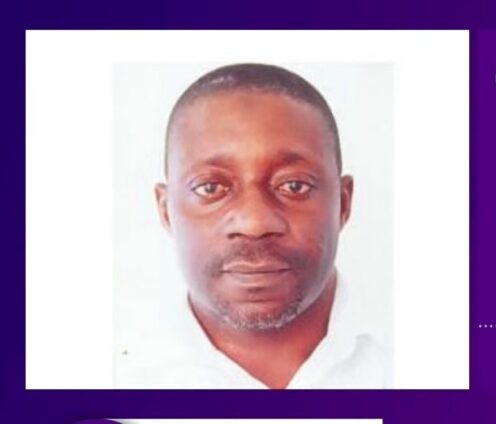
Public health engineering expert and Chief Executive Officer of Waste Care Associates, Lukman Salifu, says Ghana still needs landfill sites, even as the country adopts modern technologies to improve waste management.
He said the choice of waste treatment facilities should reflect local conditions, including the availability of land and the distances involved in transporting refuse.
Speaking in an interview on JoyFM's SMS on Monday, 5 October, Mr Salifu was responding to Local Government Minister Mahama Ayarigah’s call for metropolitan, municipal and district assemblies to allocate land for waste transfer stations and landfill development.
Asked whether landfill sites remained necessary in present-day Ghana, he said: “We need landfills, and we also need improved and modern technologies like waste-to-energy.”
Mr Salifu explained that landfills could remain an option where suitable land was available, and transportation distances made their use feasible. For Accra, however, he advocated greater attention to energy generation from waste.
“I think that for Accra, we should begin to look at waste-to-energy,” he said.
He also backed the proposed separation of household waste into organic and inorganic streams through a two-bin system, saying nearly 60 per cent of solid waste was organic.
According to him, separating waste at source could support different treatment processes and make it easier to recover energy.
“If we have a two-bin strategy and we can separate … two-bin streams are very suited to that,” he said.
He explained that organic waste could undergo biomethanation to produce biogas, while inorganic waste could be directed towards incineration for energy generation.
On concerns about the availability of land for waste transfer facilities, Mr Salifu urged assemblies to audit sites originally designated for sanitation purposes in community layouts.
“What those assemblies need to do is to do a great infrastructure audit,” he said.
The assessment, he explained, should establish whether the sites remained available, had been encroached upon or could be legally recovered. Where recovery was impossible, assemblies would need to consider alternatives.
Mr Salifu also distinguished between communal container transfer stations and larger facilities designed for onward transportation of waste.
He said communal sites could allow some sorting, while larger transfer stations enabled smaller collection vehicles to discharge waste into bigger vehicles for transportation to landfill sites.
He described the minister’s proposal as a return to an established community planning approach that could provide a foundation for improving waste management.
“I think we lost our way a bit, but it’s good to go back and build from the ground,” he said.
Latest Stories
-
Meet Sethina Edem Sunu, the healthcare professional eyeing the NDC UK & Ireland deputy organiser role
4 minutes -
The myth of ‘sophisticated customer experience’ in the digital age
8 minutes -
What happened to lands reserved for sanitary sites? -WasteCare CEO calls for audit
9 minutes -
Manasseh Writes: The shift in the NPP
24 minutes -
The price of a seat: Financial barriers and the structural quality of Ghana’s Parliament
30 minutes -
Government targets October 16 for first tranche of teacher arrears – Haruna Iddrisu
34 minutes -
Daily Insight for CEOs: The CEO’s role in driving innovation
38 minutes -
Audit existing sanitary sites to address waste management land shortages – WasteCare CEO urges assemblies
40 minutes -
Two-bin household waste system could support waste-to-energy in Ghana – Waste Care Associates CEO
46 minutes -
Dealing with political and social media insults
48 minutes -
Essi Donkor urges stronger support for girls’ education, announces GH¢2,000 BECE reward
48 minutes -
Ghana still needs landfills but Accra should prioritise waste-to-energy – Waste Care Associates CEO
56 minutes -
Godwin Mahama declares bid for NDC Greater Accra Regional Secretary
60 minutes -
Bawumia unveils NPP plan to scout parliamentary candidates capable of winning parliamentary seats
1 hour -
NPP Chairmanship race: How APL’s survey made a near-perfect prediction
1 hour