

Audio By Carbonatix
Ghana's fertility rate is above the level needed to move from low-income to high-income status and the strain is already visible in schools, hospitals and roads, a Reproductive Health Specialist, Dr Godfred Bonnah Nkansah, has warned.
Citing the 2022 Ghana Demographic and Health Survey, he said Ghana’s current fertility rate, which was 3.9, meant that the average woman was giving birth to about four children.
He said evidence showed countries moving from low to high income do best when fertility fell between 2.1 and 2.8 children per woman, which was a level at which families could invest enough in each child for them to become human capital to the nation.
"At our current 3.9, we are about 1.1 more than where we are supposed to be. That calls for greater efforts to provide reproductive health education and services to both men and women,” he added.
Dr Nkansah said this at a one-day training for journalists focused on Sexual and Reproductive Health and Rights (SRHR) and responsible reporting organised by the Alliance for Reproductive Health Rights (ARHR).
The training formed part of the ARHR’s effort to strengthen informed public conversations on SRHR and support accurate, ethical and evidence-based media reporting.
It provided journalists the opportunity to deepen their understanding of key SRHR issues and emerging misinformation and narratives around SRHR and gender.
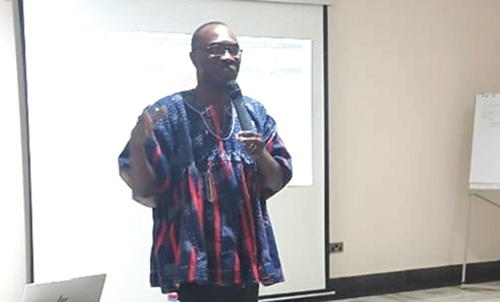
Fertility
Fertility rate is the number of children a woman will have in her lifetime. The global average is 2.4 children per woman. In sub-Saharan Africa, it is 4.6 children per woman, which implies that the African woman is giving birth to at least five children.
Dr Nkansah said the consequences of Ghana’s current fertility rate were far-reaching and already visible, pointing out that educational infrastructure was under immense pressure, as the investments made were struggling to contain the numbers.
That, he pointed out, compromises the quality of human capital development in the country.
“If you go to health, our hospitals are always overcrowded. The no-bed syndrome is because we have far more people than our current number of hospitals can contain,” he said.
He said the growing number of the country’s fertility rate also puts pressure on road infrastructure.
Dr Nkansah said without action being taken, poverty would increase, because government would be unable to meet the socio-economic needs of ever-larger numbers of people.
He said the message was not a call for a fixed family size but for people to give birth to a number of children they could comfortably take care of.
A senior media practitioner, Linda Asante-Agyei, urged media practitioners to use their platforms to educate parents on the need to provide sex education to their adolescent children, stressing that sex education was very important.
She also urged them to separate science from the opinions people have about adolescent health and sexual reproduction.
Latest Stories
-
Fiabci-Ghana inaugurated to promote professionalism and global collaboration in real estate sector
27 minutes -
‘No flying in just for matches’ – Kofi Adams sets conditions for next Black Stars coach
30 minutes -
Ghana and BRICS: Strategic opportunity, economic imperative or geopolitical gamble?
36 minutes -
SML vs GRA: Court grants preservation order in dispute over US$500 million investment
36 minutes -
Spotify brings audiobooks to Ghana
39 minutes -
GPL 2026/27: ‘We are the team to beat’ – Medeama boss Tanko ahead of Samartex clash
40 minutes -
Parliamentary Select Committee on Health assesses progress of work on KATH maternity block
47 minutes -
Ghana’s fertility rate too high for development – Reproductive health specialist warns
1 hour -
NLA/KGL Licence Contract: Why Ghana must reform the law to maximise the state’s benefit
1 hour -
Association of Small-Scale Industries empowers trade executives in Bono East with a mentorship programme
1 hour -
AMA evacuates refuse along Graphic Road, warns against indiscriminate dumping
1 hour -
STC interdicts driver over Pokuase overtaking incident
1 hour -
Ekumfi: How $6m EXIM participation built a $53m industrial asset — now poised for a 24-Hour Economy breakthrough
1 hour -
4 arrested, 142 parcels of suspected Indian hemp seized as officers reject GH¢50k bribe
1 hour -
No MMDCE can say they don’t see galamsey – Local Government Ministry
1 hour