

Audio By Carbonatix
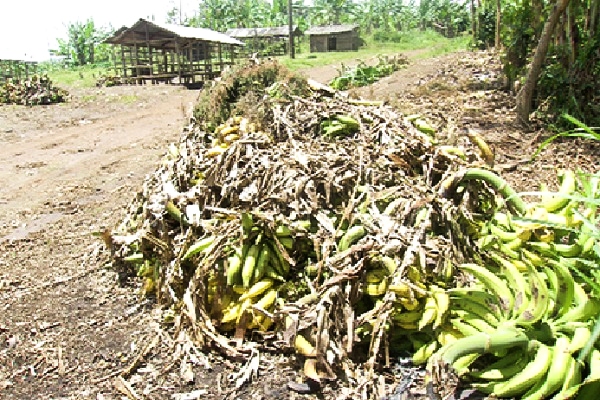
Ghana’s persistent post-harvest losses have reached crisis levels, with the nation losing enough food every year to feed the entire Ashanti Region for more than eighteen months, Daniel Fahene Acquaye, an agribusiness expert and CEO of Agri-Impact Limited, has said.
The revelation came during the inaugural Regional Agribusiness Dialogue, held in Kumasi on Friday, October 10, 2025—a meeting that has sparked urgent calls for systemic reform and investment in the nation’s agricultural value chain.
The True Cost of Food Waste
Mr. Acquaye painted a stark picture of the current state of Ghana’s food system, quantifying the annual post-harvest loss at between $1.9 and $2 billion.
For context, the Ashanti Region, Ghana’s most populous area with over 5.4 million residents (2021 Census), consumes approximately GH₵14 billion (about $1.2 billion) worth of food and non-alcoholic beverages each year.
“Our post-harvest losses per annum are estimated between $1.9 and $2 billion. I recently calculated that the value of food and non-alcoholic beverages consumed in the Ashanti Region alone is GH₵14 billion, about $1.2 billion, depending on the exchange rate you use.
This means the food we lose every year could feed the entire Ashanti Region for more than one and a half years,” Mr. Acquaye told participants, drawing gasps from the audience.
The scale of waste is underscored by figures from the Ministry of Food and Agriculture, which estimates that up to 30% of grains and 50% of fruits and vegetables harvested annually never reach consumers due to inadequate storage, poor transportation, and lack of processing facilities.
An Unsustainable Import Bill
Despite these losses, Ghana continues to import significant quantities of food staples. According to the Ghana Statistical Service, the country’s food import bill hovered at $2 billion in 2024, a figure that has remained stubbornly high for the past five years. Imports of rice, poultry, wheat, and processed foods comprise the bulk of this expenditure, draining foreign exchange reserves and undermining local producers.
Mr. Acquaye was unequivocal in his assessment of the situation:
“Ghana’s continued importation of food despite these losses is unsustainable,” he cautioned.
A Call for Dedicated Agricultural Financing
For years, stakeholders have advocated for the establishment of a dedicated AgriFund to finance critical investments in storage, processing, irrigation, and logistics—areas identified as bottlenecks in the agricultural value chain. Mr. Acquaye renewed this call, urging the government and private sector to show greater ambition.
“If we say agriculture will transform our economy, then why don’t we have an AgriFund? We must reset for transformative agri-investments,” he challenged.
Currently, agricultural lending in Ghana remains low, accounting for less than 5% of total bank credit, far below the African average, according to the Bank of Ghana.
Toward a National Agribusiness Policy
The Kumasi dialogue was the first in a series of regional consultations organized by the Ministry of Trade, Agribusiness and Industry (MoTAI), in partnership with Agri-Impact Limited, Mastercard Foundation, PwC, Development Bank Ghana, and other stakeholders. The goal: to gather grassroots input for Ghana’s first-ever National Agribusiness Policy, which aims to harmonize fragmented initiatives and drive sector-wide growth.
Kwame Ntim, Head of Agribusiness at MoTAI, emphasized the importance of coordinated policy:
“The agribusiness sector has operated in a fragmented manner with no single policy guiding it. These consultations will help us develop a strategic framework for coordinated growth,” he explained.
Industry Collaboration and Ownership
Industry leaders echoed calls for greater collaboration and private sector ownership. Hayfron Aboagye, a Partner at PwC Ghana, highlighted the paradox of Ghana’s natural wealth and prevailing poverty:
“It’s baffling that with our vast arable land, we still consider ourselves poor. Agriculture and agribusiness present both a challenge and an opportunity — one that requires collective effort,” he said.
Ghana boasts over 13 million hectares of arable land, yet only about 7 million hectares are cultivated, according to the Ministry of Food and Agriculture.
A Renewed National Commitment
The Kumasi event follows a high-level National Agribusiness Dialogue convened in Accra in July 2025, attended by President John Dramani Mahama and sector Minister Elizabeth Ofosu-Adjare. That meeting underscored Ghana’s ambition to make agribusiness a key driver of jobs, food security, and prosperity for years to come.
With annual food losses nearly matching the value of the nation’s entire food import bill, experts at the dialogue argued that the time for bold, coordinated action is now.
Latest Stories
-
A source of excellence across generations – Vice President Opoku-Agyemang lauds Mfantsipim
19 minutes -
(Photos) Mfantsipim School launches historic 150th anniversary
42 minutes -
Knights and Ladies of Marshall group backs Catholic Bishops’ stance on anti-LGBTQ+
2 hours -
Bright Simons writes: All the Filla in the Ibrahim Mahama/E&P – Gold Fields Saga
2 hours -
Monetise Idiocy In Ghana
2 hours -
The Ghanaian prophet and the mysterious death of his scottish wife Charmain Speirs
3 hours -
Nearly 400 sentenced in Nigeria for links to militant Islamists
3 hours -
Ghana’s recovery supported by gold strength despite global oil price pressures – Standard Bank Research
3 hours -
Methodist Church hails Mfantsipim@150; calls for “fresh consecration” to excellence
4 hours -
‘Excellence is our inheritance’ – Nana Sam Brew-Butler hails Mfantsipim’s 150-year reign in leadership
4 hours -
Kwaku Azar writes: A-G vs OSP
4 hours -
Mfantsipim–Adisadel rivalry built excellence, not division – Sam Jonah
4 hours -
Vice President launches Mfantsipim’s 150 years of shaping Ghana’s greatest mind
5 hours -
I assure Otumfuo, Mahama will join him to commission KNUST Teaching Hospital by end of this year – Haruna Iddrisu
5 hours -
Barcelona dominate derby to extend La Liga lead
6 hours