

Audio By Carbonatix
The oil and gas industry in Ghana may, in the coming years, record a higher number of local participation.
More Ghanaian students and researchers pursuing Geophysical Sciences and Engineering are set to receive an in-depth technical know-how in oil and gas exploration.
Two geophysical software companies, GeoSoftware and dGB Earth Science, are assisting the Department of Physics, KNUST, to train students and researchers.
Local participation in the oil industry still remains an elusive subject in the government’s spectacle.
Despite the legislative instrument governing the subject, providing locals with the expertise for the industry is a daunting challenge.
Professor Akwesi Acheampong, an Associate Professor of Geophysics at the KNUST, says “considering Ghana’s oil and gas programme, there is a local content where those industries are supposed to employ Ghanaians.
“But these people have to be well trained in order to be able to fit in the industry. The fact that there is local content doesn’t mean anyone can be employed. Employees must be trained”.
Over the past decade, students resort to industrial training prior to their recruitment, a plight the management describes as worrying.
Due to the lack of teaching software, graduates are only equipped with the needed skills by the oil and gas companies.
“If you are to send students somewhere, you are limited. But if we have the software here and trained them here, there will be no limit,” Prof. Acheampong added.
With the three software donated by the dGB Earth Science and GeoSoftware companies, students will be trained comprehensively for the oil and gas industry.
The software would also aid researchers to expand the knowledge base in petroleum exploration in Ghana.
Dr. Cyril Boateng is a lecturer at the department of Physics. He explained the rationale for the gesture.
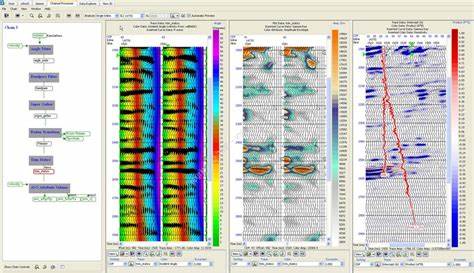
“The dGB Earth Science donated OpendTect seismic interpretation software for data interpretation. GeoSoftware is donating, HampsonRussell and PowerLog for seismic interpretation and reservoir characterization.
“Usually when a student graduates as a geophysicist, it takes them a year or two to be trained in the industry. But with this software available at the school, it will cut that experience,” he said.
The softwares are collectively worth $200,000.
Latest Stories
-
Ghana explores centre of excellence for hearing, communication and cochlear implant care
1 hour -
Schizophrenia-related disorders lead mental health cases recorded in Ghana
1 hour -
Dutch authorities enlist Ghana in hunt for fugitive drug lord Bolle Jos
2 hours -
Ghana housing finance conference adopts communiqué to improve affordable housing access
6 hours -
Special Initiatives Minister urges Wa Technical Institute to enrol more girls as EU-backed solar training lab opens
7 hours -
In the matter of my first year at the Bar
7 hours -
ActionAid Ghana calls for an end to child marriage, greater investment in girls’ rights
7 hours -
Newsfile to tackle World Cup visa scandal, beach demolitions, education strikes, BRICS bid
7 hours -
UK-Ghana Trade & Investment Summit: Trade Resource Centre to help businesses maximise UK-Ghana trade opportunities
8 hours -
Embassy of Denmark celebrates World Maritime Day
8 hours -
Linking LEAP to productive inclusion could cut extreme poverty by 2030 – UNICEF
9 hours -
Trade Ministry backs use of creative arts to rehabilitate prison inmates
9 hours -
Negotiations with government to continue despite strike suspension – GNAT
9 hours -
‘Ghana cannot afford to waste public resources; every cedi has a job’ – Ato Forson
9 hours -
Ghana expects economic boost as World Assemblies of God Congress brings 10,000 delegates to Accra
9 hours