

Audio By Carbonatix
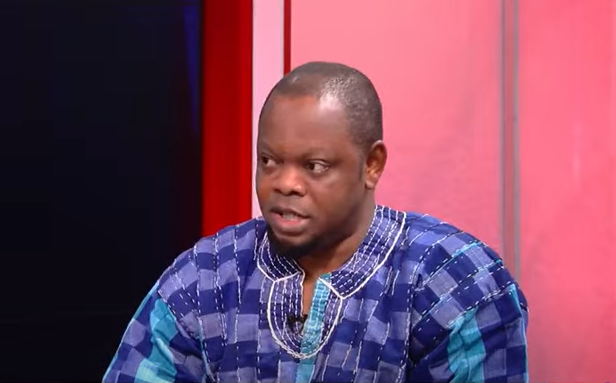
The General Legal Council (GLC) will soon be stripped of its role in legal education and focus solely on maintaining professional standards at the Bar, according to Deputy Attorney General, Dr Justice Srem Sai.
He disclosed this on JoyNews’ PM Express on Wednesday, describing the planned reform as a long-overdue correction of a stop-gap system that has outlived its purpose.
“This is not the scrapping of the GLC,” Dr Srem Sai clarified. “The Council will remain, but its focus will change. It will now deal only with maintaining professional standards once someone has been called to the Bar.”
He explained that the government is introducing a Legal Education Bill that will formally separate the administration of legal education from professional regulation.
“Currently, the GLC handles legal education, calls to the Bar, and post-call standards. We are going to decouple that,” he said.
Under the new arrangement, a different institution will be responsible for legal education and calling lawyers to the Bar.
“Once you are called, the GLC will take over. That’s where their role starts — not before.”
The Deputy Attorney General dismissed concerns that the change would make the GLC redundant.
“Some people think this means the GLC is being scrapped. That’s not true. When the new structure is rolled out, they will see just how relevant the GLC still is,” he said.
Dr Srem Sai traced the origins of the current setup to Ghana’s early post-independence period.
“During Nkrumah’s time, we didn’t have enough lawyers. So the GLC had to do everything — education, professional standards, even regulatory work for judges. It was a stop-gap measure,” he explained.
He said it was never intended to be permanent.
“That was 1960. Now we’re in 2024. Sixty-four years later, and we are still using the same structure. It’s not sustainable. This bill simply corrects that.”
The Deputy Attorney General said the reform will create clarity and allow both education and professional regulation to thrive.
“Proper legal education administration needs its own dedicated institution. The same applies to professional standards. That’s what this reform is about — clarity, efficiency, and structure.”
Latest Stories
-
Daily Insight for CEOs: The CEO as Chief Decision Maker
56 seconds -
Burnham had formal meeting with Man City chair while mayor
7 minutes -
Is Ghana producing too many lawyers? What is the best lawyer-to-citizen ratio?
10 minutes -
NDC sinking Ghana’s democracy with Emelia Agbenyo’s appointment – Miracles Aboagye
19 minutes -
Seedorf back in football as Corinthians head coach
32 minutes -
Hincapié and Zubimendi injured in post-match training session
41 minutes -
Fridges in French supermarkets hit by cyberattack
52 minutes -
Qantas flight grounded after bedbug outbreak
1 hour -
Reality Zone with Vicky Wireko: International Day of the Girl, shaping today’s girl for tomorrow’s future – ZONTA Clubs lead the way
1 hour -
Global health must be led by countries, not designed for them – Mintah Akandoh
2 hours -
Mahama honoured at 2026 World Health Summit in Berlin for global health leadership
2 hours -
Breast cancer is not a death sentence – Besease Kontire Obaapanin, Magmina Foundation lead awareness campaign
2 hours -
EcoBank invests in digital education of 4 Garisson School to mark 40 years in Africa
3 hours -
AGI urges investment in skills and raw materials to strengthen local manufacturing
3 hours -
GPL 2026/27: ‘We have to rectify our mistakes’ – Boadu reacts to Aduana FC defeat
3 hours