

Audio By Carbonatix
Following a strong rebound in 2021, the global economy is entering a pronounced slowdown amid fresh threats from Covid-19 variants and a rise in inflation, debt, and income inequality that could endanger the recovery in emerging and developing economies, according to the World Bank’s latest Global Economic Prospects report.
Global growth is expected to decelerate markedly from 5.5% in 2021 to 4.1% in 2022 and 3.2% in 2023 as pent-up demand dissipates and as fiscal and monetary support is unwound across the world.
The rapid spread of the Omicron variant indicates that the pandemic will likely continue to disrupt economic activity in the near term. In addition, a notable deceleration in major economies - including the United States and China - will weigh on external demand in emerging and developing economies.
This is coming at a time when governments in many developing economies lack the policy space to support activity if needed, new COVID-19 outbreaks, persistent supply-chain bottlenecks and inflationary pressures, and elevated financial vulnerabilities in large swaths of the world could increase the risk of a hard landing.
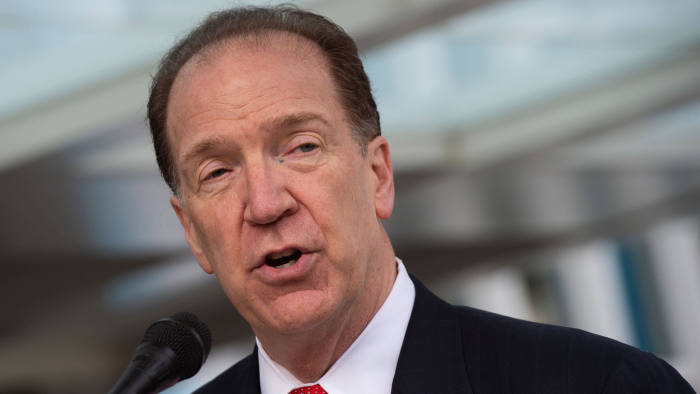
“The world economy is simultaneously facing COVID-19, inflation, and policy uncertainty, with government spending and monetary policies in uncharted territory. Rising inequality and security challenges are particularly harmful for developing countries,” said World Bank Group President David Malpass.
“Putting more countries on a favorable growth path requires concerted international action and a comprehensive set of national policy responses”, he added.
The slowdown will coincide with a widening divergence in growth rates between advanced economies and emerging and developing economies. Growth in advanced economies is expected to decline from 5% in 2021 to 3.8% in 2022 and 2.3% in 2023 - a pace that, while moderating, will be sufficient to restore output and investment to their pre-pandemic trend in these economies.
In emerging and developing economies, however, growth is expected to drop from 6.3% in 2021 to 4.6% in 2022 and 4.4% in 2023.
By 2023, all advanced economies will have achieved a full output recovery; yet output in emerging and developing economies will remain 4% below its pre-pandemic trend. For many vulnerable economies, the setback is even larger: output of fragile and conflict-affected economies will be 7.5% below its pre-pandemic trend, and output of small island states will be 8.5% below.
Meanwhile, rising inflation - which hits low-income workers particularly hard-is constraining monetary policy. Globally and in advanced economies, inflation is running at the highest rates since 2008.
In emerging market and developing economies, it has reached its highest rate since 2011. Many emerging and developing economies are withdrawing policy support to contain inflationary pressures—well before the recovery is complete.
The latest Global Economic Prospects report features analytical sections that provide fresh insights into three emerging obstacles to a durable recovery in developing economies.
The first, on debt, compares the latest international initiative to tackle unsustainable debt in developing economies-the G20 Common Framework—with previous coordinated initiatives to facilitate debt relief. Noting that Covid-19 pushed total global debt to the highest level in half a century even as the creditors’ landscape became increasingly complex, it finds that future coordinated debt relief initiatives will face higher hurdles to success. Applying lessons from the past restructurings to the G20 Common Framework can increase its effectiveness and avoid the shortcomings faced by earlier initiatives.
“The choices policymakers make in the next few years will decide the course of the next decade,” said Mari Pangestu, the World Bank’s Managing Director for Development Policy and Partnerships.
“The immediate priority should be to ensure that vaccines are deployed more widely and equitably so the pandemic can be brought under control. But tackling reversals in development progress such as rising inequality will require sustained support. In a time of high debt, global cooperation will be essential to help expand the financial resources of developing economies so they can achieve green, resilient, and inclusive development.”
The second analytical section examines the implications of boom-and-bust cycles of commodity prices for emerging market and developing economies, most of which are heavily dependent on commodity exports. It finds that these cycles were particularly intense in the past two years, when commodity prices collapsed with the arrival of Covid-19 and then surged, in some cases to all time-highs last year.
The third analytical section explores Covid-19’s impact on global inequality. It finds that the pandemic has raised global income inequality, partly reversing the decline that was achieved over the previous two decades.
Ayhan Kose, Director of the World Bank’s Prospects Group, said: “in light of the projected slowdown in output and investment growth, limited policy space, and substantial risks clouding the outlook, emerging and developing economies will need to carefully calibrate fiscal and monetary policies. They also need to undertake reforms to erase the scars of the pandemic. These reforms should be designed to improve investment and human capital, reverse income and gender inequality, and cope with challenges of climate change.”
Latest Stories
-
Gov’t to suspend GH¢1 D-Levy on diesel for October and November
18 minutes -
Fire destroys belongings in Akweteyman apartment
48 minutes -
Baffour Awuah to turn himself in to EOCO today – JoyNews sources
54 minutes -
Government identifies payment discrepancy holding up teachers’ strike resolution
1 hour -
BoG signals no FX intermediation for October as GoldBod plans $1bn support for banks
1 hour -
When share ownership becomes personal: The African mindset of the Dangote IPO
1 hour -
Why MFWA Legal Fund matters to Ghana’s democracy
1 hour -
Fuel prices to rise from October 1; diesel could hit GH¢19.60 – COMAC
1 hour -
Parliament must investigate how 3.9 tonnes of cocaine left Ghana undetected – Samuel Jinapor
1 hour -
Government pledges to pay striking teachers as payment dispute is resolved
2 hours -
Government cannot investigate drug exports under its own watch – Abu Jinapor
2 hours -
Government extends GH¢2 diesel subsidy for two more months
2 hours -
GTEC flags over 100 tertiary institutions as unrecognised
2 hours -
Agric Committee chair commends NAFCO for turnaround from GH¢20m debt to GH¢96m profit
2 hours -
NPP: Judicial office requires judges to surrender some personal freedoms
2 hours