

Audio By Carbonatix
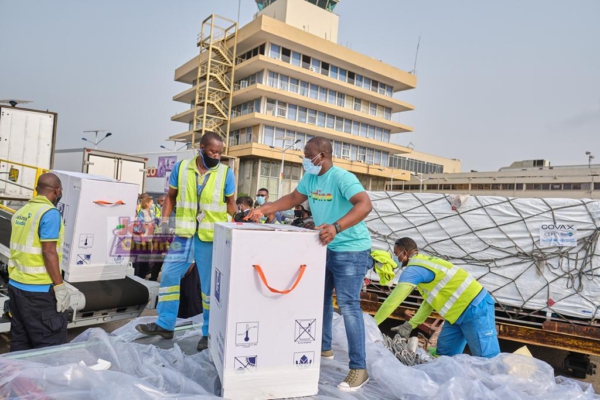
On Wednesday, February 27, 2021, Ghana became the First Nation in the world to receive 600 thousand doses of the AstraZeneca vaccine.
The World Health Organisation's (WHO) global sharing scheme, aims to deliver over 2.3 billion doses by the end of the year, including 1.8 billion to poorer countries at no cost to their governments.
A section of Ghanaians has, however, questioned why Ghana, a middle-income country benefited from a program meant for the world's poorest countries.
Bryan Pearson, who has spent many years editing the Africa Health Journal, a leading medical publication, held the view that Ghana's reputation in effectively managing vaccines in the past might have placed it above other countries.
"The question was asked to John Nkengasong, Africa CDC chief this morning as to why Ghana was chosen first, he said, Well, the truth is, I don't know, but someone has to be first, you know? So it's hard to know what criteria were used".
"I'm sure that COVAX is saying who is ready, not ready? Because the whole process can be a big waste of money if it's not well managed and especially with donations, you want them to go to places that are already well-positioned to manage them, and I think Ghana has a pretty good reputation in vaccine management like polio and no doubt put forward a strong protocol to show that they were ready and able to manage the process."
I suspect they were quite strong in the process, as opposed to tagging Ghana as being a developing country," he added.
GAVI/COVAX programme
The first phase, which is the 600 thousand doses received on February 24, 2021, is under the vaccine alliance, GAVI COVAX program
Before the outbreak of COVID -19' vaccines in Ghana has been free under the vaccine alliance, GAVI.
The alliance has over the years helped vaccinated almost half of the world's children against deadly and debilitating infectious diseases.
Following the outbreak of Covid -19, GAVI formed an alliance called COVAX Facility, a global initiative working on equitable COVID-19 vaccine access to help developing countries, including African nations, acquire vaccines.
To help fund this initiative, countries pledged nearly US$ 1 billion to support equitable access to the COVID-19 vaccine under the GAVI COVAX AMC.
The United Kingdom pledged approximately US$ 640 million.
This commitment includes £1 in matched funding for every US$ 4 committed by others, to an amount up to £250 million.
This is in addition to an earlier US$ 61 million pledged by the UK on June 4, bringing the total contribution to US$ 701 million, while the Canadian government pledged a total amount of US$191 million.
The German government also pledged US$ 120 million at the Global Vaccine Summit as special funds for Gavi to combat COVID-19.
The government of Italy, on the other hand, pledged a total contribution of US$ 102 million while Sweden pledged approximately US$ 12 million.
Phase Two
To complement COVAX efforts, the African Union has secured 670 million vaccine doses for the continent, distributed in 2021 and 2022 as countries secure adequate financing.
The African Export-Import Bank will facilitate payments by providing advance procurement commitment guarantees of up to $2 billion to the COVID vaccine manufacturers on behalf of these countries.
Twenty-six countries have placed orders through this mechanism, and Bryan Pearson said hopefully they would be an announcement in the next seven days on the countries involved.
"These countries will be announced in the next seven days, but that will be costing people because when you look at the price of the vaccines and most of them, you need two shots to be effective. It's a significant cost to the population of 1.3 billion people across Africa.
Unfortunately, COVAX, which was primarily designed to help towards equitable distribution of vaccines in less wealthy countries, was grounded and didn't get the funds it needed to achieve this goal.
After a while, it became evident that this was not coming together as they had hoped, which is when the AU themselves got talking with various people from the world bank and other groups.
Eventually, the African Exim bank scheme came forward to guarantee up to 2 billion dollars upfront funding to secure the orders. Still, then the countries themselves needed to come in to buy".
Phase Three
Phase three of the vaccination process will be funded by the government of Ghana.
The total number of vaccines and cost will depend on how much the country benefits under the first two phases.
Although Ghana expects up to 2.4 million doses under the GAVI COVAX program, the Ghana Health Service says the actual number will depend on market availability.
Latest Stories
-
Total revenue & grants stood at GH¢144.5bn in July 2026, lower than targeted amount – BoG
10 minutes -
Ghana Sports Fund urges sports federations to submit credible proposals and measurable targets
13 minutes -
Musk says US government may be behind slowdown of Ukraine drone speeds
31 minutes -
Picking Chief Justices nearing retirement could give Mahama immense power – Bentil
41 minutes -
Netflix to shed 1,000 jobs in steepest cuts since 2022
1 hour -
Burnham had two hospitality dinners with Man City chairman, deleted records show
1 hour -
Semenyo ‘froze’ after alleged racist abuse, court told
1 hour -
‘Shameless’ – Mourinho critical of Vinicius Jr ban timing
2 hours -
Loyalty can outweigh competence in Chief Justice selection – Bentil
2 hours -
Man City suffer as PSG masterclass sets up Champions League win
2 hours -
Customer Service Africa CEO urges business leaders to observe staff and customer interactions
2 hours -
On night of mayhem for Liverpool, Barcola arrives in style
2 hours -
Muzic Mensah finds healing and renewed love in new single ‘WayƐ Late’
2 hours -
FIFA to offer extra £2.6bn for football development
2 hours -
Government backing is no EPA permit – Authority warns GoldBod, ministries
3 hours