


Audio By Carbonatix
Scammers are sending 18 million hoax emails about Covid-19 to Gmail users every day, according to Google.
The tech giant says the pandemic has led to an explosion of phishing attacks in which criminals try to trick users into revealing personal data.
The company said it was blocking more than 100 million phishing emails a day. Over the past week, almost a fifth were scam emails related to coronavirus.
The virus may now be the biggest phishing topic ever, tech firms say.
Google's Gmail is used by 1.5 billion people.
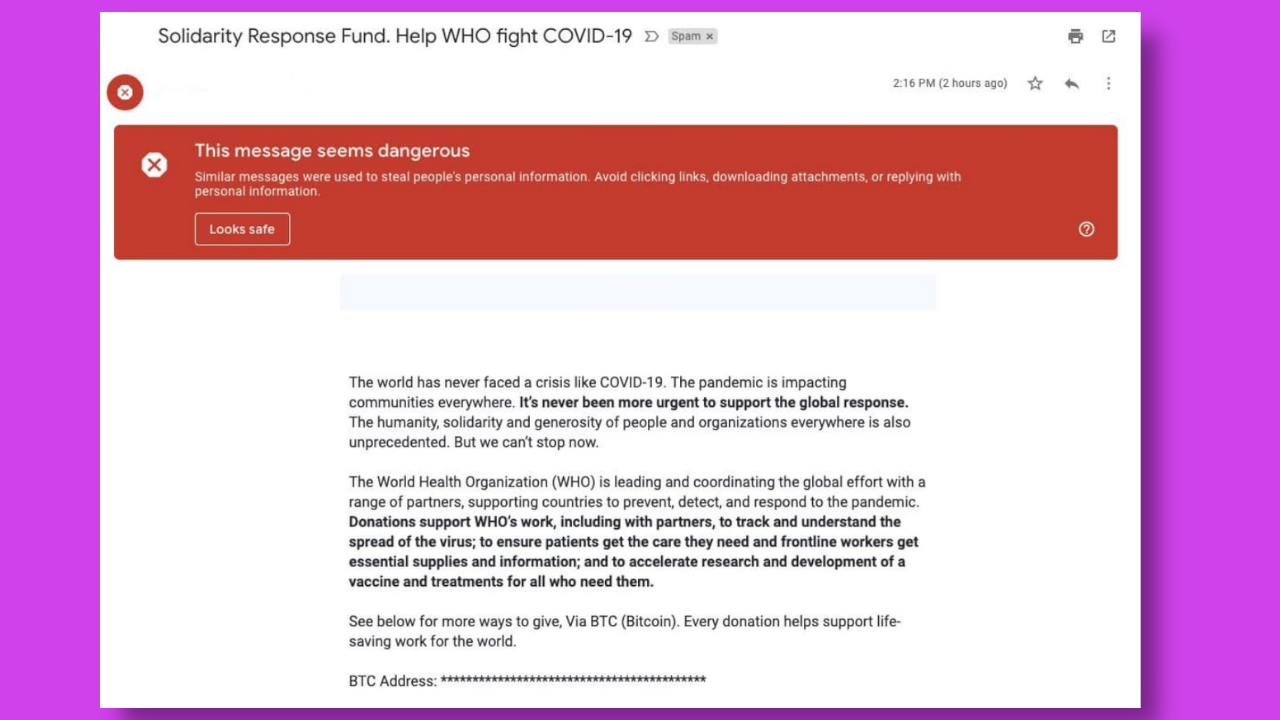
Individuals are being sent a huge variety of emails which impersonate authorities, such as the World Health Organization (WHO), in an effort to persuade victims to download software or donate to bogus causes.
Cyber-criminals are also attempting to capitalise on government support packages by imitating public institutions.
Google claims that its machine-learning tools are able to block more than 99.9% of emails from reaching its users.
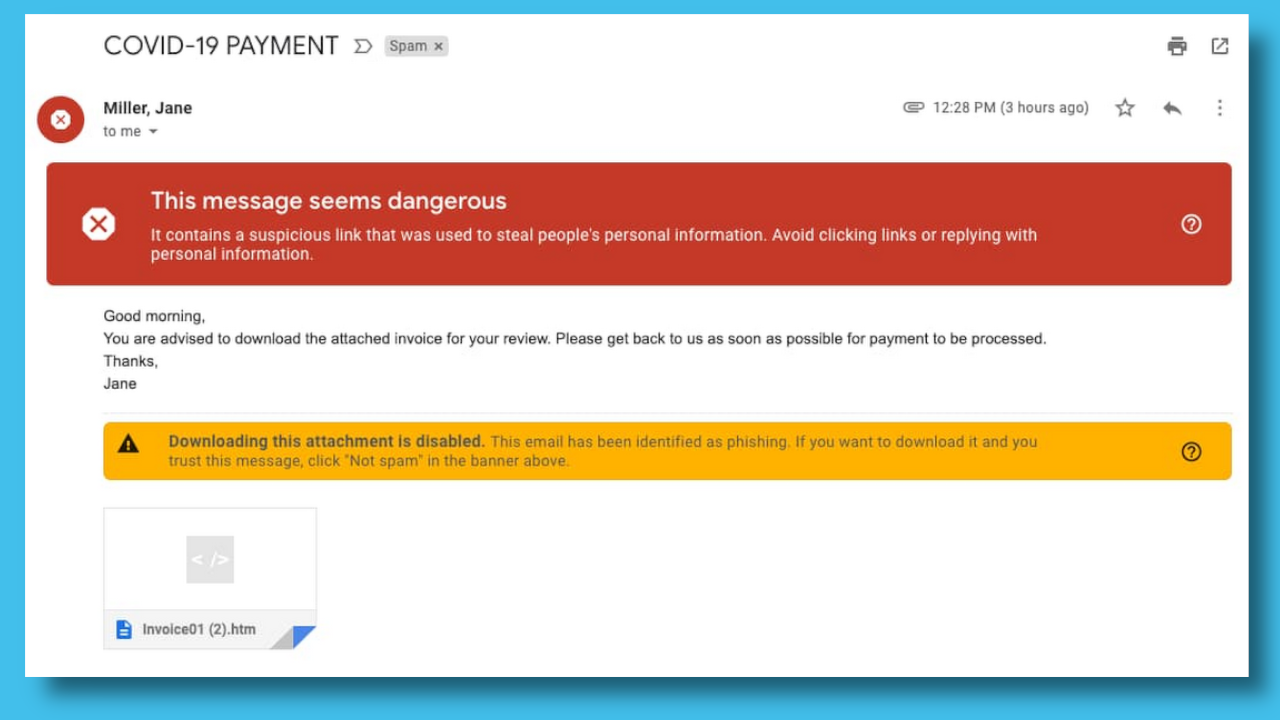
The growth in coronavirus-themed phishing is being recorded by several cyber-security companies.
Barracuda Networks said it had seen a 667% increase in malicious phishing emails during the pandemic.
Scammers have been sending fake emails and text messages claiming to be from the UK government, the WHO, the Centre for Disease Control and Prevention and even individual US officials, including President Trump.
"Phishing attacks always share the common trait of inciting or depending on an emotion that causes us to act more hastily or think less about our actions at that moment in time," said independent security researcher Scott Helme.
"The coronavirus pandemic is a highly emotional topic right now and cyber-criminals clearly know this. They're hoping that the typical person might be more inclined to click through links or follow bad instructions if they use this lure."
'Exploitation'
Researchers have also found malicious websites and smartphone applications based on genuine coronavirus resources.
One malicious Android app claims to help track the spread of the virus, but instead infects the phone with ransomware and demands payment to restore the device.
Last week, the National Cyber Security Centre and the US Department of Homeland Security issued a joint advisory.
They said they had seen "an increasing number of malicious cyber-actors" that were "exploiting the current Covid-19 pandemic for their own objectives".
The NCSC has published advice on its website to help people avoid becoming the victim of a scam.
Latest Stories
-
Hawa Koomson pledges experienced and mature leadership of NPP women’s wing
33 minutes -
Young woman found dead at Kasoa Peace Town
1 hour -
Playback: The Law examined lawful arrest in Ghana
2 hours -
Mahama urges African governments to treat healthcare as an investment, not budget cost
2 hours -
Bawumia congratulates John Boadu and new NPP executives, pledges support ahead of 2028
2 hours -
‘No talent should be left out’ – Bawumia pledges inclusive NPP campaign for 2028
2 hours -
Prof. Mike Oquaye recounts how he blocked the Special Prosecutor’s attempt to arrest Bawku Central MP
2 hours -
Make health sovereignty a priority for Africa – Mahama
3 hours -
Dorimon Naa, Wa West DCE lead massive clean-up exercise; threaten sanctions against recalcitrant residents
3 hours -
Photos from Adom FM Y2K Jam
3 hours -
Praye Tiatia steals the show at Adom FM Y2K Jam [Watch]
3 hours -
Boakye Agyarko congratulates John Boadu, pledges support for NPP leadership
3 hours -
Antwi HiMight thrills fans with Antwi ne Antwi hits at Adom FM’s Y2K Jam [Video]
4 hours -
Amb. Edward Boateng congratulates Boadu, Kodua on election wins
4 hours -
John Boadu pledges to rebuild NPP from grassroots and restore ‘winning machinery’
4 hours