

Audio By Carbonatix
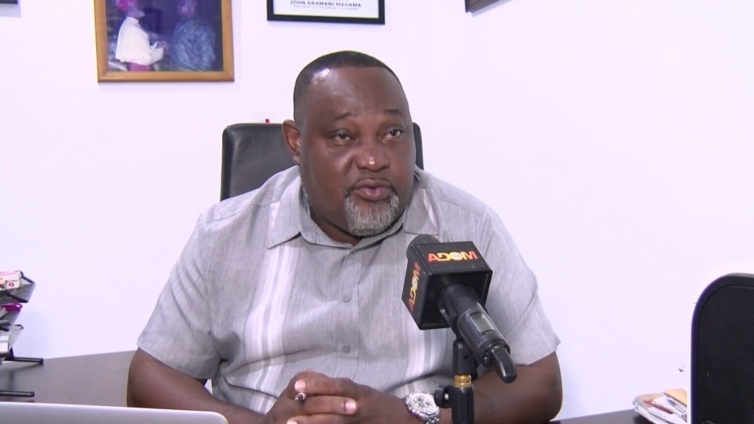
Executive Secretary of the Ghana Real Estate Developers Association (GREDA), Samuel Amegayibor, has called for the immediate establishment of a National Housing Fund and a National Housing Authority to tackle Ghana’s persistent housing challenges.
His call follows a JoyNews Research analysis of the 2021 Population and Housing Census, which revealed that while the country’s total dwelling units increased from 5.82 million in 2010 to over 10 million, nearly 1.3 million of these units remain unoccupied.
Speaking on Adom FM’s Dwaso Nsem show, Mr. Amegayibor expressed frustration over the country’s failure to implement long-promised solutions to make housing affordable and sustainable.
“The lack of continuity culture in the country is very problematic. We always want to engage in ad-hoc measures and end up recycling our problems,” he lamented.
He noted that although private real estate developers are making efforts, housing costs remain beyond the reach of many Ghanaians due to high interest rates and the absence of structured financial support.
“Individual real estate developers are doing their best, but what they may put out as the minimum price will not be affordable for many people — that’s the reality,” he explained.
Mr. Amegayibor added that developers face steep financial barriers when sourcing funds for housing projects because banks classify them as high-risk borrowers.
“When a developer goes to the market for a loan to build, he is rated as a higher risk compared to someone importing chicken or sugar from abroad, so the interest rate will be high,” he said.
He recalled that as far back as 2015, Ghana’s national housing policy proposed the creation of a special fund to provide developers with affordable loans for housing construction. However, a decade later, the fund has yet to materialise.
“Since 2015, when we included in our national housing policy the creation of a fund for developers to access affordable loans to build houses, we haven’t been able to do so — ten years on,” he emphasised.
Mr. Amegayibor also reiterated the need to establish a National Housing Authority, run by technocrats rather than political appointees, to ensure long-term planning and execution of housing projects.
“The proposal was to establish a National Housing Authority that would be managed by professionals with the technical know-how, not politicians. The technocrats would handle execution and supply of houses, while the government supports with legislation and other enablers,” he explained.
He concluded that only consistent policy implementation, supported by a dedicated housing fund and an independent authority, can help bridge Ghana’s growing housing deficit and make homes more affordable for citizens.
Latest Stories
-
Tyson Fury dominates Makhmudov, calls out Joshua next
4 minutes -
I have supported highway authority financially to fix roads in my constituency – A Plus
1 hour -
US, Iran fail to reach peace agreement after marathon talks in Pakistan
2 hours -
ECG kicks off Phase Two of transformer upgrades at Lashibi; brief outages expected
2 hours -
Port crises loom as 11,000 drivers threaten four-day strike
3 hours -
A source of excellence across generations – Vice President Opoku-Agyemang lauds Mfantsipim
4 hours -
(Photos) Mfantsipim School launches historic 150th anniversary
4 hours -
Knights and Ladies of Marshall group backs Catholic Bishops’ stance on anti-LGBTQ+
5 hours -
Bright Simons writes: All the Filla in the Ibrahim Mahama/E&P – Gold Fields Saga
6 hours -
Monetise Idiocy In Ghana
6 hours -
The Ghanaian prophet and the mysterious death of his scottish wife Charmain Speirs
6 hours -
Nearly 400 sentenced in Nigeria for links to militant Islamists
7 hours -
Ghana’s recovery supported by gold strength despite global oil price pressures – Standard Bank Research
7 hours -
Methodist Church hails Mfantsipim@150; calls for “fresh consecration” to excellence
7 hours -
‘Excellence is our inheritance’ – Nana Sam Brew-Butler hails Mfantsipim’s 150-year reign in leadership
7 hours