

Audio By Carbonatix
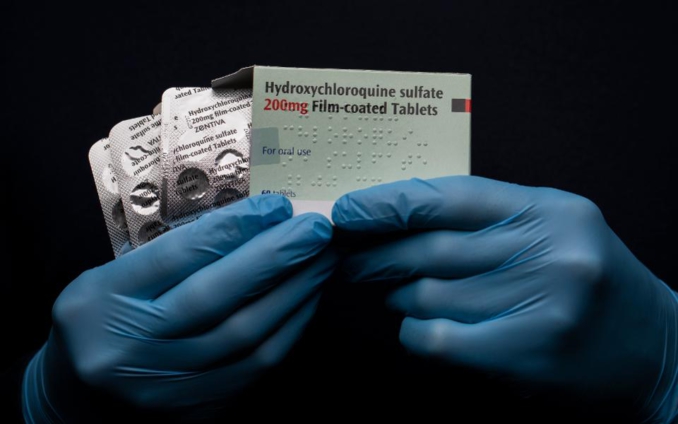
This is a question Ghana’s 30 million citizens and even more around the world may be asking right now after Health Minister, Kwaku Agyeman-Manu, announced we are to use hydroxychloroquine to treat Covid-19 patients in the country.
Hydroxychloroquine first caught my attention at the peak of the coronavirus devastation in China, with doctors reporting its ‘impressive turnout’ in the treatment of patients, especially in Wuhan.
The period between President Akufo-Addo’s lockdown announcement and the day it took effect saw many of my friends mounting a search for chloroquine to stock, just in case. I did too. I visited a pharmacy at Achimota Mile 7 but was disappointed because they did not have chloroquine in stock. The dispenser revealed I was about the 10th person asking for chloroquine in the few hours preceding my visit.
With more than a million people around the globe contracting coronavirus and another 52,000 already dead from the infection, the world’s scientific community has been at work trying to decode what makes the Covid-19 so contagious and deadly and what therapy can defeat it.

So what is hydroxychloroquine?
It is an antimalarial drug and, like all antimalarial medications, can be dangerous. They’re known to cause heart rhythm problems and can't be given to people with liver or kidney problems. The announcement that Ghana is using it to treat Covid-19 definitely put the World Health Organisation (WHO) and the Centres for Disease Control (CDC) on alert.
In a small study in China, doctors in Renmin Hospital, Wuhan (where the pandemic began) gave 31 coronavirus patients hydroxychloroquine for five days and treated another 31 with normal therapy. The latest study was published by medical experts at Wuhan University but has not been reviewed by other scientists or a medical journal. Pneumonia infections improved in 25 per cent more patients in the chloroquine group when compared with those who had standard treatment.
One man in the US died after trying to self-medicate with chloroquine by drinking aquarium cleaner, which contained a chemical version.
Hydroxychloroquine remains an experimental therapy being trialled around the world. So as Ghana begins to rely on it in the treatment of Covid-19 patients, what are the risks? How successful will this be?
I’ve spent a bit of time learning the effectiveness and risks associated with administering hydroxychloroquine on Ghana’s coronavirus patients. The doctors are extremely excited about the effectiveness of the chloroquine medication on Covid-19 patients.
‘‘For now, we are giving the treatment mostly to the symptomatic, and we are seeing results: speeding up of recovery,” one doctor told me.
“And the way the virus is replicating very quickly, this mechanism of action of the drug to inhibit this replication activity and to reduce the viral load is also helping to reduce the virulence of the condition and to increase the recovery rate.’’
Then he adds: ‘‘So it is serving the purpose. The recovery rate of patients who came in very ill, symptomatic condition, in critical condition is encouraging. And we are, therefore, having the conviction the reduction of the viral load really concerns the medication.’’
But does hydroxychloroquine completely eliminate the virus from the human system? Well, the doctors say the drug reduces the viral load.
“When you have a virus, or you have an organism which is not getting the kind of conditions favourable to replicate, to go through its reproductive stages to increase, eventually, the host mounts an immune system to it,” one doctor treating a Covid-19 patient said.
“So this virus is not replicating; it is not getting more virulent as it was because your immune system is getting stronger.”
Danger
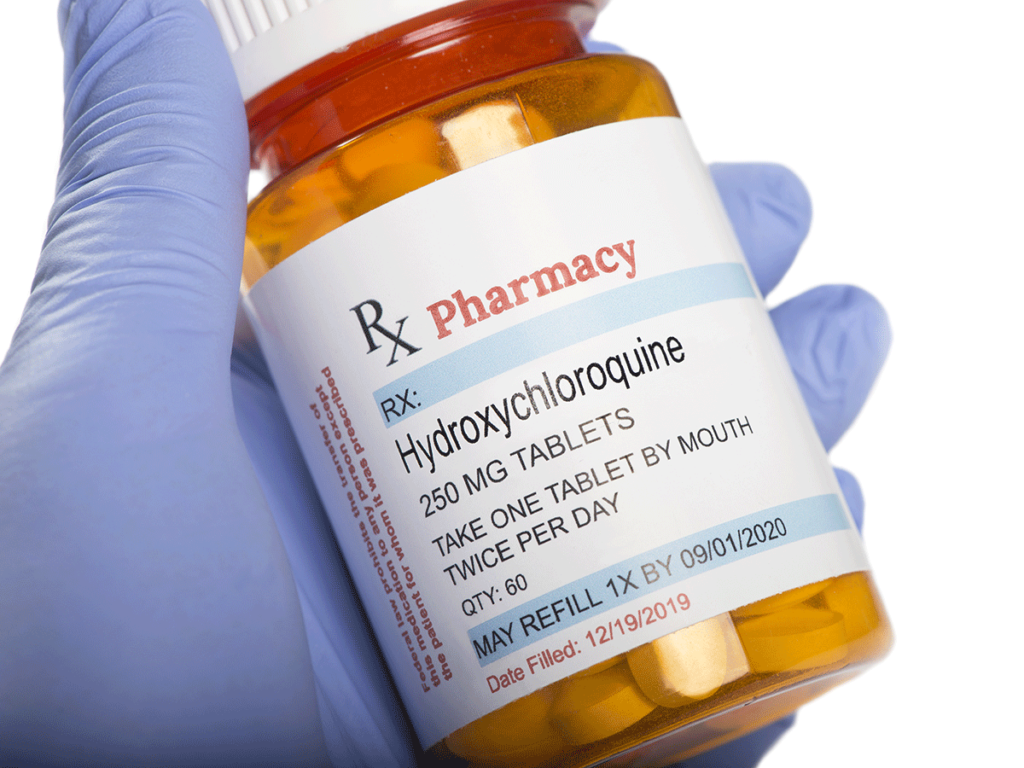
Despite the testimony about the successes of the drug, hydroxychloroquine may not be good for everyone – it can actually be deadly for some. The doctors say, for instance: “One of the cautions we give is that we don’t prescribe it under some conditions which are very critical when it comes to the medication. So we’re cautious when it comes to that.”
Possible side effects
Itchiness: The itchiness that has long been associated with chloroquine use persists, despite the numerous chemical changes it has gone through over the years. So the persons who traditionally react this way to the drug will continue to react the same way, except that doctors will have to draw the balance between itchiness and the risk of dying from coronavirus. Besides, there are drugs such as antihistamines that can subdue the itchiness quite significantly.
Hypoglycemia: This is the reduction of blood sugar levels of patients under hydroxychloroquine treatment. This, therefore, makes it dangerous for diabetic patients who are already on medication.
Irregular heartbeat: Persons with heart conditions such as prolonged QT interval (irregular heartbeat) are ineligible for hydroxychloroquine therapy.
Despite these exemptions, doctors say they still have potent drugs such as azithromycin to treat those who cannot be treated with hydroxychloroquine. This drug is also said to be doing well too, except that it is not as fast-acting as hydroxychloroquine.
Warning
Doctors have a strong warning for those who intend to self-medicate on hydroxychloroquine ward of the coronavirus to banish the thought immediately.
The drug, they say, is not to be used as prophylactic (a medication or a treatment designed and used to prevent a disease from occurring). Unfortunately, this means it cannot prevent anyone from contracting coronavirus.
---
Fred Smith is the head of the Health Desk at JoyNews.
Latest Stories
-
Strengthening economy through informal sector tax collection
16 minutes -
Stonebwoy Can Do It: A call to unite behind 2026 BHIM Fest
42 minutes -
World Shea Expo returns to Tamale for 2026 edition
44 minutes -
Prioritise cocoa sector with better prices, timely payments-Annoh-Dompreh urges NDC
1 hour -
Lands and Mines Watch Ghana endorses Heath Goldfields’ mining capacity
1 hour -
Gbintiri residents protest alleged diversion of 24-hour market project
2 hours -
Justin Bieber headlines Coachella with nostalgia-fuelled set
2 hours -
Ukraine and Russia accuse each other of hundreds of ceasefire violations
2 hours -
Asha Bhosle: The sound of Bollywood dies aged 92
2 hours -
Fire destroys section of 4-bedroom apartment at Tantra Hill
2 hours -
Safe city: Unnoticeable protection
3 hours -
North East Regional Police Commander raises alarm over burning of checkpoints
3 hours -
Free Primary Healthcare Programme set for take-off — Health Ministry confirms readiness
3 hours -
3 co-wives, 5 children perish in canoe disaster – Maritime Authority insists life jackets use mandatory for all water transport
4 hours -
Iran war lands ‘triple blow’ to flood-ravaged Sri Lankans
4 hours