

Audio By Carbonatix
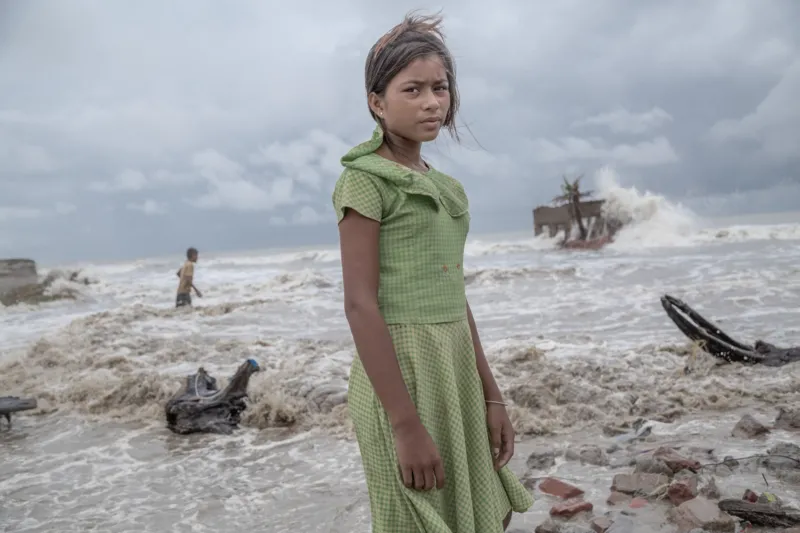
Supratim Bhattacharjee has been named overall winner of this year's Mangrove Photography Awards for his image of a young girl in the aftermath of a devastating storm in Frazerganj, Sundarbans, India.
Run by the Mangrove Action Project, the competition - now in its 10th year - aims to show the relationships between wildlife, coastal communities and mangrove forests, as well as the fragility of these unique ecosystems, both above and below the waterline.
Mr Bhattacharjee's winning image, called Sinking Sundarbans, shows Pallavi standing in front of her home and tea shop, which has been destroyed by the sea during a storm.
"I observed her strong face and calm nature during that devastating period," said Mr Bhattacharjee.
"Children are the ones that suffer the most."
Nestled in the Bay of Bengal, the Sundarbans is the largest mangrove forest in the world.
"[The winning] image raises a thousand questions, whilst connecting you to the girl's heart," said competition judge Dhritiman Mukherjee.
"Her vulnerability exposes the full impact of climate change and sea level rise experienced by many coastal communities.”
Mangroves are an important protection against climate change, with one acre (4,000sq m) of mangrove forest absorbing nearly the same amount of carbon dioxide as an acre of Amazon rainforest.
The forests also protect coastlines from eroding, as intense storms grow more frequent.
"Conservation as a story, is a complicated one," said another of the judges, Morgan Heim.
"Photography has the ability to help us receive and feel close to those stories no matter our language. Every time I look at this kind of photography, I think, there's still hope."
Fellow judge Christian Ziegler added: "[In the competition] were many fascinating stories about life in the mangroves, ranging from scientific insights to restoration of the ecosystem and the difficult conditions people face."
Here are a selection of winning images from seven competition categories, with descriptions by the photographers.
Mangroves & People winner: Mud Bath Ritual, by Johannes Panji Christo, Indonesia
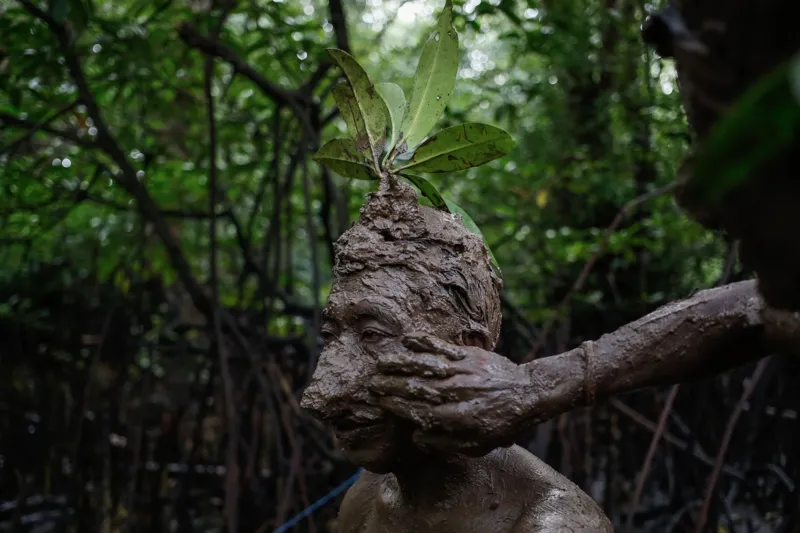
Men, women and children, wearing sarongs and traditional headgear, collect mud from a mangrove forest in Kedonganan village, just outside the town of Denpasar in Bali, Indonesia.
They cover themselves as part of a purification ritual called Mebuug Buugan, where people pray for gratitude and earth’s fertility.
Mangroves & People, Highly Commended: Sinking Sundarbans II, by Supratim Bhattacharjee, India
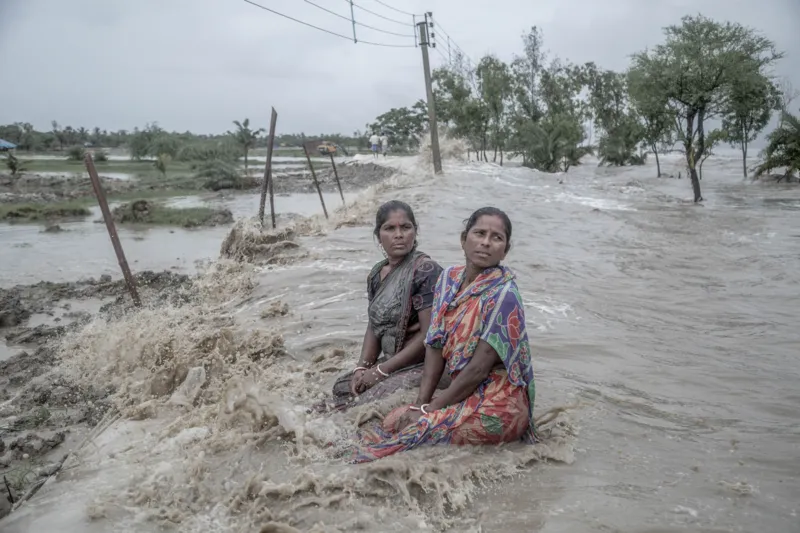
The Sundarbans archipelago spans the borders of India and Bangladesh... [and] is known for its rich forest resources, which locals rely on for income.
But rampant deforestation coupled with worsening storms has intensified food and water scarcity, diminished agriculture productivity and soil quality, and turned local communities into climate refugees.
Mangroves & Landscape winner: Nature's Ribbon, by Ammar Alsayed Ahmed, United Arab Emirates
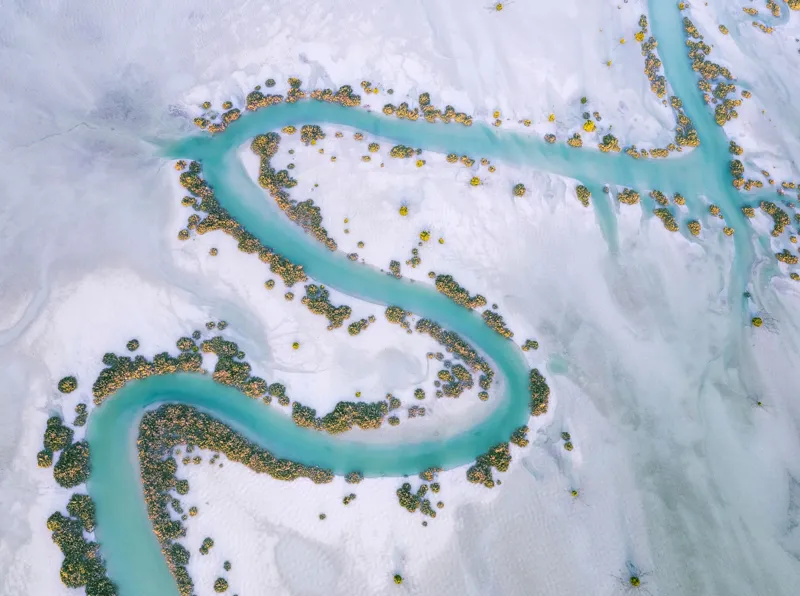
This tranquil scene invites contemplation as the gentle flow of water navigates its course through the heart of the mangrove forest.
The intertwining roots of the trees form intricate patterns, creating a natural tapestry that harmonises with the fluidity of the water.
Mangroves & Landscape, Highly Commended: Framing the Sunset, by Vladimir Borzykin, India
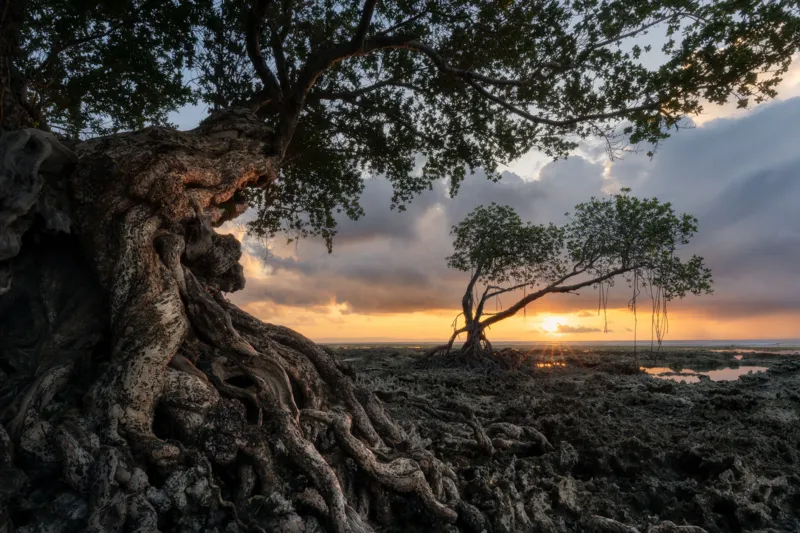
On the rugged coast of Neil island (Shaheed Dweep) in the Andaman Islands archipelago, the tide recedes far away from the shore and exposes an extremely sharp rocky reef.
Mangroves & Wildlife winner: Mud-Ring Feeding, by Mark Ian Cook, US
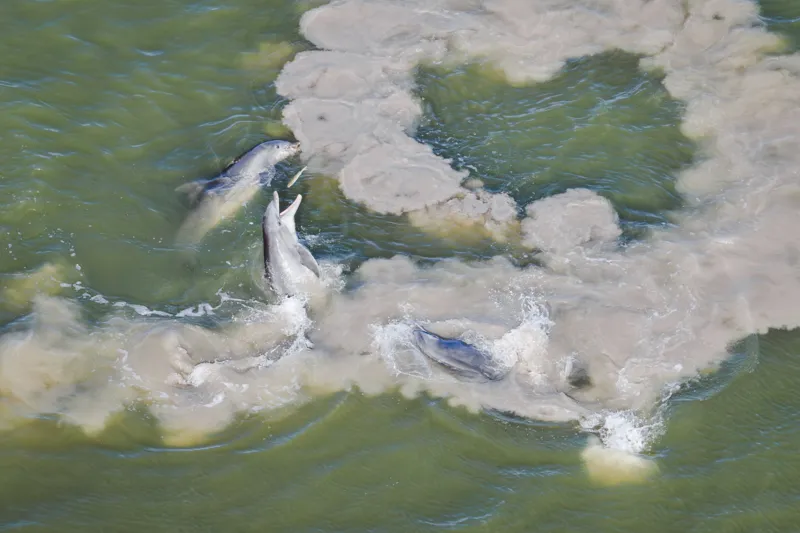
Mud-ring feeding is a unique fishing behaviour employed by bottlenose dolphins living in the shallows of the mangrove-lined bays of Florida Bay and a few other locations in the Caribbean.
On finding a school of mullet, a dolphin from the pod encircles the fish kicking up the sediments with its tail, which corrals the fish into an ever tightening spiral-shaped silty plume.
The dolphins have a remarkable ability to know where the fish are going to jump and will snatch them from the air as they try to make their escape.
Mangroves & Wildlife, Highly Commended: The Fire Within, by Javier Orozco, Mexico
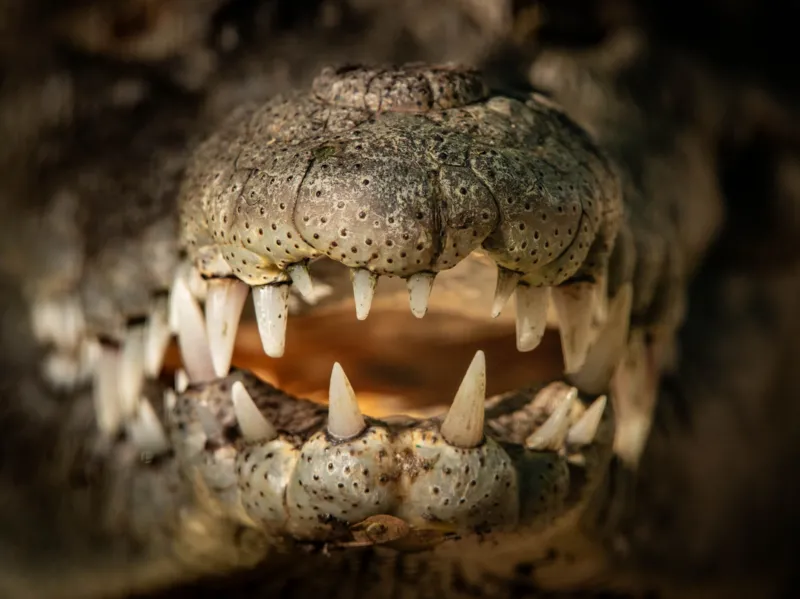
Photographer Javier Orozco came face-to-face with a crocodile at El Cora Crocodile Sanctuary in Bucerias in Banderas Bay, Mexico.
In the last 40 years, Banderas Bay has lost more than 80% of its wetlands to urban expansion.
This crocodile sanctuary is a non-profit organisation located next to a small lagoon. The surrounding area has been taken over by shopping centres, hotels and condos.
Mangroves & Threats winner: Mangrove Walls Broken, by Dipayan Bose, India
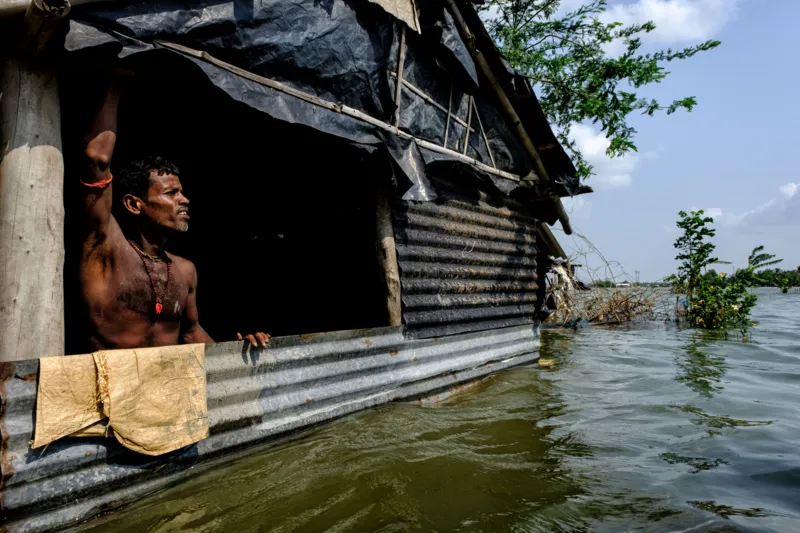
Due to repeated tropical cyclones and sea level rise in the Bay of Bengal, river embankments have become broken by high tides across the Sundarbans, West Bengal, India.
As a result, homes and farms have flooded, fisheries have become destroyed by seawater, and people have been forced to migrate.
This villager has lost all his household belongings in the flood.
Mangroves & Threats, Highly Commended: Love Entangled in Ghost Net, by Daphne Wong, Hong Kong
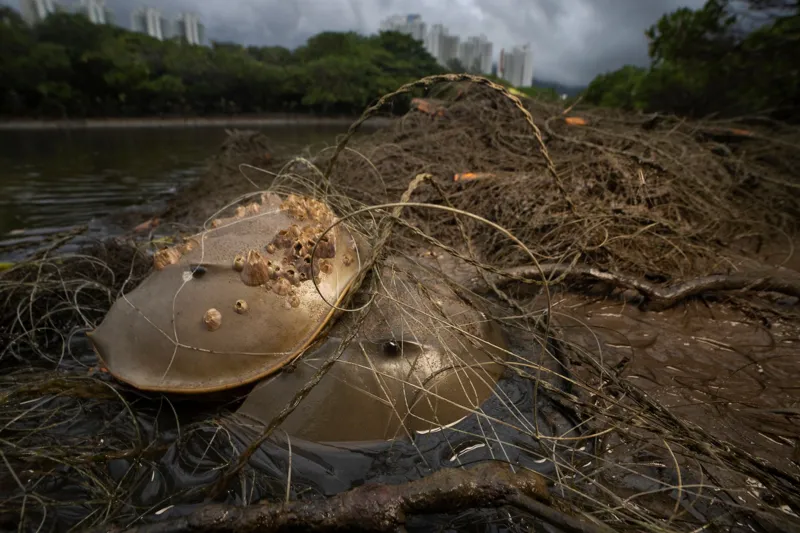
The male horseshoe crab tightly grasps onto the back of the female, on a mission of reproduction.
They move with the rising tide, searching for a suitable place to lay their eggs. But when they reach the mangroves, they become entangled in a huge ghost net.
If no one rescues them in time, they will eventually die from prolonged exposure.
In Hong Kong and throughout Asia, abandoned fishing nets wash ashore and in mangrove forests, entangling many creatures.
Mangroves & Underwater winner: Guardians of the Mangroves, by Olivier Clement, Bahamas
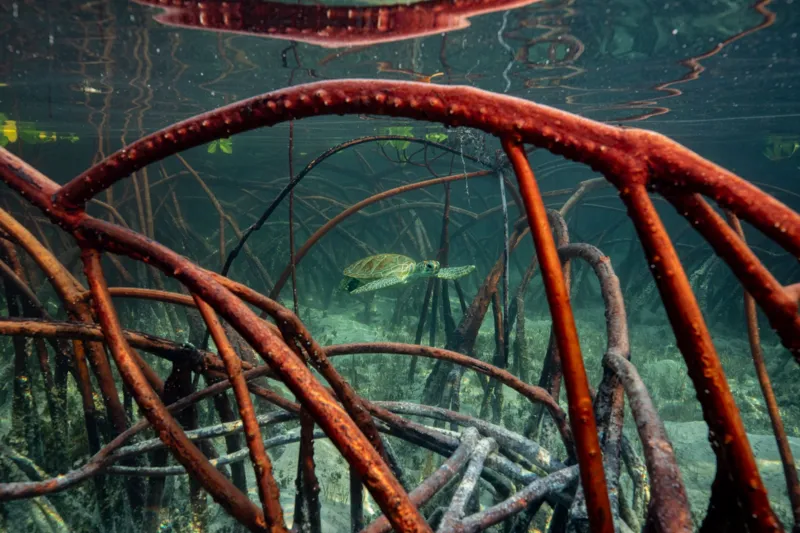
A turtle gracefully navigates the mangroves’ labyrinthine roots, seeking refuge for the night.
At high tide, the water engulfs the roots and transforms the space into a haven for marine life seeking shelter and safety.
Mangroves & Underwater, Highly Commended: Kakaban Mangrove, by Purwanto Nugroho, Indonesia
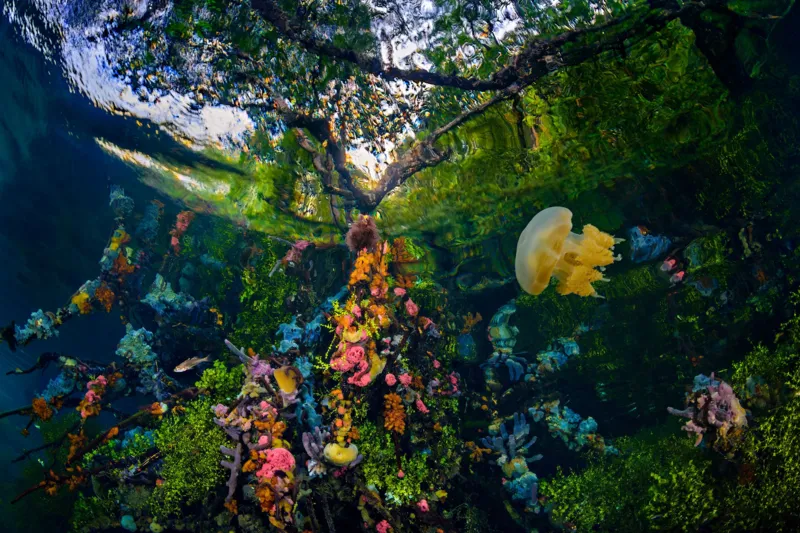
Mangroves act as a natural filter that can remove most pollutants before they reach the ocean.
Soil and mangrove biomass have a significant capacity to store carbon from the atmosphere, helping to reduce carbon dioxide concentrations in the air.
The complex roots of mangroves also help bind soil and sediment, reduce erosion, and protect against damage from waves and currents.
Mangroves & Conservation Stories winner: Symbiosis, by Giacomo d'Orlando, Indonesia
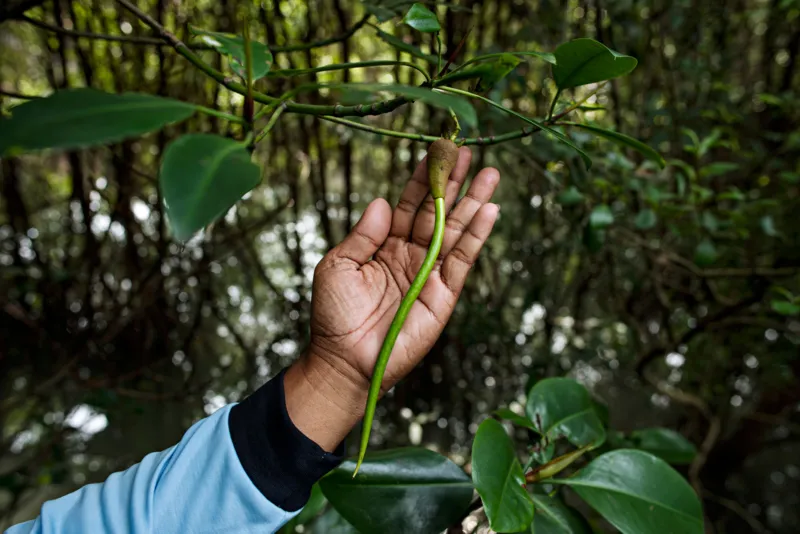
In Demak Regency, Indonesia, the coastline has been severely eroded, and mangroves that once protected the coast have been cut down and replaced by aquaculture ponds. As a result, the sea is literally swallowing people’s homes.
[Demak's residents] have realised the only solution is to restore the ecosystem by replanting the mangroves that have been cut down.
Mangroves & Conservation Stories, Runner Up: Together, by Raj Hassanaly, Madagascar
In Demak Regency, Indonesia, the coastline has been severely eroded, and mangroves that once protected the coast have been cut down and replaced by aquaculture ponds. As a result, the sea is literally swallowing people’s homes.
[Demak's residents] have realised the only solution is to restore the ecosystem by replanting the mangroves that have been cut down.
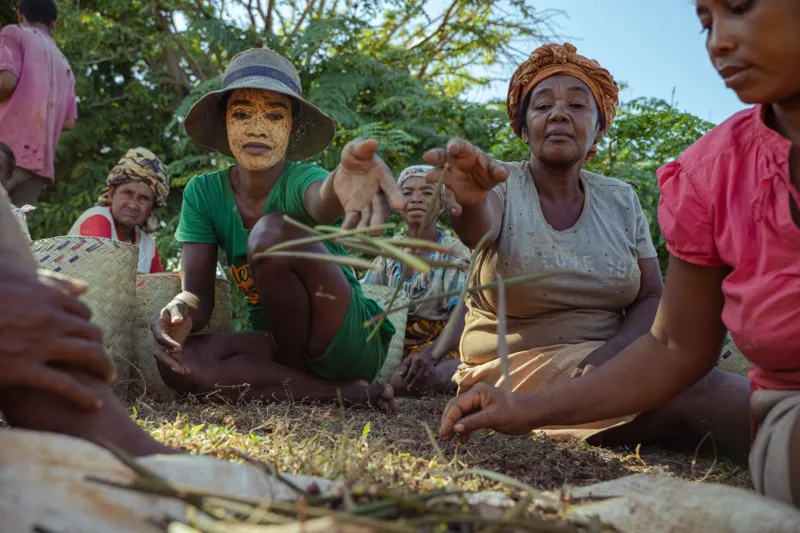
With the cutting of mangrove trees, it is increasingly difficult to fish, catch crabs, and protect against climate change and violent cyclones in the regions.
Bôndy, a private company working in ecosystem restoration, collaborates with local communities to restore mangroves at a rural commune in Majunga, Madagascar.
Together, always with a smile and in good spirits, they traverse the mangroves to revive vast stretches of isolated land.
Young Mangrove Photographer of the Year winner: Mangrove at Night, by Nicholas Alexander Hess, Australia
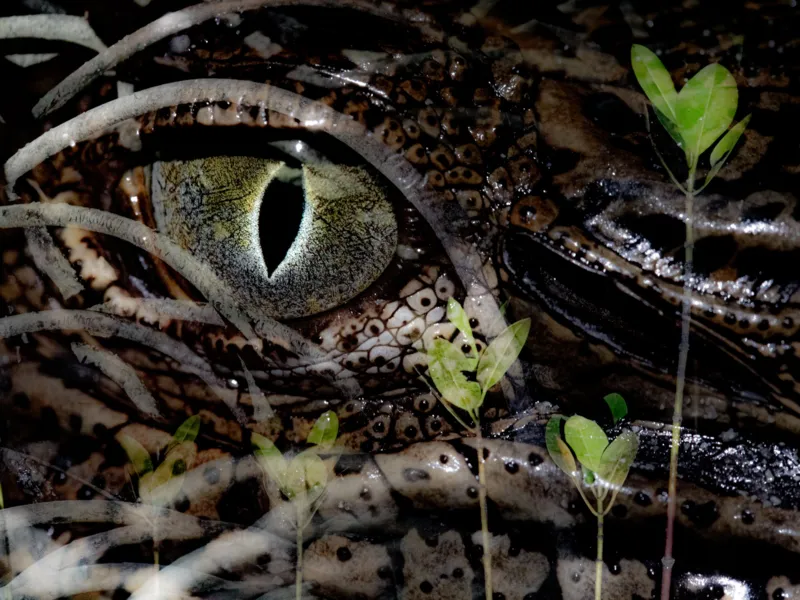
I wanted to capture more than just this young saltwater crocodile when I encountered it at low tide in the mangroves.
I used the multiple exposure mode in my camera to superimpose layers onto my image of the croc's eye, to capture more of the scene without sacrificing detail of the eye.
The image gives off a slightly unsettling feeling, such as what one may experience in a mangrove, unknowing of what predators may be lurking nearby, hidden by the dense network of the mangrove.
Latest Stories
-
Philanthropist Alhaji FuZak donates Da’wah bus to Ambariya Sunni community
11 seconds -
GUTA calls for suspension of Publican AI system over trade disruptions, demands temporary halt in import activities
3 minutes -
TTAG raises alarm over proposed recruitment of 7,000 teachers, demands national posting roadmap
36 minutes -
Civilians feared killed after reports of air strike on Nigerian market
46 minutes -
Bishop Simon Kofi Appiah installed as new Jasikan Diocese Bishop
47 minutes -
Trump’s Strait of Hormuz blockade threat raises risks and leaves predicaments unchanged
49 minutes -
US Court backs extradiction of former MASLOC CEO Sedina Tamakloe-Attionu’s to Ghana
1 hour -
Seven arrested as NAIMOS dismantles illegal mining camp, seizes firearms at Boin River
1 hour -
Fire erupts at Madina Ritz Junction, destroys multiple wooden structures and containers
1 hour -
Daniel-Kofi Kyereh returns from long-term injury, registers assist for Freiburg U23
2 hours -
Knifeman calling himself ‘Lucifer’ slashes three at NYC’s Grand Central
2 hours -
Brands are built from within to without
2 hours -
Matriculants urged to pursue excellence as gov’t reaffirms support for Maritime education
2 hours -
See the areas that will be affected by ECG’s planned maintenance on Monday, April 13, 2026
2 hours -
GPL 2025/26: Salim Adams double fires Medeama back to summit after Kotoko rout
2 hours