

Audio By Carbonatix
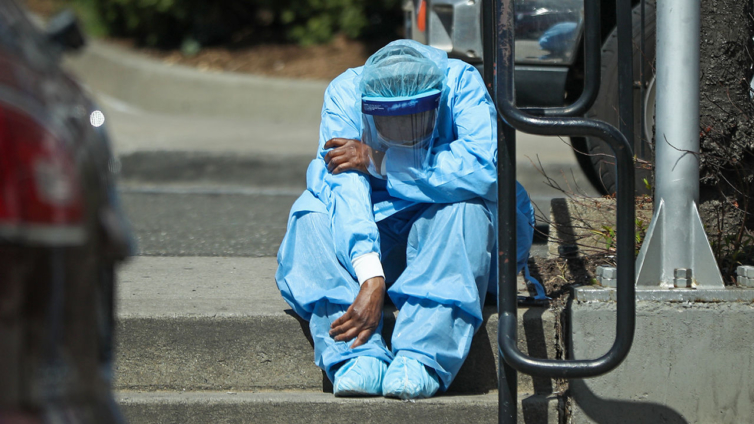
There are fears of a second wave of coronavirus among health and care staff whose mental health has suffered as a result of the trauma they have witnessed during the pandemic.
A report by leading health charity The King's Fund says the impact of the Covid-19 pandemic on the workforce "has been unprecedented and will be felt for a long time to come".
Winnie Nwosu has been a nurse for 10 years and loves her job. But she says what she saw during the peak of the virus left her feeling broken.
"I never knew depression until the Covid pandemic hit.
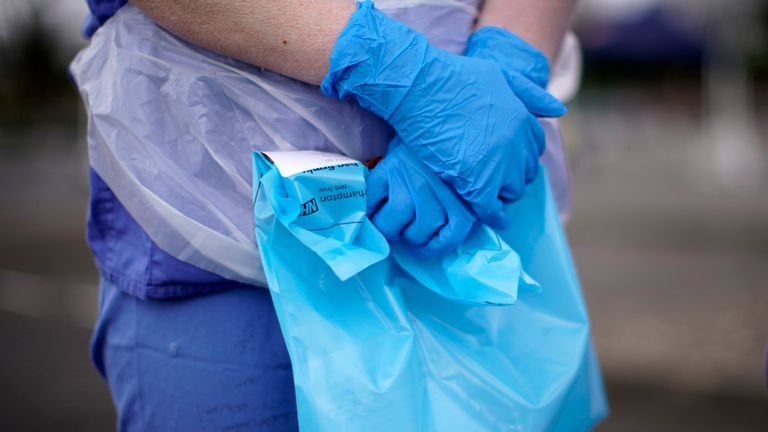
"I didn't know at the time that I was depressed or stressed or burnt out. Coming out if it now I realise that I was very depressed. Very, very demoralised."
She describes the situation on the wards as very difficult.
"It's so alarming how people suffer.
"Having to watch that patients beg for you to help them breathe or reach out to their family or bring their family to them and you can't do that because you're trying to also keep their family safe. It was awful."
Consultant psychiatrist Derek Tracy believes there is concern some healthcare staff may be suffering from a syndrome related to trauma.
He says: "Moral injury is an idea that originally tracks back to the military but has become more common in recent discussions in NHS healthcare.
"The idea is where people are exposed to work or stress for which they feel unprepared.
"Most staff, whatever your profession or your grade, we slot neatly into a wider structure, we know what to expect when we go into work. We know what risks we should be taking on and who we can speak to and a pandemic changes that.
"We're suddenly facing uncertainty. Will I become unwell when I go in? Will I go back and infect my family? We're seeing people with very high death rates when they're intubated and moral injury is this idea that we feel out of control of that."
The King's Fund report which was commissioned by The RCN Foundation says the pandemic exacerbated already high levels of stress and burnout among health and care staff.
It blames excessive workloads for "alarmingly high" numbers of staff intending to quit their jobs which would add to the already large numbers of nurse and midwife vacancies across the health and care system.
Winnie says despite the trauma she went through earlier this year she is ready to fight to the virus again.
"You know you get the patients that look at you after all you've done for them and say thank you."
And she knows her team will keep each other going, as they did before.
Latest Stories
-
PAC sends Ghana Water hearing back, demands Minister and MD appear over GH¢3bn debt
21 minutes -
GACL to hold full-scale emergency simulation exercise on October 15
1 hour -
327 entries submitted for 30th GJA Media Awards
1 hour -
Mahama proposes rent-to-own scheme for unfinished houses
1 hour -
Mahama wants banks to introduce affordable housing loans within six months
1 hour -
Photos from National Conference on Housing Finance
1 hour -
Italy, Ghana unite 40 artists for ‘Beyond Creation’ exhibition at Accra Art Centre
2 hours -
Premature to call for Sports Minister’s removal while CID probe is ongoing – Ernest Norgbey
2 hours -
NPP mourns Samuel Arthur Odoi-Sykes
2 hours -
Stay out of World Cup visa probe to avoid interfering with CID investigations – Ernest Norgbey to politicians
3 hours -
Bono East Minister inspects ‘Big Push’ roads; contractor on Tankor-Fiema-Busunya road ahead of schedule
3 hours -
Scrutiny is not disloyalty – Chief of Staff defends serious journalism at 30th GJA Awards launch
3 hours -
Abuse case: Nana Akua’s husband Harold unable to appear in court after hospital admission – Police
3 hours -
Mahmud Kabore picks NDC Ashanti Regional Communication Officer nomination forms
3 hours -
KNUST Career Services pioneer Selina Doe Angmor named among 2026 40 Under 40 honourees
3 hours