

Audio By Carbonatix
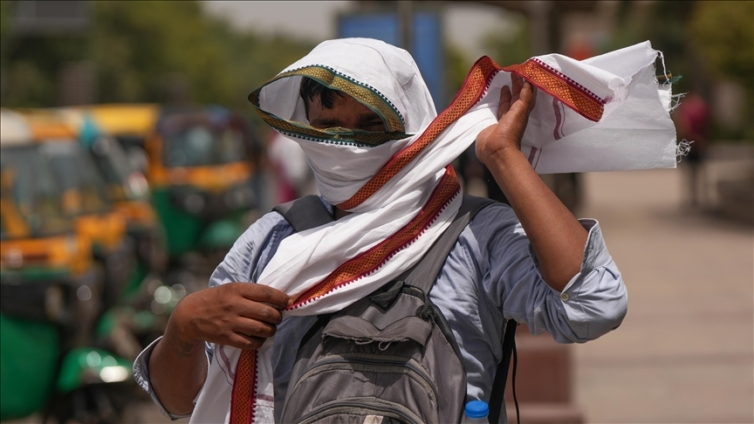
India’s relentless heat wave killed 33 poll workers as the country concluded its final day of voting in the world’s largest general election, officials said, underscoring the impact of searing temperatures in recent days.
The workers died in the northern state of Uttar Pradesh, the state’s chief election officer, Navdeep Rinwa, told reporters at a news conference. Their families will receive $18,000 each in compensation, he added.
Voters and election workers have endured an extended period of unusually high temperatures across much of the country’s north as India voted in a seven-phase election that began on April 19. The last phase took place on June 1.
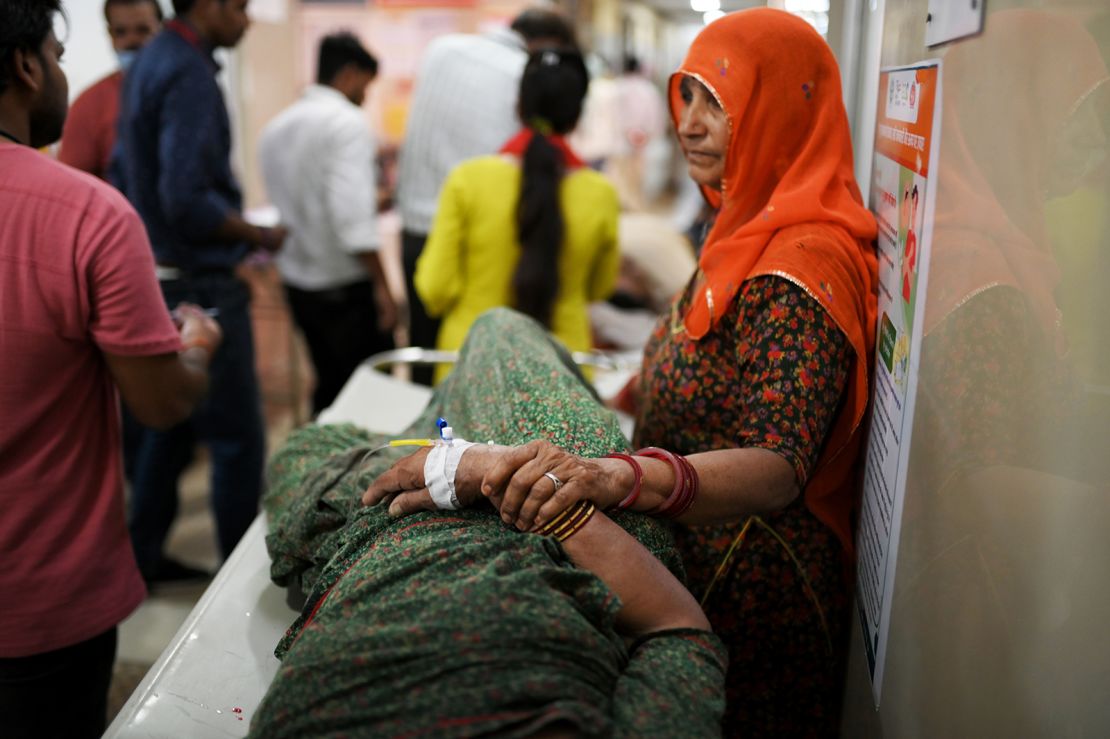
At least 61 people have died from heat strokes, heat exhaustion, dehydration and other heat-related illnesses since May 24, according to local health and government officials.
Of that number, at least 43 were election workers, authorities said.
Election duty is compulsory in India for public sector employees. They’re assigned by the election commission before polling begins.
Home to more than 1.4 billion people, about 969 million were eligible to cast their vote — more than the populations of North America and the European Union combined.
Election rules state that voters should be no more than 2 kilometres (1.24 miles) from a polling station.
To carry off such a huge election, India relies on a network of some 15 million polling officials and security staff, with some of these election workers travelling via road, boat, camel, train, and helicopters to reach citizens across the vast nation.
Northwest and central India have been experiencing maximum temperatures above 42 degrees Celsius (107.6 Fahrenheit) with some towns even crossing the 50-degree mark (122 Fahrenheit), according to the Indian Meteorological Department.
The capital territory of Delhi sweltered to its highest-ever temperature of 49.9 degrees Celsius (121.8 degrees Fahrenheit) last week, as the oppressive heat wave forced authorities to impose water rationing.
Before voting began, the Election Commission of India announced several measures to account for high temperatures during voting, such as making water available at polling booths and setting up tents for shade.
“Heat wave conditions over Northwest, Central & East India are likely to continue with reduced intensity during next 3 days,” the Indian Meteorological Department said on Sunday.
India is among the countries expected to be worst affected by the climate crisis, according to the Intergovernmental Panel on Climate Change, threatening its development while risking reversing its progress on poverty alleviation, health and economic growth.
The country often experiences heat waves during the summer months of May and June, but in recent years they have arrived earlier and become more prolonged. Experts say the climate crisis is only going to cause more frequent and longer heat waves in the future, testing India’s ability to adapt.
Counting up all the votes will take place on a single day – Tuesday, June 4 – with results expected later that day.
Latest Stories
-
High Court sets November 4 for ruling on Wontumi’s bail application
12 minutes -
Tetteh Kwetey files nomination for NDC Greater Accra Regional Chairmanship
21 minutes -
Korle Bu appeals for more doctors, nurses as A&E Centre struggles under pressure
34 minutes -
AFCON 2027Q: ‘I’m optimistic Black Stars can turn things around’ – Agyemang-Badu
35 minutes -
Digital innovation could widen Africa’s inequalities if people are left out – Sam Jonah
37 minutes -
Galamsey is an economic, health and moral problem – Sam Jonah
40 minutes -
Africa must create AI technology instead of paying to use it – Sam Jonah
42 minutes -
2026 U-17 WWC: Black Maidens to face Norway, Brazil and Canada in Group C
47 minutes -
Agbodza, Sam George move to curb fibre optic cable cuts during road works
54 minutes -
2026 U-17 WWC: Black Maidens unveil 21-player squad for competition in Morocco
56 minutes -
South Africa evacuation and the minority’s half-truth
1 hour -
‘You never know tomorrow’ – Anthony Baffoe on contesting for GFA Presidency
1 hour -
Obuasi SHTS head accused of sexually abusing students is NDC Juaben secretary seeking chairmanship
1 hour -
Cedi depreciates by 7.11% against dollar in August 2026 – BoG report
2 hours -
Put women and youth at the centre of mineral resource governance — ActionAid
2 hours