

Audio By Carbonatix
The image of rehabilitation in Ghana's correctional centres has long been associated with vocational workshops, classrooms and counselling sessions. Carpentry, masonry, tailoring and formal education have become familiar pathways through which inmates prepare for life beyond prison walls.
But a different kind of rehabilitation is quietly gaining ground — one built not around textbooks or tools, but around rhythm, movement and creative expression.
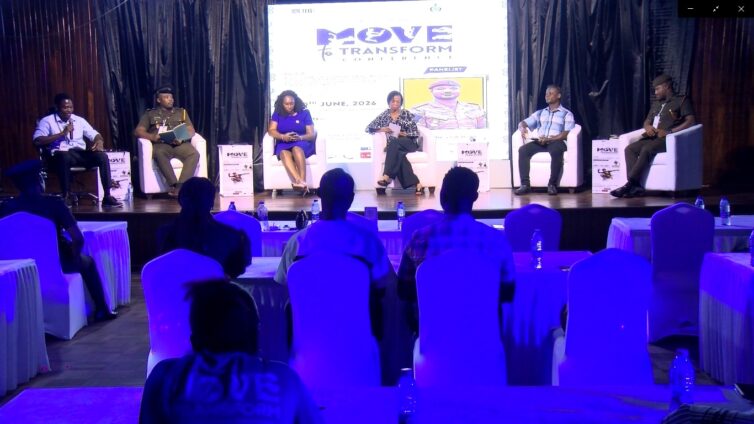
The Conference formed part of Move to Transform, an MFA final-year research project by Ewurafua Biney, a postgraduate student in the Department of Dance Studies at the University of Ghana.
Titled Exploring Non-Formal Dance Education as a Framework for Behavioural and Social Development in Juvenile Correctional Institutions in Ghana”, the project examines how structured, non-formal dance education can serve as an effective tool for rehabilitation, behavioural transformation, and social reintegration among young people in correctional institutions.
Speaking about the initiative, Biney emphasised that she does not view Move to Transform as merely an academic requirement, but as the beginning of a movement with the potential to reshape juvenile rehabilitation in Ghana. She described the project as a call to recognise the arts, particularly dance not simply as a form of entertainment, but as a powerful medium for healing, personal development, discipline, and social change.
Through the practical dance workshop at the Senior Correctional Centre and the stakeholder forum, she hopes to lay the foundation for a sustainable, evidence-based framework that can support rehabilitation efforts in juvenile correctional institutions and inspire long-term policy and institutional change across the country.
At the Move to Transform Conference held at the University of Ghana, prison officers, dancers, mental health advocates and educators gathered around a simple but increasingly compelling idea: that dance can help heal trauma, rebuild confidence and support the reintegration of young people in correctional facilities.
For Assistant Superintendent of Prisons Bismark Yaw Bodi, rehabilitation is about far more than teaching employable skills.
Many of the young people who enter correctional centres, he said, carry emotional wounds that cannot simply be addressed through classroom lessons.
"These young people carry trauma. You cannot always solve that through maths or science. Rehabilitation must go beyond the hands; it must reach the mind, the heart, and the soul."
According to him, many incarcerated young people have grown up in environments where instability, neglect and hardship shaped their outlook on life. Those experiences often create deep mistrust and emotional isolation.
Even where professional counsellors are available, expressing painful experiences can be difficult.
Dance, he believes, creates another language.
"Dance allows them to express what they cannot say. For that moment, they are free. They are not thinking about their problems—they are just present."
Rather than seeing dance as entertainment, Mr Bodi describes it as a form of somatic healing — using movement to process emotions stored within the body.
More than movement
The impact, he argues, extends well beyond emotional release.
Inside correctional facilities, where young people from different backgrounds are brought together under difficult circumstances, trust can be scarce.
Dance changes those dynamics.
Participants must move together.
They must listen.
They must follow instructions.
They must rely on one another.
"In correctional spaces, many come from different backgrounds and do not trust each other," Mr Bodi explained. "But when they dance, they must work together, follow leadership and respect one another."
The result is the development of skills that are rarely taught directly but are essential for life after incarceration — discipline, teamwork, patience and communication.
Dance programmes also reduce idleness, he noted, providing structured activities that channel energy into creativity rather than conflict.
From custody to correction
The philosophy reflects a broader evolution within the Ghana Prisons Service.
Rather than simply housing offenders, the Service increasingly sees its role as preparing people to return to society as productive citizens.
Vocational training remains central, but Mr Bodi believes creative arts deserve equal attention.
"This is about transformation," he said.
"If someone leaves and comes back, then we have not done our job well."
He also pointed to Ghana's expanding creative economy, suggesting that dance could become more than therapy.
With the right mentorship and industry connections, it could become a career.
Finding confidence through creativity
For Vivian Boateng, Chief Executive Officer of Vivie's Dance and Theatre Academy, the journey begins with something much simpler than choreography.
It begins with self-belief.
She often starts her sessions by asking participants to stand tall, imagine placing a crown on their heads and remind themselves that they matter.
For many children and young people, she said, that affirmation is unfamiliar.
"Many children come from homes where they are already broken. The first thing we do is remind them that they matter."
She recalled working with a young girl who struggled academically and had little confidence in herself.
Dance changed that.
"For the first time, she said, 'I have found something I am good at.' That changed everything."
As the girl's confidence grew on the dance floor, it gradually reflected in her classroom performance.
To Ms Boateng, dance teaches lessons that extend far beyond performance.
"It teaches structure, discipline, resilience and self-expression.
"These are life skills."
A personal testimony
The conference also featured a deeply personal reflection from broadcast journalist and Safoa Foundation CEO Safoa Boahene.
Growing up, she constantly compared herself with her high-achieving siblings.
"I always felt like I wasn't good enough," she recalled.
Dance became the turning point.
"For the first time, someone told me I was good at something."
That moment, she said, reshaped how she viewed herself.
The confidence she discovered through dance later contributed to opportunities she never imagined, including her participation in Ghana's Most Beautiful.
She believes the same transformation is possible for young people behind bars.
"When someone is incarcerated, they often lose their sense of identity and dignity," she said.
"Dance helps restore that."
Still, she cautioned against viewing dance as a standalone solution.
"It must be part of a system with education, mentorship and mental health support.
"That is how real transformation happens."
A shared responsibility
The speakers agreed that expanding arts-based rehabilitation will require collaboration beyond government institutions.
Civil society organisations, creative practitioners, development partners and educational institutions all have a role to play.
"There must be collaboration," Mr Bodi said.
"We want to help, but we must also ensure security and sustainability."
Support from organisations including the United Nations Office on Drugs and Crime and the Crime Check Foundation has already helped introduce creative rehabilitation initiatives in parts of Ghana's correctional system.
Whether these programmes eventually become mainstream remains to be seen.
But one message resonated throughout the conference.
Rehabilitation is not simply about keeping people occupied until they leave prison.
It is about helping them rediscover who they are.
And sometimes, that journey begins not with words, but with movement.
Latest Stories
-
Mankranso DCE laid to rest as Muslims hold final Juma’ah prayers
30 minutes -
Ghanaian professor Kofi Akamani shot dead in US; wife arrested
40 minutes -
Sammy Gyamfi says 2018 NACOC removal from port inspections weakened drug checks
50 minutes -
Greater Accra region accounts for 77% of total secured credit in half-year 2026 – BoG
53 minutes -
Founder’s Day: We face forward, but are we moving?
1 hour -
Sheenah Naturals unveils Akuaba Collection at Beauty Inside Out Conference
1 hour -
T-bills: 91-day, 364-day yields to trade slightly higher in second half of 2026
1 hour -
Black Stars: It’s our decision to leave Kudus to recover – Queiroz
2 hours -
Sammy Gyamfi backs Mahama’s directive to restore NACOC’s at ports
2 hours -
Queiroz provides insight into Kudus’ decision to withdraw from Black Stars squad
2 hours -
I’m not changing after 47 Years – Queiroz fires back at critics
2 hours -
Nkrumah Never Dies: Celebrating the visionary who awakened a continent
3 hours -
Hassan Ayariga calls for Ghanaian ownership in strategic investment deals
3 hours -
Black Stars: Thomas-Asante receives late call-up for September-October games
4 hours -
NPP Techiman South demands immediate release of detained Nurse Salomey Awiti Baffoe
4 hours