

Audio By Carbonatix
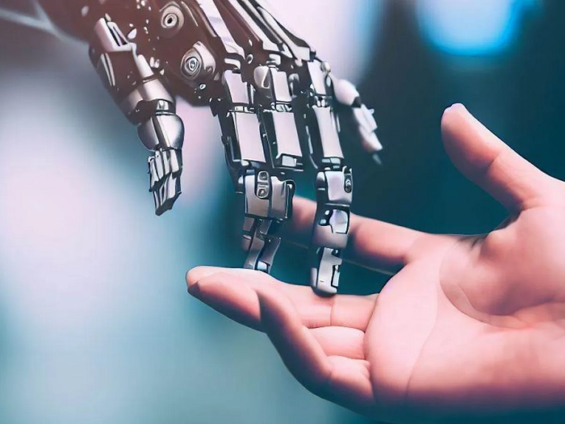
Election, the bedrock of democracy has evolved since its first occurrence in ancient Greece, 508 B.C. One of the profound tools which are changing elections is digital technologies. The rise of Artificial Intelligence (AI) is significantly impacting elections. AI describes the ability of digital technologies such as computers to perform a task premised on human intelligence, such as reasoning, problem-solving, creativity and learning. AI can be applied in any discipline, hence a powerful cross-cutting tool.
An example of AI in action is the creation of texts, images and videos, which previously required significant know-how, a time-consuming process, and expensive technological infrastructure. Currently, AI is making wholesale digital content creation and dissemination very easy and inexpensive., One can generate a speech, joke, video or press release without costly content generators. Also, it generates contents relevant to targeted audience based on ongoing conversations.
The impact of AI on elections reflects in major actors in the electoral space, including voters, elections management bodies, civil society actors, media, political parties and candidates. AI can empower voters with opportunities to understand electoral issues, offer them detailed profiles of candidates and ensure effective participation in election-related discourse.
Also, candidates and political parties can use it as a tool to manipulate, persuade and engage voters in one-on-one interaction as it provides information on candidates and personalises interactions making it more effective through automation of behaviour manipulation, incorporating voter sentiment and micro-targeting. Campaign messages can be personalised due to AI's capability to generate multiple personalised messages based on individuals.
Furthermore, it can deliver customised targeted campaign adverts, that is, different set of messages for online or traditional media engagement. The power of AI in influencing voters is seen in reinforcement learning. Machine learning feature of AI teaches how algorithms are used to train the system based on trial and error until it gets a “perfect” message which can change voting behaviours. There is a growing list of AI tools designed to support the electoral process, like Quiller.ai, an AI tool that can write and send campaign fundraising emails.
Electoral management bodies are the centre of elections as legally mandated to determine eligible voters, process candidates or political parties’ nominations, conduct the elections, count votes and announce winners. AI can provide help to these bodies at the different stages in the electoral cycle through a full or partial automation of relevant electoral processes. Examples are, it can determine candidates’ eligibility based on a set of parameters and aid in results collation to ensure the integrity of the results, seamlessly.
Elections observers are critical stakeholders in electoral processes, as they validate election results using Parallel Vote Tabulation (PVT). Based on data collected, they are independently able to confirm the validity of results issued by electoral management bodies. AI can predict election results more accurately than other prediction methods, by supporting PVT, providing a faster and reliable method of vote tabulation.
CONS
Although AI is shaping elections, its usage is not without challenges which must urgently be attended, as it can lead to the disconnection of citizens from the voting process. AI as a tool can foster disinformation during elections. Political opponents can use it to discredit their opponents and promote fake facts since it provides a mechanism that harnesses disinformation where there is no regard for the truth, or voters are disarmed in differentiating true from false. AI contributes to the creation and dissemination of deepfake, which is the digital fabrication of realistic-looking images and sounds used as a tool for deceit.
In emerging economies, the availability and access of technological tools hinders some people from being directly impacted by AI in the context of elections, hence, the need to look at how digitally excluded persons can be included. The negative impact of AI is far-reaching because previously, to produce disinformation, there was a need to set up a troll farm designed to create content to promote disinformation but AI has made the process easier and affordable.
REGULATORY NIGHTMARE
Overall, AI is exacerbating election misinformation, and implementing solutions to curb negative impact on elections is difficult. With self-regulation political parties and candidates will use AI responsibly or avoid its usage in elections but this seems impossible as political parties' thirst for the potentials of AI to aid them attain power.
Regulating AI in democratic elections and the society is an uphill task since there is no clear approach. Although enhanced privacy protection and strong data privacy laws can ensure restricted access to information needed to deploy AI, more is required. Electoral Management bodies can attempt to regulate the use of AI in elections; however, this requires more resources.
Finally, the introduction of guardrails which mandate the identification of content and adverts generated by AI by adding a tag like “AI generated this message”, may help discerning audience assess contents. However, it is tough implementing guardrails of disclosure requirement needs to protect voters against disinformation, fake news, and misinformation.
European parliament is making some attempts through a draft Artificial Intelligence Act where “AI systems to influence voters in campaigns” are deemed as “high risk” and therefore subject to regulations.
In brief, the rapid advancement in AI indicates it is a matter of time before elections are decided not on the political party or candidates with the best policy proposal or political propositions, instead, the ones with most effective AI tools and strategy. Suppose AI becomes the determinant of elections outcome, the electoral democracy will suffer a major blow since voters will no longer decide on their leaders.
The writer, Dr. Kwami Ahiabenu, II is a Technology Innovations Consultant. E-mail:kwami@mangokope.com
Latest Stories
-
Police restore calm at Larteh following Odwira festival disturbance
38 minutes -
‘All the camps will dissolve’ – Bawumia demands one NPP for 2028
40 minutes -
There is no time to waste – Bawumia orders NPP to begin 2028 work
48 minutes -
Sarkodie visits MobileMoney Fintech LTD
50 minutes -
John Boadu unveils new NPP strategy to win back youth and modernise party
55 minutes -
Hawa Koomson elected NPP National Women’s Organiser
58 minutes -
John Boadu begins NPP rebuild from grassroots ahead of 2028 election
59 minutes -
Titus Glover wins NPP National Organiser race on second attempt
1 hour -
Winning 2028 election won’t be easy; we must work harder – Bawumia
1 hour -
You’ll be part of 2028 campaign; there’s enough work for all of us – Bawumia to NPP aspirants
1 hour -
John Boadu moves to unite NPP after heated leadership contest
1 hour -
Today is not a day of victory but a day of responsibility and great unity – John Boadu
1 hour -
Let us choose unity over division – John Boadu to NPP
1 hour -
Our task is to build a renewed NPP – John Boadu
1 hour -
Teamwork, discipline will drive NPP’s 2028 victory – Justin Kodua after retaining General Secretary position
1 hour