

Audio By Carbonatix
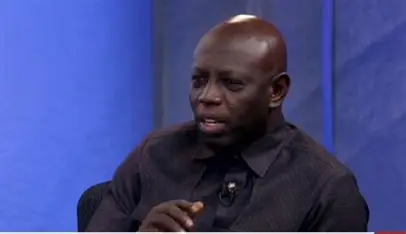
Executive Director of the Institute of Economic Research (IERPP), Prof. Issac Boadi, has rejected proposals to extend Ghana's presidential term from four to five years, arguing that the move would weaken democratic accountability and leave the country vulnerable to prolonged periods of poor governance.
His comments come after Attorney-General Dr Dominic Ayine announced that the government had accepted the Constitutional Review Committee's recommendation to extend the tenure of the President and Members of Parliament from four years to five.
According to the Attorney-General, the recommendation is intended to give governments more time to effectively implement their policies and development programmes, as the current four-year constitutional cycle is considered too short.
Speaking on JoyNews AM Show on Friday, July 31, Prof. Boadi said he had no objection to the proposed age limit for presidential candidates, stressing that leadership ability should not be judged solely by age.
"If you look at the age limit, you can have someone who is grown and able to reason well. You can also have a young person who is very sharp and capable. So I don't have an issue with the age bracket," he said.
However, he made it clear that he does not support the proposal to extend the presidential term from four to five years.
"My issue is the five-year term," he stated.
Prof. Boadi challenged the argument that a five-year mandate would allow governments more time to govern effectively after spending months appointing officials and preparing for the next election.
He argued that Ghana's political cycle does not provide governments with the uninterrupted time often cited by proponents of the proposal because political activities begin almost immediately after general elections.
"The argument is that governments spend about six months appointing officials and another year preparing for elections, leaving only about two years for active administration. But in Ghana, right after elections, politics starts again. Election issues begin almost immediately," he said.
He also questioned whether the proposed amendment would require a national referendum, noting that entrenched provisions of the Constitution must be approved by voters before they can be amended.
Although the Attorney-General has indicated that an implementation committee will classify the proposals based on the constitutional processes required for their implementation, Prof. Boadi said legal experts would have to determine whether the proposed extension of the presidential term falls under entrenched provisions.
"My understanding is that the proposals have been grouped into categories, including those that require a referendum. The lawyers will have to confirm whether this proposal is one of them," he said.
Prof. Boadi further argued that extending the presidential term could have serious consequences if Ghanaians elected a government that failed to perform or was tainted by corruption.
"I don't understand this whole discussion. Imagine getting a president who is not performing, or a corrupt president, or someone sleeping on the job, and the country has to wait five years before voting again. We would be finished," he cautioned.
He maintained that extending the presidential tenure is not the solution to Ghana's governance challenges, insisting that stronger accountability mechanisms, rather than longer terms in office, should be the focus of constitutional reforms.
Latest Stories
-
Guidelines, regulations of cryptocurrency in Ghana fall short of comprehensive oversight – IMF
41 seconds -
COCOBOD’S GH¢16.3bn SPV: Real progress toward a sustainable cocoa sector
22 minutes -
Ghana lose Morocco friendly as Atlas Lions turn to Mali
2 hours -
2026/2027 GPL: Kelvin Nkrumah strike sends Medeama top of league table
2 hours -
Emmanuel City crowned champions of maiden Global Game Scouting Tournament
3 hours -
Thomas Partey loses father Jacob Teye Partey
3 hours -
Martin Kpebu explains when EOCO can arrest Manhyia South MP after securing court warrant
3 hours -
EOCO’s reasons for seeking Manhyia South MP arrest warrant not justified – Kpebu
3 hours -
MTN Ghana warns SMEs against sharing PINs amid digital fraud risks
3 hours -
Yendi nursing students warn restricted access to skills lab could affect their training
3 hours -
Minority awaits formal notice of arrest warrant for Manhyia South MP – Annoh-Dompreh
3 hours -
LTIF announces 2026 Pan-African edition in Accra from October 6-7
3 hours -
Mfantsipim needs broader funding partnerships to bridge infrastructure gap – Prof Baiden
3 hours -
MP status must not shield anyone from law enforcement – Kwakye Ofosu
3 hours -
EOCO had tactical team ready to arrest Baffour Awuah – Felix Kwakye Ofosu
4 hours