

Audio By Carbonatix
The President of the Association of Ghana Industries (AGI), has warned that the recent 10% tariff slapped on Ghanaian exports by the U.S. is a stark reminder of the country’s structural economic vulnerabilities.
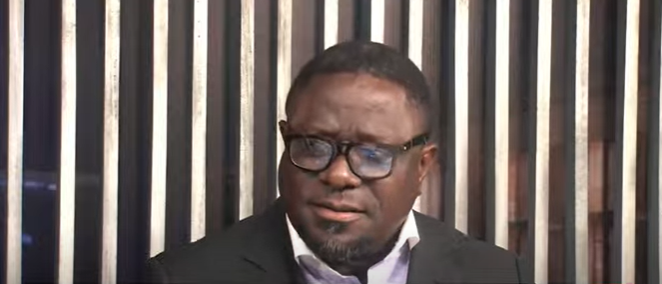
Dr. Humphrey Ayim-Darke questioned the nation’s readiness to transform external crises into meaningful reform in his interview on Joy News’ PM Express Business Edition on Friday, April 11.
He stressed that while political assurances of resilience are often echoed in the wake of such external shocks, they rarely translate into real industrial transformation.
“To the extent of the assurance, you need to also internalise it and look at the risk element as an entity,” he argued.
“The general, broad assurance is there. But you know, there are some externalities—external factors—when they befall a nation, no matter the assurance from the President, because they are beyond your control.”
The AGI president described the U.S. tariff as a classic case of such external factors, calling on Ghanaian policymakers and industrial leaders to treat it as a moment of reckoning rather than rely on rhetoric.
“How do you manage it? How do you mitigate it?” he asked.
“There was this optimistic assurance that, look, we can recalibrate and restructure the economy to take advantage of it. Yes, it is possible. The case of Covid-19 showed us one clear example.”
Yet, he was quick to remind that while the Covid-19 pandemic exposed the fragility of global supply chains, Ghana did little to strategically reposition its economy in response.
“How did we execute the fallout of Covid?” he asked pointedly.
“How did we deliberately promote local manufacturing companies as a fallout of Covid? That example is there. How many companies can we count out beyond that?”
For Dr. Ayim-Darke, the failure to learn from past shocks raises doubts about the nation’s capacity to respond meaningfully this time.
“That said, assurance is not sufficient, because there are other obstacles in these structural reforms to build internal capacity.”
He pointed to the power industry as a missed opportunity, despite existing local content laws and clear prospects for value chain development.
“We even have a local content law, and we sought to build a value chain in the power industry so that manufacturers could produce cables and conductors,” he said, citing how the Electricity Company of Ghana (ECG) once encouraged meter assembly plants to set up in Ghana.
“But beyond that, you need to interrogate: how far have we come? Have they been successful over the years?”
To him, it is not enough to declare optimism or preach economic recalibration. The hard reality, he said, is that Ghana is still highly dependent on imports, and little has changed structurally.
“Recovery couldn’t take advantage of the situation to industrialize,” he lamented. “The structure of the economy is still highly dominated by imports.”
Casting doubt on the country’s ability to seize the moment following the U.S. tariff hike, Dr. Ayim-Darke asked: “If COVID couldn’t give us a start—reawakening to correct issues—and we see such mistakes still reoccurring, what is the probability that we could take our destiny into our own hands, even with this Liberation Day declaration?”
In his final remarks, he warned against complacency and political posturing, insisting that Ghana must move beyond talk if it is to ever build economic resilience.
“It’s full of talk that we need,” he said.
Latest Stories
-
Ghana housing finance conference adopts communiqué to improve affordable housing access
4 hours -
Special Initiatives Minister urges Wa Technical Institute to enrol more girls as EU-backed solar training lab opens
4 hours -
In the matter of my first year at the Bar
4 hours -
ActionAid Ghana calls for an end to child marriage, greater investment in girls’ rights
4 hours -
Newsfile to tackle World Cup visa scandal, beach demolitions, education strikes, BRICS bid
5 hours -
UK-Ghana Trade & Investment Summit: Trade Resource Centre to help businesses maximise UK-Ghana trade opportunities
5 hours -
Embassy of Denmark celebrates World Maritime Day
5 hours -
Linking LEAP to productive inclusion could cut extreme poverty by 2030 – UNICEF
6 hours -
Trade Ministry backs use of creative arts to rehabilitate prison inmates
6 hours -
Negotiations with government to continue despite strike suspension – GNAT
6 hours -
‘Ghana cannot afford to waste public resources; every cedi has a job’ – Ato Forson
6 hours -
Ghana expects economic boost as World Assemblies of God Congress brings 10,000 delegates to Accra
7 hours -
Joy in Nayilifong as Farouk Aliu Mahama donates 100kVA transformer to improve power supply
7 hours -
Chief Justice urges employers to tackle mental health stigma in workplaces
8 hours -
Analysis: Ghana’s yellow fever numbers reveal a gap between vaccination and protection
8 hours