

Audio By Carbonatix
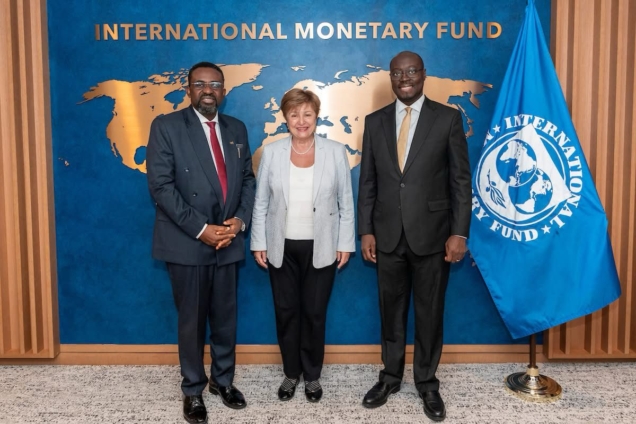
An International Monetary Fund (IMF) staff mission is expected in Accra from September 29, 2025, for Ghana’s 5th programme review.
The exercise will assess how Ghana has performed under the IMF programme since completing the 4th review earlier this year.
This will be the penultimate review, with the final one scheduled for April 2026 before Ghana concludes the programme in May 2026.
The 5th review is considered particularly important, as some market analysts fear Ghana may struggle to maintain fiscal discipline once the programme ends.
Development partners are, therefore, urging the institution of “shock absorbers” to prevent economic instability after May 2026.
Government, however, insists there is no cause for alarm, stressing that it has already taken steps to assure markets of expenditure discipline post-programme.
If Ghana passes this 5th review, about $360 million is expected to be disbursed in October 2025. So far, Ghana has received approximately $2.3 billion since signing onto the IMF programme.
Focus of the 5th Programme Review
Joy Business has gathered that the review will focus on Ghana’s economic data ending June 2025. Key areas of discussion include:
- Inflation performance.
- Sustainability of reserve build-up.
- Audit of arrears.
- Weak private sector banks require recapitalisation.
- State-owned banks needing recapitalisation, similar to NIB.
- Fiscal policy shortfalls in the face of an appreciated currency, with adjustments needed to meet the 1.5% of GDP primary surplus target.
- Arrears build-up in NHIL, GETFund, Road Fund, and other areas.
- Social spending shortfalls.
Ghana’s IMF Programme and Priorities
On May 17, 2023, the IMF Executive Board approved an SDR 2.242 billion (about US$3 billion) 36-month Extended Credit Facility (ECF) arrangement for Ghana. This decision allowed for an immediate disbursement equivalent to SDR 451.4 million (about US$600 million), with the rest disbursed in tranches every six months following programme reviews.
The programme seeks to:
- Restore public finances to a sustainable path through revenue mobilisation and improved spending efficiency, while protecting the vulnerable. For example, allocations to the LEAP cash transfer programme and the school feeding programme have doubled under recent budgets.
- Support fiscal adjustment and resilience with structural reforms in tax policy, revenue administration, public financial management, energy, and cocoa.
- Curb inflation, with the Bank of Ghana raising interest rates and ending monetary financing of the budget, while maintaining a flexible exchange rate to rebuild reserves.
- Preserve financial stability.
- Encourage private investment, growth, and job creation through broader reforms.
Latest Stories
-
NACOC addressing inherited gaps in fight against drug trafficking – Deputy Director-General
11 minutes -
Taekwondo goes to school as GTF launches five-region youth campaign
14 minutes -
The issues Mourinho is struggling to fix at Real Madrid
20 minutes -
Hundreds throng EducationUSA College Fair in Kumasi in pursuit of abroad studies
23 minutes -
Drug bust: NACOC should be part of port inspection team – Twum-Barimah
26 minutes -
Ward appointed Liverpool’s sporting director
26 minutes -
This isn’t the first cocaine bust; NPP must stop the politicisation – NACOC deputy boss
30 minutes -
Drug bust case: Only Customs officers, MPS officials in scanning room – NACOC
2 hours -
I don’t mind being insulted; I have a crocodile skin – President Mahama
2 hours -
Samson’s Take: Verify the badge – and verify the story
2 hours -
President Mahama explains why Ghana must rethink regulation of TikTok, other new media platforms
2 hours -
Rule of law must be protected – GBA condemns EOCO action against Baffour Awuah
4 hours -
950,000 barrels of Sankofa crude head to TOR as GNPC deepens domestic refining
4 hours -
Scales of deception removed – Annoh-Dompreh attacks new cocoa price
4 hours -
Young Positivist Writes : My Experience with GCLP
5 hours