

Audio By Carbonatix
The Minister of Trade and Industry, Alan Kyeremanten has observed that for Ghana to benefit from the civil market, there is the need to create a high level of awareness among regulatory authorities.
"These regulatory authorities included Customs, Immigration, Police, Producers and Exporters as well as the Logistics Industry who were the agents that would make the African Continental Free Trade Area (AfCFTA) work on the ground in order for Ghana to derive the maximum benefits," he said.
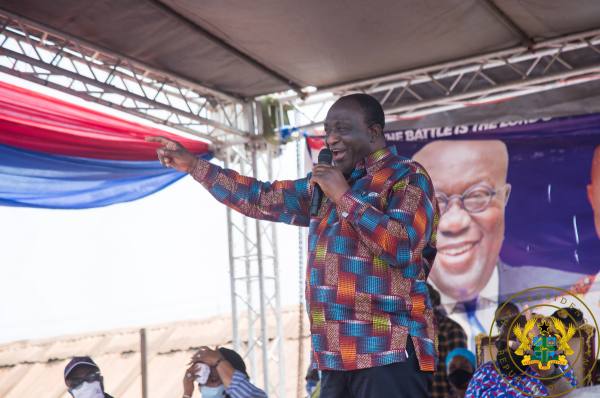
Mr. Kyeremanten said this in a speech read on his behalf by Dr. John-Hawpkins Asiedu, Technical Advisor-Industrial Parking and Special Economic Zones at the Ministry of Trades and Industry, during the regional conference on the implementation of the AfCFTA.
“If there is no awareness, we cannot harvest the full benefit of the agreement.
"We need to develop concrete ways to enable the regulatory authorities and the economic operators to interface with the systems that are being established under the AfCFTA and to agree on the routes of entry, the custom facilities and the procedures for export and import of goods,” he said.
Mr Kyeremanten noted that for them in Ghana, they recognised that an increase in Trade was the surest way to deepen regional integration in Africa.
Adding that the coming into being of the Continental Free Trade Area Agreement was one of the most important decisions taken by the African Union.
He indicated the government’s commitment to ensure the operationalization of the AfCFTA Secretariat in Ghana, adding, it would accelerate industrial transformation for inclusive economic transformation.
The Trade and Industry Minister noted that Ghana’s overarching objective was to position itself as the new manufacturing and services hub on the African Continent.
He stressed that this was the most opportune time for the government to empower the private sector to optimize the full benefit of the AfCFTA.
“Government seeks the cooperation of the private sector, the public and all relevant institutions to work together as stakeholders and become strategic partners to address the complexities of regional integration while ensuring that the implementation of AfCFTA leaves no one behind,” Mr. Kyeremanten said.
“AfCFTA is the second-largest trading blog in the world today with a population of 1.2 billion and a combined GDP of 3.4 trillion dollars,” he said.
He noted that the agreement when fully implemented had the potential to bridge the African trade by as much as 52.3% by 2022 from the current 15%.
Mr Albert Kassim Diwura, Deputy Chief Executive Officer (CEO) of the Ghana Export Promotion Authority (GEPA), noted that over the past decade, Ghana had enhanced its stature in international trade recording substantial expansion in total export, and gave credit to the joint effort of the government and the Ghanaian private sector.
He noted, however, that the recent relatively weak performance of the non-traditional export sector and other externalities in the external trading environment had revealed the risk, the weaknesses and the uncertainty associated with their over dependency on commodity export and limited product diversification and value addition.
Mr Diwura said it was for this reason that President Akufo-Addo called for a paradigm shift from the export of raw materials to value added products, noting that government had therefore embarked on an industrialization agenda, which saw the establishment of several manufacturing companies under the government's “One-District-One Factory” programme.
The conference was organized under the theme: “Empowering Ghanaian Business to Harness the Benefits of the AfCFTA within the Framework of the National Export Development Strategy (NEDS)”.
It was organized by the Ministry of Trade and Industry in collaboration with the Ghana Export Promotion Authority (GEPA) and the National Coordination Office for the AfCFTA.
The conference, which was part of the preparation for the commencement of trading on January 1, 2021, was to sensitize the business community in the Upper West Region on the available market opportunities as well as essential target products in the African Continental Free Trade Area Agreement (AfCFTA).
Latest Stories
-
Hawa Koomson pledges experienced and mature leadership of NPP women’s wing
47 minutes -
Young woman found dead at Kasoa Peace Town
1 hour -
Playback: The Law examined lawful arrest in Ghana
2 hours -
Mahama urges African governments to treat healthcare as an investment, not budget cost
2 hours -
Bawumia congratulates John Boadu and new NPP executives, pledges support ahead of 2028
2 hours -
‘No talent should be left out’ – Bawumia pledges inclusive NPP campaign for 2028
2 hours -
Prof. Mike Oquaye recounts how he blocked the Special Prosecutor’s attempt to arrest Bawku Central MP
3 hours -
Make health sovereignty a priority for Africa – Mahama
3 hours -
Dorimon Naa, Wa West DCE lead massive clean-up exercise; threaten sanctions against recalcitrant residents
3 hours -
Photos from Adom FM Y2K Jam
3 hours -
Praye Tiatia steals the show at Adom FM Y2K Jam [Watch]
3 hours -
Boakye Agyarko congratulates John Boadu, pledges support for NPP leadership
4 hours -
Antwi HiMight thrills fans with Antwi ne Antwi hits at Adom FM’s Y2K Jam [Video]
4 hours -
Amb. Edward Boateng congratulates Boadu, Kodua on election wins
4 hours -
John Boadu pledges to rebuild NPP from grassroots and restore ‘winning machinery’
4 hours