

Audio By Carbonatix
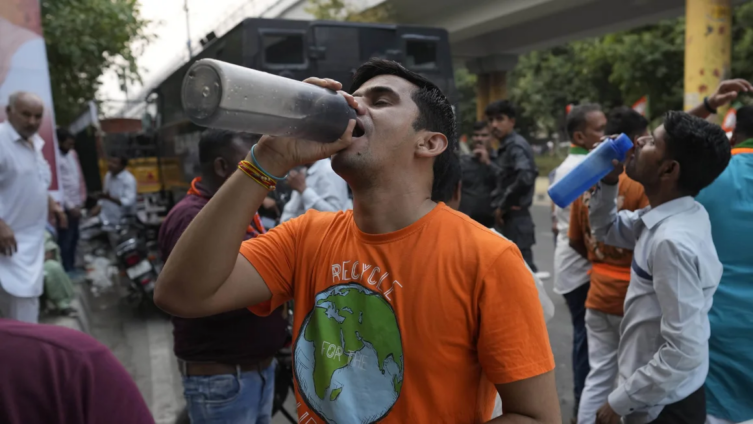
There’s no fresh water in the slums of Delhi’s Chanakyapuri neighbourhood. It’s 49.9 degrees Celsius, or 121 Fahrenheit – the hottest temperature on record.
The sun belts off the tin roofs of the shanties. Desperate people wait for drinking water to be delivered.
When it arrives, there’s chaos.
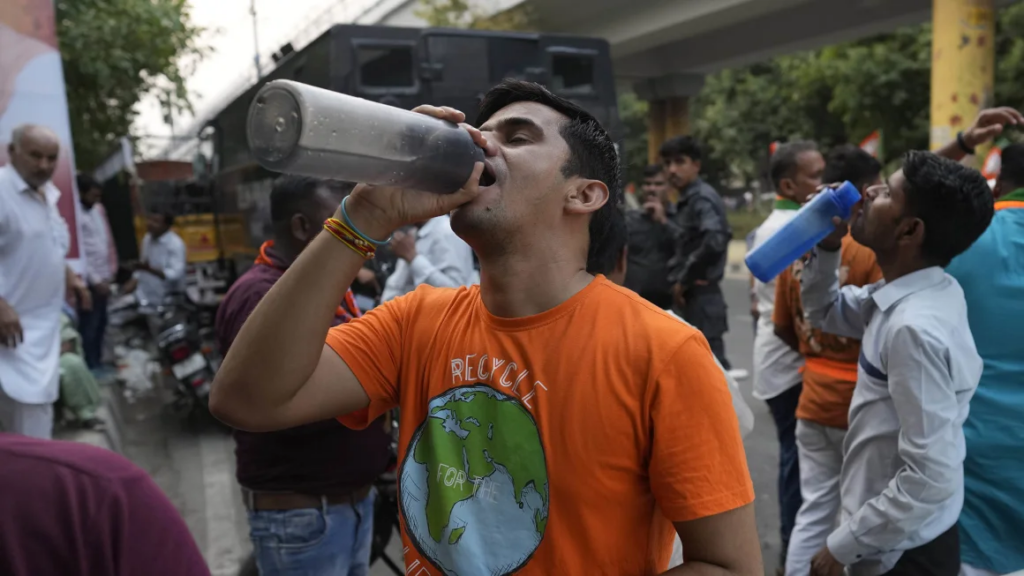
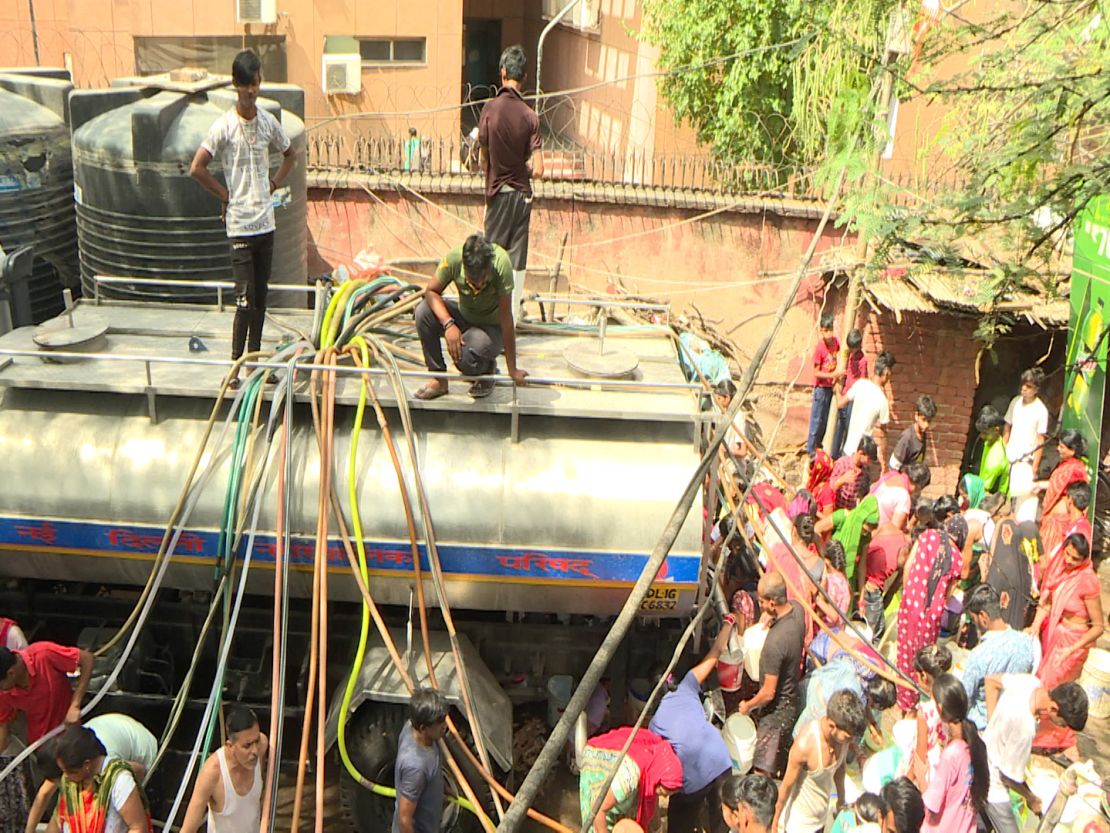
Dozens of people run to the truck, some even climbing on top of it to throw pipes in, pushing in to get their containers filled with water. It’s first come first served, and many people miss out.
Mother-of-six Poonam Shah is one of those people.
Manish Swarup/AP
“There are 10 people in my family – six kids, me and my husband, my in-laws, relatives come over sometimes – can we all bathe in one bucket of water?” she asks.
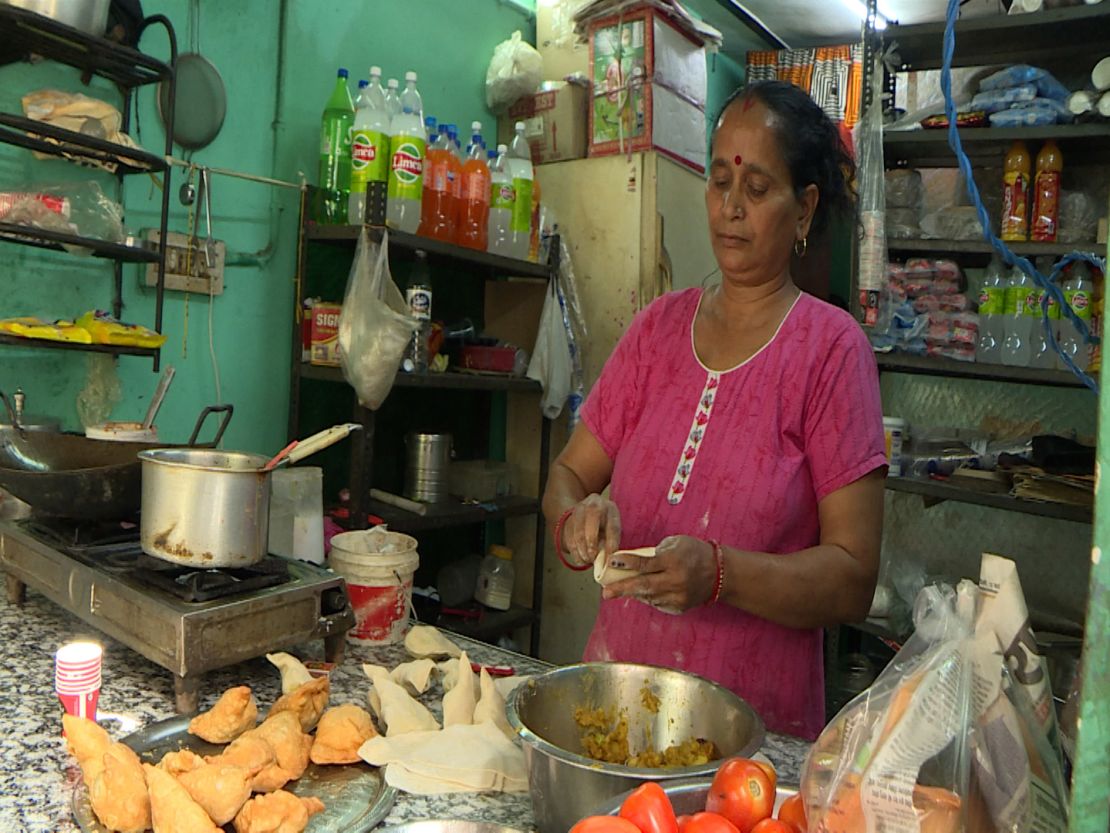
Today her family may not even have one bucket. Poonam was working her street food stall when the water truck arrived. She tried to run back for it – but it was too late, the water had run out.
“What are we supposed to do? There’s no water. I work in a shop, there’s no water there. But forget about the shop, we don’t have water for our kids.”
She’ll now look to buy water – it’ll cost up to half of the $3 she usually earns in a day selling samosas and other snacks.
As record heat grips northern India, the Delhi government has been forced to ration these free water deliveries. Previously, Poonam’s neighbourhood received two to three tanker deliveries per day. Now it’s just the one.
Temperatures in Delhi have been hovering above 40 degrees Celsius over the last week and on Tuesday they hit an all-time high of 49.9 degrees Celsius in one area of the capital, according to the Indian Meteorological Department.
At least one death has been reported in the city so far, and dozens more across the country.
At Ram Manohar Lohiya (RML) hospital in Delhi, a heatstroke unit with cold immersion tanks is treating more and more patients suffering extreme heatstroke, exhaustion and dehydration.
The hospital’s ice baths and air conditioning can help a handful of the millions of people who have no choice but to brave the Delhi heat to earn a living, but only if they get to hospital quickly.
“The mortality rate of heatstroke is very, very high, it is close to 60% to 80%,” Dr Ajay Shukla, medical superintendent of the hospital, told CNN. “People can survive if they get immediate and very early medical care and that involves rapidly cooling the body.”
“If people get that rapid cooling, they stabilize, they survive. But if they get to the hospital late and the intervention is late, the mortality rate is so high. We’re unable to save them if they come to us late.”
The patient who died in Delhi had been admitted to RML hospital. He was a 40-year-old migrant laborer, and like many working outdoors in the harsh sun, he succumbed to the heat.
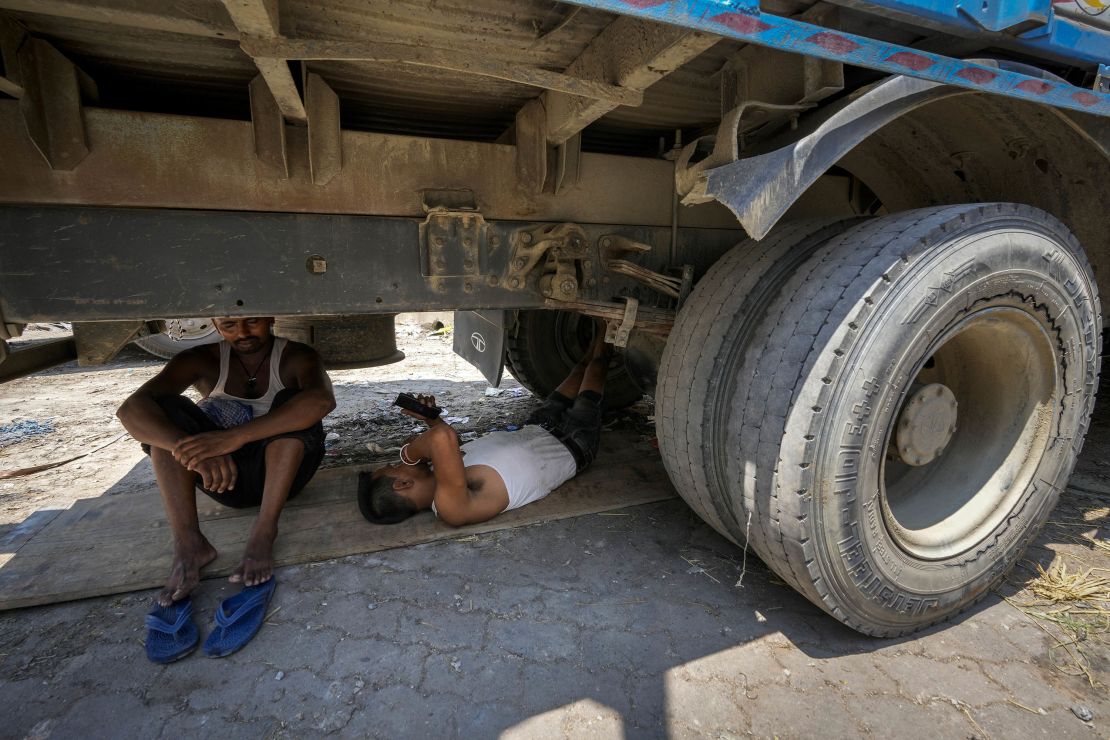
“He was working in a factory… he was working in an area where there was no cooling, a very small congested area with a tin shed so there were multiple workers inside,” Dr Shukla said, adding that it was too late by the time he arrived at the hospital.
The man’s name has not been released, for privacy reasons.
Most of the hospital’s heatstroke patients are from poorer communities, where working people have no choice but to spend long stretches out in the summer sun.
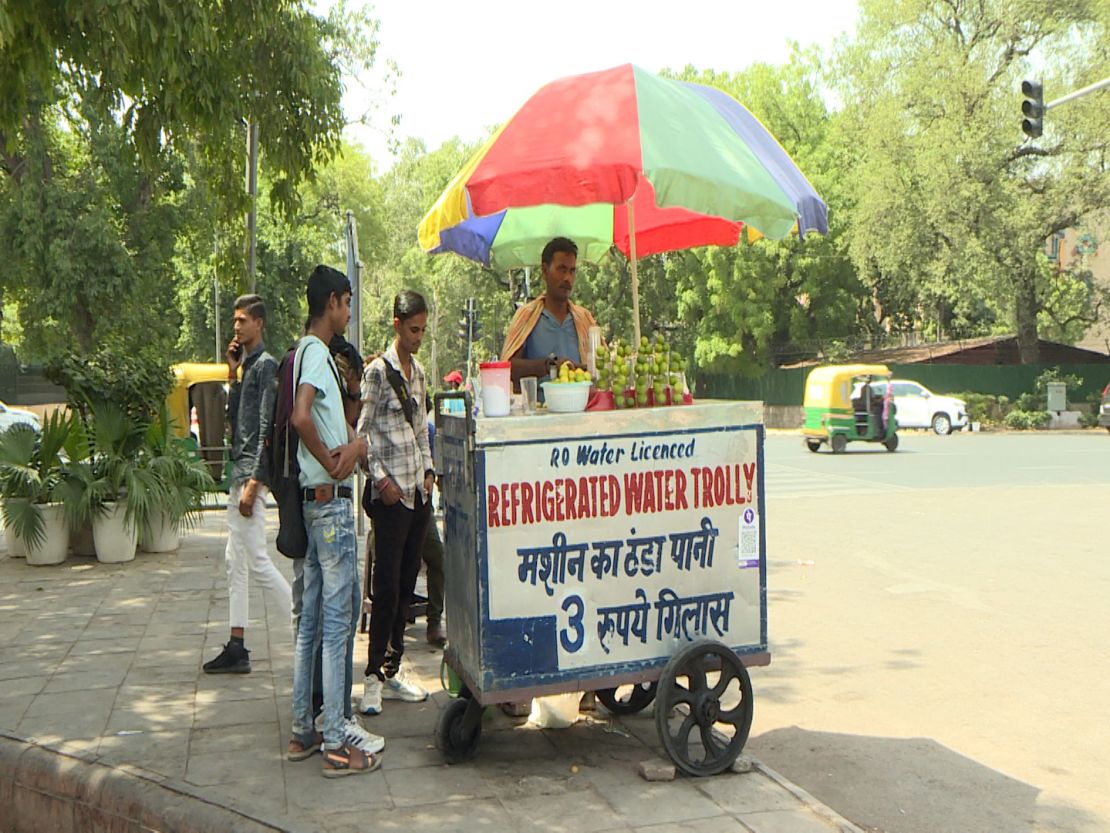
Kali Prasad sells water and lemon juice outside the India Gate. Each day he pushes his water cart to the famed spot, from his home some eight kilometres (five miles) away.
“The heat has risen drastically over the last five to 10 days, it’s very hot, people aren’t even coming here because of it,” he said.
He says he has no choice but to stand all day under the scorching sun, as there is no one else to provide for his wife, children and parents.
In recent years, the summer heat has come earlier, temperatures have risen higher and higher, and heatwaves have lengthened.
Northwest and central India have been experiencing maximum temperatures above 42 degrees Celsius with some towns even crossing the 50-degree mark, according to the Indian Meteorological Department.
The trend is “a clear manifestation of the escalating impacts of climate change,” says Farwa Aamer, the director of South Asia initiatives at the Asia Society Policy Institute.
“This alarming spike in temperatures underscores the urgent need for robust adaptation strategies and proactive measures in India and the region to protect lives and livelihoods, especially among vulnerable populations, from the devastating health effects of such intense heat,” said Aamer, who researches climate vulnerabilities in South Asia.
For many in Delhi, the climate crisis has already made life during summer unbearable.
“We have to deal so we deal, we are poor people so we have to die, we have to work no matter how hot it is,” Kali Prasad said.
“We don’t have any other option.”
Latest Stories
-
EOCO had tactical team ready to arrest Baffour Awuah – Felix Kwakye Ofosu
16 minutes -
Afoko can unite NPP’s factions, says Charles Owusu Juanah
30 minutes -
Guardiola backing Man City after guilty verdicts
36 minutes -
Annoh-Dompreh questions EOCO’s claim that Manhyia South MP was unavailable for questioning
37 minutes -
Djokovic wins first match since Wimbledon at China Open
49 minutes -
KAIPTC, National Peace Council move to bridge civilian-security trust deficit to counter violent extremism
56 minutes -
Infantino should have no place in future of football – Pinto
59 minutes -
A decade of duty: First Commander recounts the unexpected birth of Ministries Fire Station
1 hour -
Mfantsipim must cultivate more business leaders, entrepreneurs – Nana Awuah
1 hour -
MOBA must reduce reliance on donations to protect Mfantsipim’s future – Patrick Kittoe
1 hour -
GCB extends Customer Service Week into month-long customer engagement
1 hour -
Africa risks widening inequality if it fails to build AI expertise – Kweku Awotwi
1 hour -
Women’s Voices Matter Movement petitions Gender Ministry over women’s rights and development
1 hour -
Ronaldo leaves Portugal camp after coach denies rift
1 hour -
Huel ad banned for suggesting its products could replace all meals
1 hour