

Audio By Carbonatix
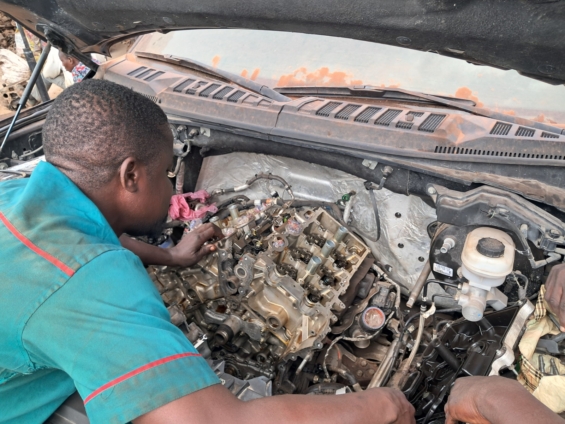
Suame Magazine, Ghana’s largest mechanical hub, is beginning to feel the pressure of a fast-changing automotive world. As electric vehicles (EVs) slowly enter the country, many artisans in this famous Kumasi industrial zone say they are lacking the skills, equipment, and technical training needed to repair or service them.
For decades, Suame Magazine has been known for its noise, energy, and technical mastery. Mechanics there fix petrol and diesel vehicles from all parts of Ghana and West Africa. But EVs—with their high-voltage systems and advanced electrical components—are a new challenge many artisans fear.
Daniel Kyei has worked at Suame Magazine for nearly 10 years, repairing American Ford vehicles. But when hybrid cars arrive, he says, artisans do not understand the electric systems, so they convert them to petrol or diesel engines.
“We don’t know enough about the electric part. So the hybrid ones, we always convert them to petrol or diesel,” he said.
Daniel believes the problem is not only a lack of knowledge. The specialised tools and diagnostic machines needed for EV repairs are missing.
“Electric vehicles are not common. So the tools we need are not available for us.”
While many artisans fear EVs, others see a new opportunity for Suame Magazine. A mechanic of 19 years who trained at Kumasi Technical University, Isaac Kudjoe, believes EVs will soon become common in Ghana, and artisans must prepare before they are left behind.
“Electric cars are coming. We need to understand them. We must learn both mechanical and electrical skills,” he said.
To Isaac, Suame Magazine can succeed in this new era if artisans get access to training and modern equipment.
“We need training. We need the machines. If we learn it well, Suame can do it.”
A young apprentice, Farida Musah, has never touched an EV before. She has only seen them online—but she wants to learn.
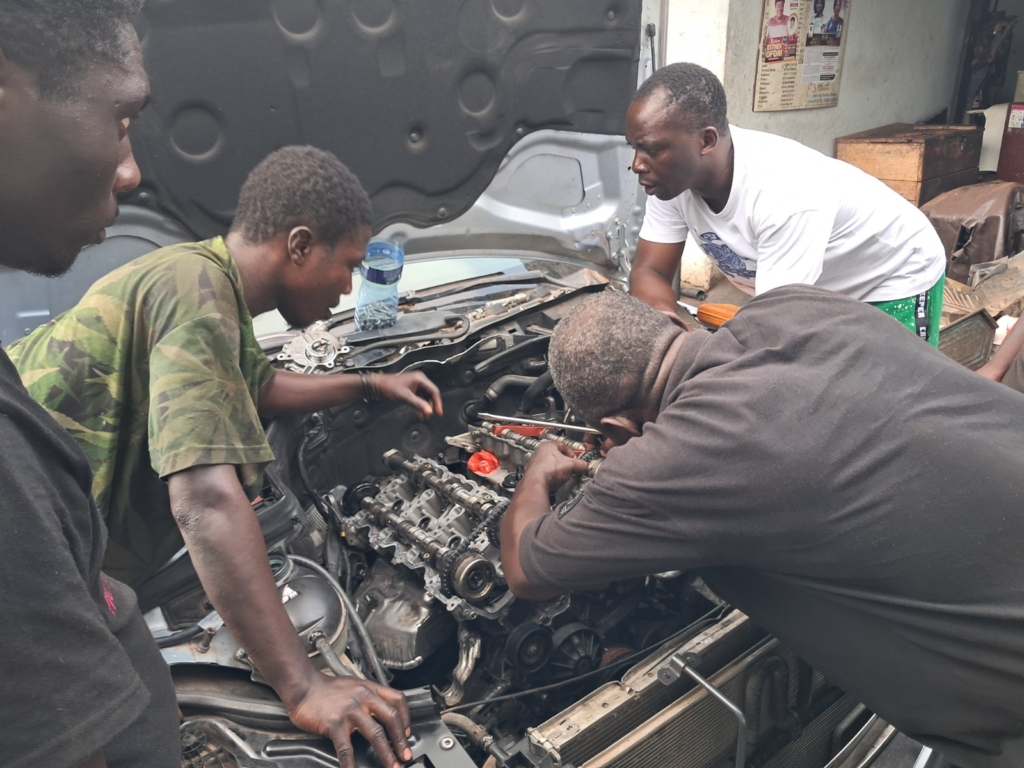
“I only see electric cars on social media. I want to learn it. I want more training so I can work on them,” she said.
For young people like Farida, EVs are not something to fear. They are an opportunity to secure a career in the automobile industry for the next generation.
Suame can become Ghana's EV service hub
The Suame Magazine Industrial Development Organization (SMIDO) believes electric mobility can unlock massive opportunities—if training and investment come fast enough.
“With proper investment, Suame Magazine can become a major EV service hub. We can train many young people for the future,” said Patrick Asante Okyere, SMIDO’s Managing Consultant.
But he warns that if the gap is not closed quickly, artisans risk being excluded from Ghana’s electric mobility revolution.
It was because of these mounting challenges that JoyNews, in partnership with the embassy of Federal Republic of Germany Embassy, organised its final edition of the 2025 Climate Talks under the theme: “Innovation in Motion: Artisans at the Centre of Ghana’s Electric Mobility Revolution.”
The event, held on November 25, 2025, brought together nearly 200 participants, including artisans from Suame Magazine, policymakers, automotive engineers, EV experts, transport unions, academics, and private sector innovators.
The goal was to simply face the challenge head-on by creating a national conversation about how to support artisans through Ghana’s EV transition.
Participants shared practical experiences—from the frustration of not understanding EV technology to the excitement of joining a global future. Policymakers and experts also outlined steps Ghana must take, including setting up EV training centres, subsidising diagnostic tools and equipment, updating curricula in technical schools, forming partnerships with EV manufacturers, and creating an inclusive national roadmap for electric mobility.
For many artisans who attended, it was the first time their concerns were placed at the centre of a major national dialogue.
A future Suame must prepare for
As the world responds to climate change, countries are shifting to cleaner and climate-friendly transport. Ghana is expected to see more EVs on its roads over the next decade.
Suame Magazine—built on skill, creativity, and decades of hard work—now stands at a crossroads. Artisans say they are ready to learn and adapt, but they cannot do it alone. They need tools, training, and structured support to join the global shift.
The workers say they have the hands and experience, but now, they need the knowledge to power Ghana’s electric future.
Latest Stories
-
AFCON 2027Q: ‘Our Black Stars team is gone’ – Former Sports Minister
9 minutes -
Prof. Prempeh calls for public review of draft constitutional reform bills
21 minutes -
AFCON 2027Q: ‘I have never seen a poor performance from Black Stars like against Gambia’ – Nii Lante Vanderpuye
26 minutes -
Nigeria set to launch National Digital Address System 9 years after Ghana showed the way
49 minutes -
Policy rate decision takes time to reflect in lower lending rates – BoG
59 minutes -
Western Regional Minister applauds Karpowership’s role in Ghana’s power sector
1 hour -
Livestream: Road safety crises: Where are we getting it wrong?
1 hour -
Enterprise Life celebrates 25 years of protecting families and building trust
2 hours -
ICC London rules in favor of Ghana against Tullow over $400m tax charge
2 hours -
We are disappointed in ICC’s ruling over our corporate income tax assessment in Ghana – Tullow Oil
2 hours -
Cost of building inflation for August 2026 increases to 4.6% – GSS
2 hours -
Today’s front pages: Wednesday, September 30, 2026
2 hours -
Bawumia highlights agricultural, compulsory insurance reforms in IBAG engagement
2 hours -
Ghana will secure Tullow tax revenues while protecting Jubilee, TEN investments – Ato Forson
3 hours -
Ghana wins $393m Tullow tax arbitration as tribunal upholds GRA assessment
3 hours