

Audio By Carbonatix
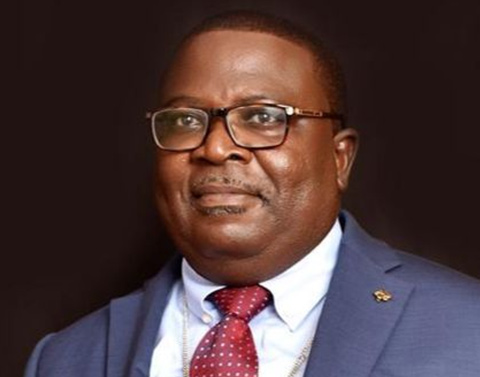
The President of the Chartered Institute of Taxation Ghana, George Kwatia, has advised government to close the tax gap by investing in existing tax laws rather than introducing new levies.
According to him, the introduction of new taxes and increases in levies without a corresponding increase in the country's Gross Domestic Product is counter-productive.
Speaking on a Joy Business discussion themed, “Ghana’s High Taxes; the causes and finding remedies”, Mr. Kwatia said a cursory look at the budget shows that shortfalls in projected revenue could be blamed on increased taxes when economic growth is low.
According to him, increasing and introducing new taxes without an assessment of growth projection will always create a gap that may lead to revenue gaps.
“If you look at total tax revenue, I have mentioned that in the revised one for 2023, government is only looking at ¢108 billion, while we have a tax gap of about ¢55 billion to ¢70 billion”, he said.
Mr. Kwatia explained that new taxes do not necessarily guarantee an increase in taxes particularly when economic activities are not encouraging in the private sector.
Providing some recommendations, he called for investments in existing taxes to close the gap between formal workers who pay majority of taxes and players in the informal economy.
“If you really are a country that wants to invest and make sure that you will get the right taxes, let me remind you it is not about more taxes, but is rather about investments into making sure that we close the tax”.
He maintained that effectively closing the tax gap will not only improve revenue collection but will strengthen the tax administration system.
Speaking on the same show, Economist at the Institute of Statistical Social and Economic Research (ISSER), Prof. Charles Ackah said government must find a better way of taxing the informal economy where much income is generated but unaccounted for.
Citing an example, Prof. Ackah revealed that there are more workers in the informal sector earning more than university lecturers, and yet pay no income taxes.
Such a development, he said is a disincentive to the few in the formal economy who pay taxes to the government.
“There are barbers in Ghana who earn more than ¢5,000 a month and yet they are not taxed. Compare that to a nurse or a teacher who earn less than that but is taxed. How can the system tax a cleaner at the university who earns about ¢800 and ignore a barber, a mechanic and all the informal workers who earn more”, he said.
Latest Stories
-
Gov’t to establish Prison Industrial Hub to equip inmates with income-generating skills – Prison Service boss
7 minutes -
Alhassan Tampuli donates cement, roofing sheets to support storm victims in Gushegu
7 minutes -
Alhassan Tampuli appeals for urgent support for storm victims in Gushegu
10 minutes -
The hypocrisy must stop; pass Anti-LGBTQ+ Bill now – Alhassan Tampuli to Mahama
14 minutes -
Imprisonment should be rehabilitative, not punitive – Ghana Prisons boss at UNGA
36 minutes -
Ga Adangbe traditional priests petition Mahama over McDan aviation licence revocation
47 minutes -
Anti-LGBTQ Bill: NDC’s arrogance is worrying – Hassan Tampuli
57 minutes -
Let’s give OSP time to mature, not to scrap it – Hassan Tampuli
1 hour -
Nigeria convicts 386 Islamist militants in mass trials
1 hour -
Djibouti president wins election with 97.8% of vote, state media says
1 hour -
We don’t have mandate to deduct tax from rent allowance of security services personnel – Interior Ministry clarifies
1 hour -
Ablakwa receives Presidential Special Envoy on Reparations to advance global agenda
2 hours -
Christina Koch becomes first woman to travel around the moon on Artemis II
2 hours -
Epstein survivors’ calls to meet King Charles and Queen harder to ignore as US visit approaches
2 hours -
UN Secretary-General names Ghana’s Anita Kiki Gbeho as South Sudan envoy
2 hours