

Audio By Carbonatix
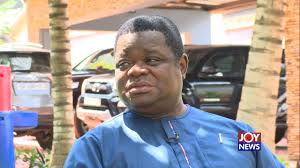
The Director of the Institute of Statistical, Social and Economic Research (ISSER), Prof Peter Quartey, has warned that the rising preference for black market and forex bureau transactions is fuelling under-invoicing and tax evasion in Ghana.
Speaking on Joy FM’s Super Morning Show on Monday, July 21, Prof Quartey cautioned that many importers and traders deliberately avoid the formal banking system to conceal the true value of their transactions and evade taxes.
“Unfortunately for our brothers and sisters in the Ghana Union of Traders' Associations (GUTA) and the rest, they prefer to transact in cash. They don’t want to use the banking system because when you do that, government can track the value of your imports, so you pay the appropriate taxes,” he explained.
“So, they prefer to deal in the black market, deal in physical cash, where issues of under-invoicing and all those can happen so they beat how much tax they pay. That is the problem,” Prof Quartey added.
No Dollar Shortage in Banks
His comments come in response to recent complaints from business operators, particularly importers, who claim there is a shortage of US dollars in the banking system.
Prof Quartey dismissed those claims, clarifying that there is no scarcity of foreign currency in the formal sector. According to him, banks are encouraging electronic transfers and cheque payments over large-scale cash withdrawals to improve safety and financial accountability.
“If you have an account and you want to import with all the necessary documentation, there is no problem—there is no limit on how much you can pay. It is only those who insist on physical cash without having deposited any, that are having difficulties,” he explained.
Call for Transparency
Prof Quartey urged traders, importers, and exporters to use the regulated banking system to ensure transparency and support national revenue mobilisation efforts.
He emphasised the need for collective education and awareness to promote cashless transactions and reduce reliance on informal forex markets, which, he warned, distort the economy and undermine tax collection.
“We are saying we are moving cashless, yet people want to trade in forex using huge sums of physical cash. It is not safe and it is not sustainable,” he cautioned.
Prof Quartey’s remarks come at a time when the government is intensifying efforts to clamp down on tax evasion and illicit financial flows.
Latest Stories
-
Global health must be led by countries, not designed for them – Mintah Akandoh
42 minutes -
Mahama honoured at 2026 World Health Summit in Berlin for global health leadership
51 minutes -
Breast cancer is not a death sentence – Besease Kontire Obaapanin, Magmina Foundation lead awareness campaign
53 minutes -
EcoBank invests in digital education of 4 Garisson School to mark 40 years in Africa
1 hour -
AGI urges investment in skills and raw materials to strengthen local manufacturing
1 hour -
GPL 2026/27: ‘We have to rectify our mistakes’ – Boadu reacts to Aduana FC defeat
1 hour -
No disability access, no building permit – KMA declares
1 hour -
Asantehene to lead environmental restoration effort at Jimi Land Reclamation Site
2 hours -
Poor Ghanaians are being jailed because they cannot afford justice – Crime Check Foundation
2 hours -
No conflict in appointing Emelia Agbenyo as Deputy EC Chair – NDC
2 hours -
87-year-old man jailed 20 years for defiling 9-year-old girl at Ofankor
2 hours -
Sankofa Gold targets 70kg output after 9-month shutdown
2 hours -
Tamale, Bolgatanga had just one Legal Aid lawyer between them – Kwesimintsim MP
2 hours -
PAC orders eviction of former irrigation company MD from official residence
2 hours -
Legal Aid Commission has offices in only 45 of Ghana’s 261 districts, needs 180 more staff
2 hours