

Audio By Carbonatix
Before Kennedy became president in 1961, his country had made little attempt to understand the rapid changes that Africa was undergoing.
By the time he was assassinated in 1963 the picture had radically changed.
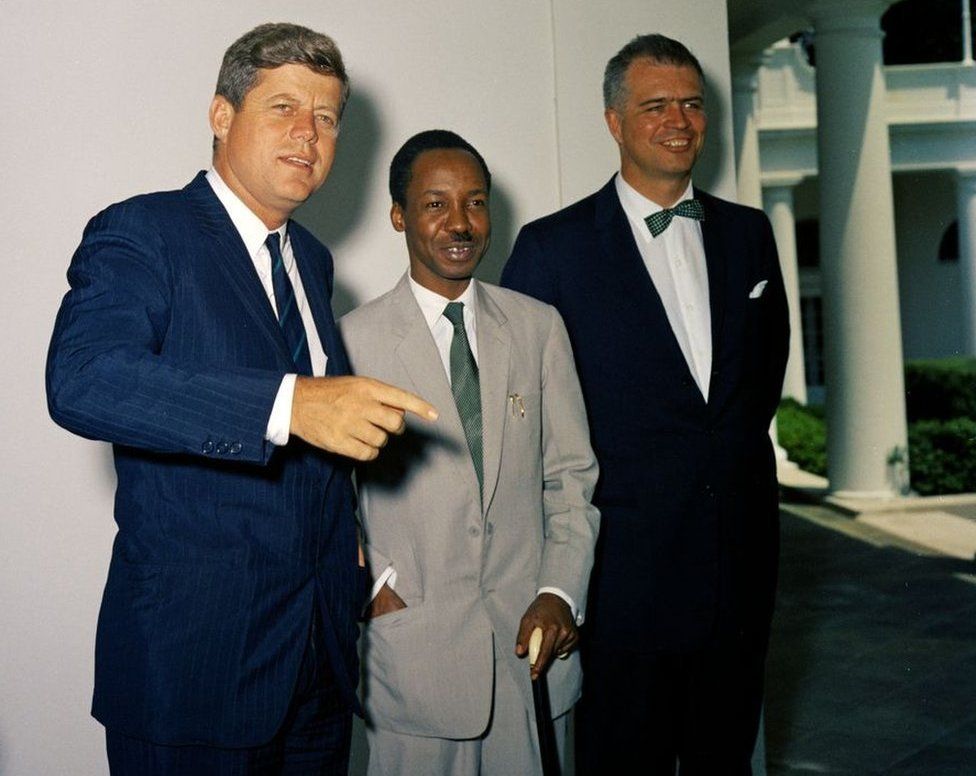
In his short time in office, Kennedy had received at the White House either the leader of every independent African state - numbering more than two dozen at the time - or its ambassador.
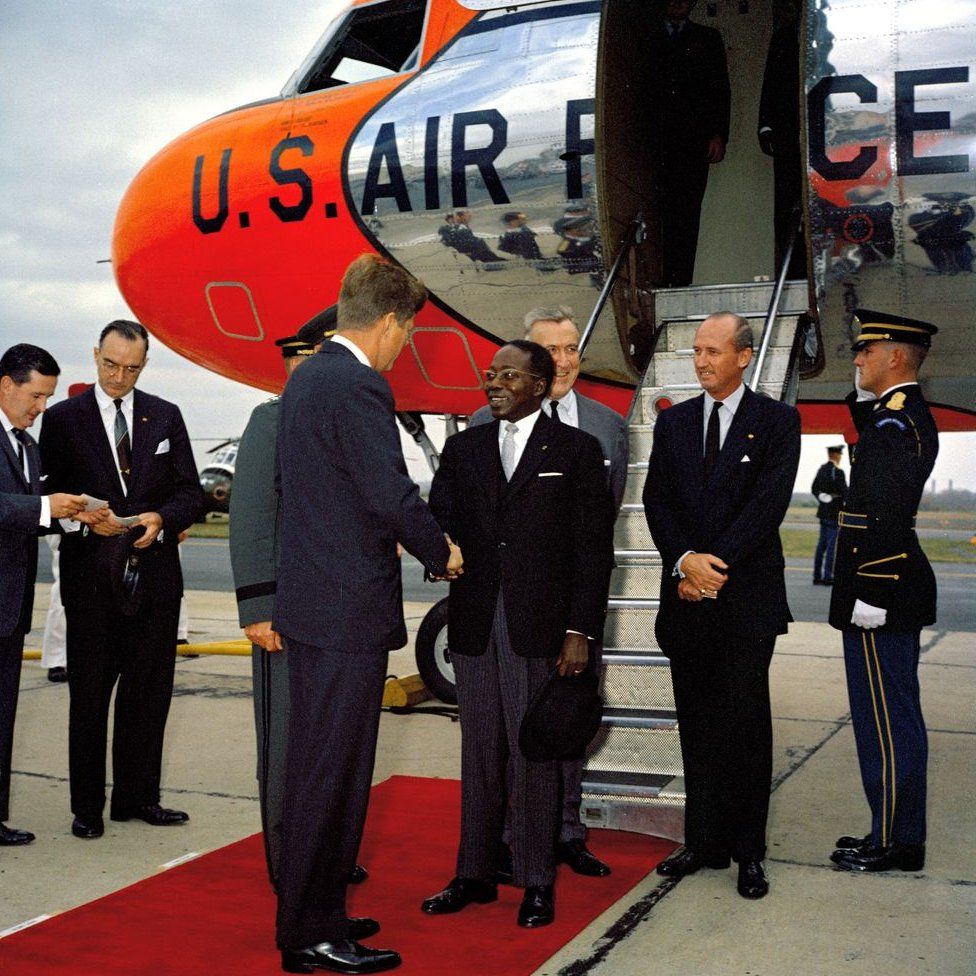
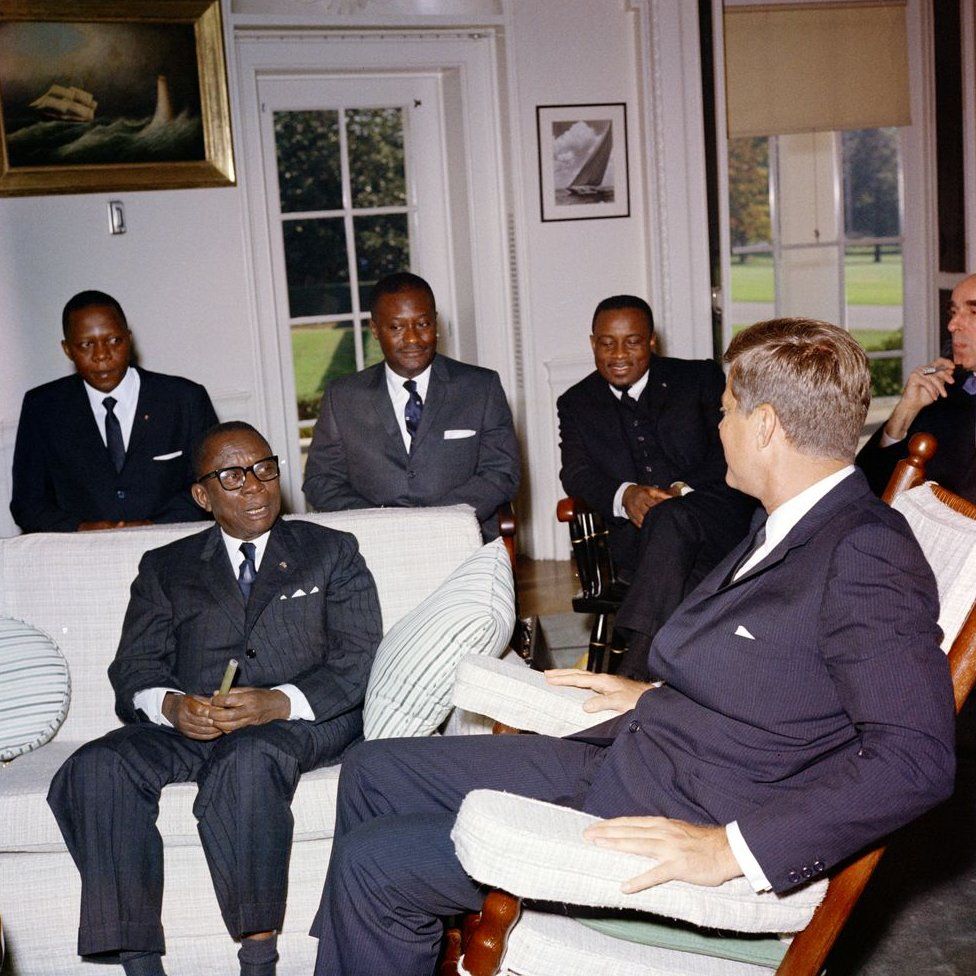
Senegal's President Léopold Sédar Senghor, a key figure in the anti-colonial movement in Francophone countries, flew into Washington in November 1961
A year before he became president, 17 African countries had gained independence from their colonial masters, and aware that the world was changing, Kennedy knew that a new relationship needed to be forged.
That relationship was based on supporting the new African nations.
It was a foreign policy outlook that essentially survived, given the occasional tweak, until President Donald Trump's efforts to replace it with his more transactional approach.
It was reported that Mr Trump infamously used derogatory language when talking about the continent, and Kennedy's predecessor, Dwight D Eisenhower, had his own negative views.
He told Togo's President, Sylvanus Olympio, that the reason the US shared one ambassador between Togo and Cameroon was because he did not want his diplomats to "have to live in tents".
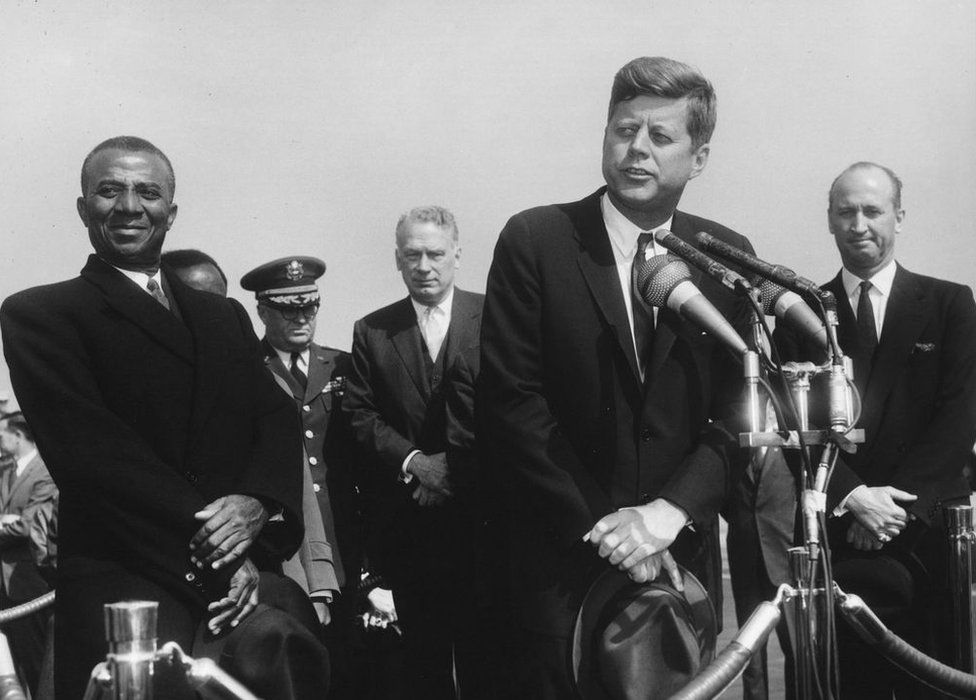
During the 1960 election campaign, Kennedy repeatedly criticised Eisenhower's administration for "neglecting the needs and aspirations of the African people" and stressed that the US should be on the side of anti-colonialism and self-determination, not on the side of the colonialists.
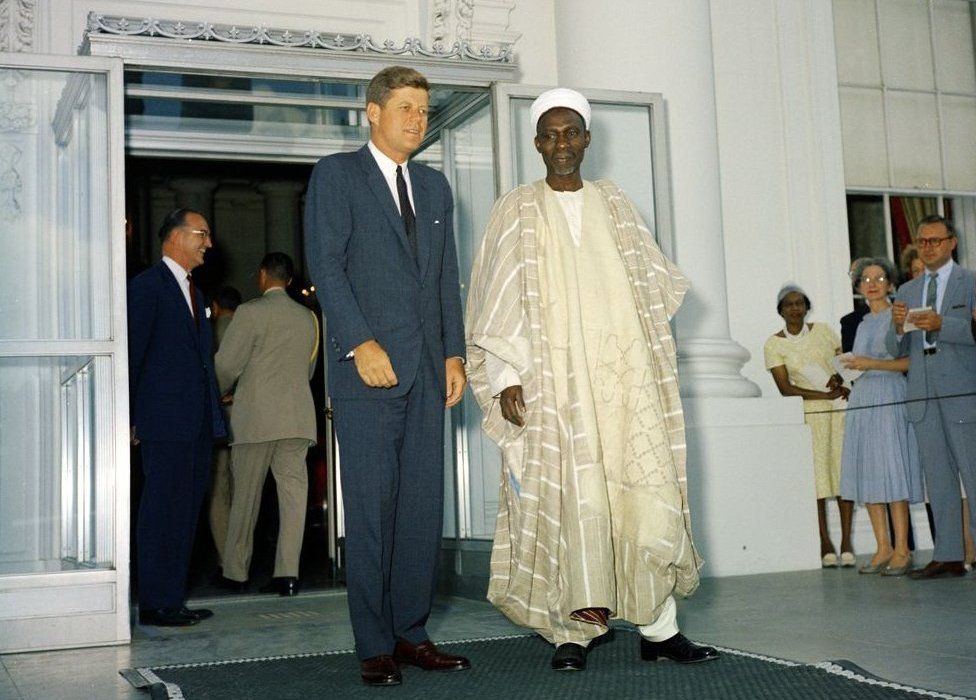
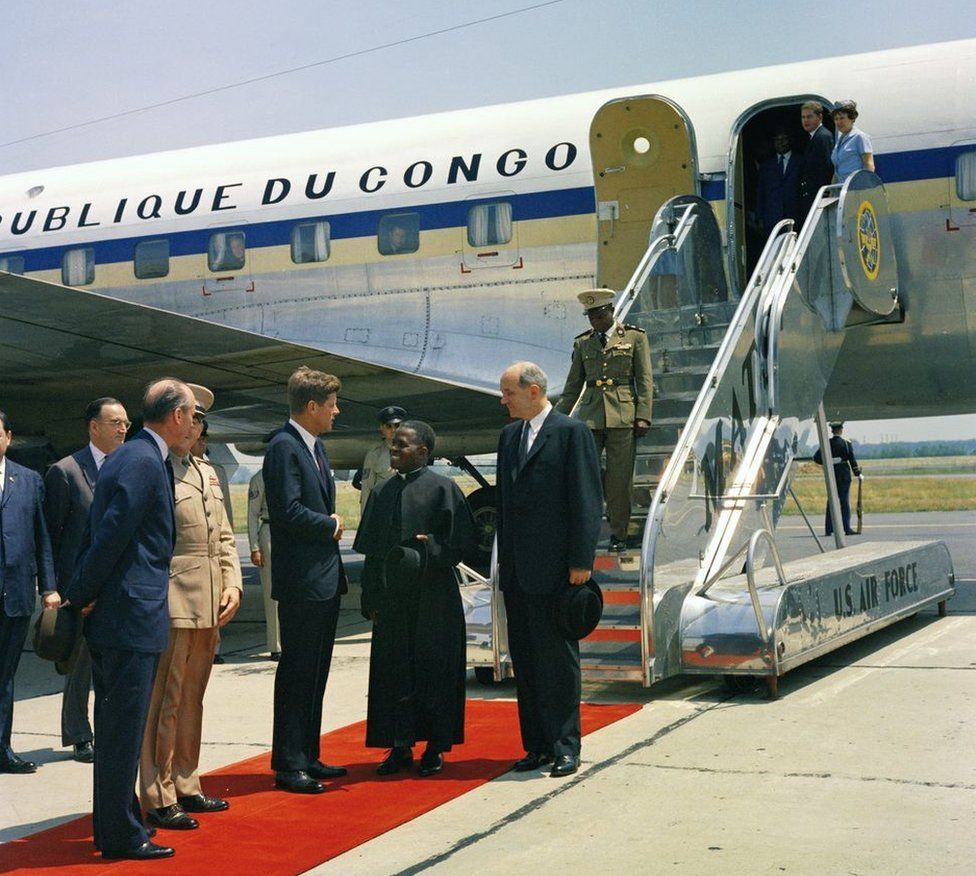
Once in power, Kennedy invited African leaders for state visits and laid out the red carpet.
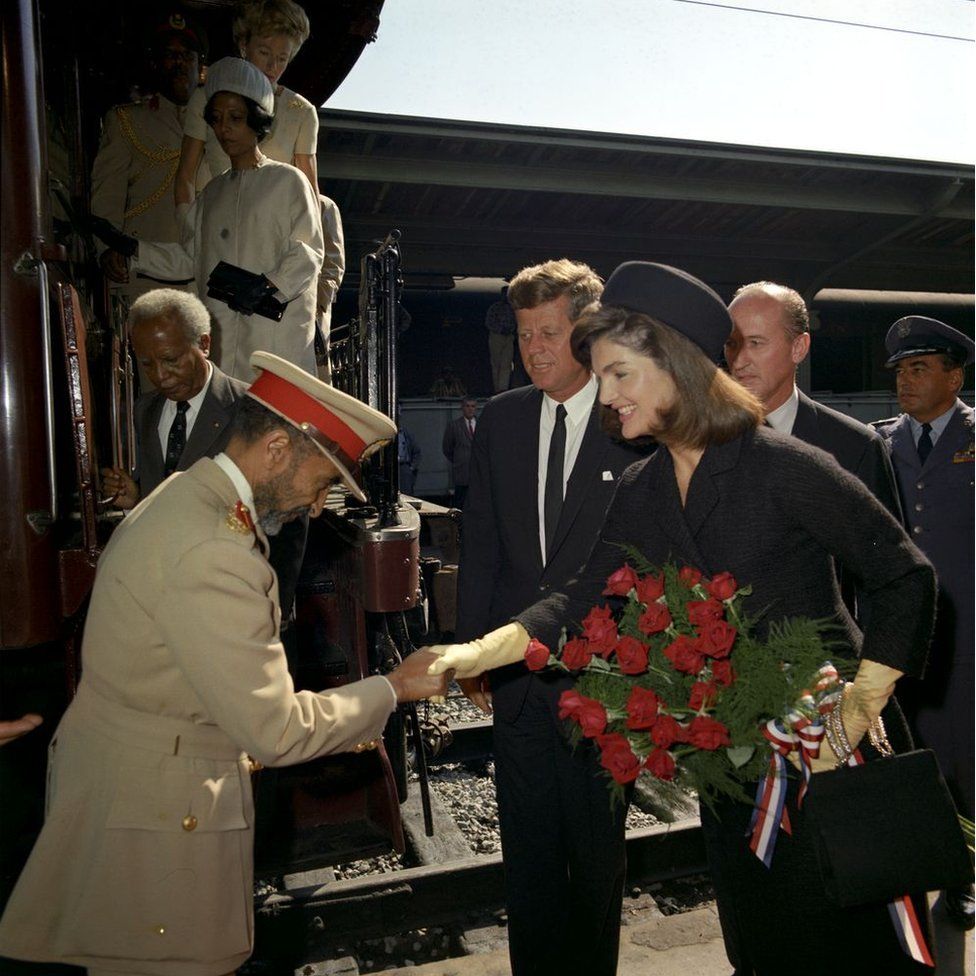
Accompanied by first lady Jackie Kennedy, he would greet each of them - including Ethiopia's Emperor Haile Selassie and King Hassan IV of Morocco - when they arrived in the country.
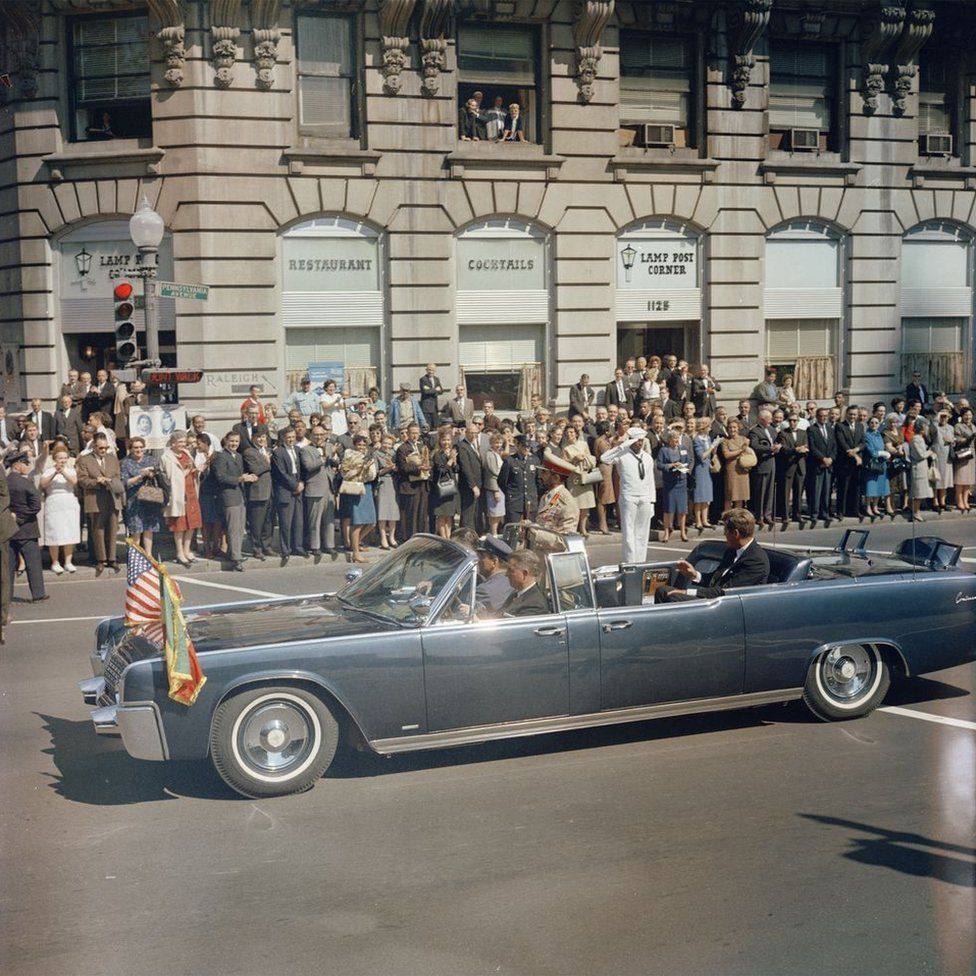
There were also guards of honour, lavish dinners and visits to the ballet, the theatre and places of historical interest.
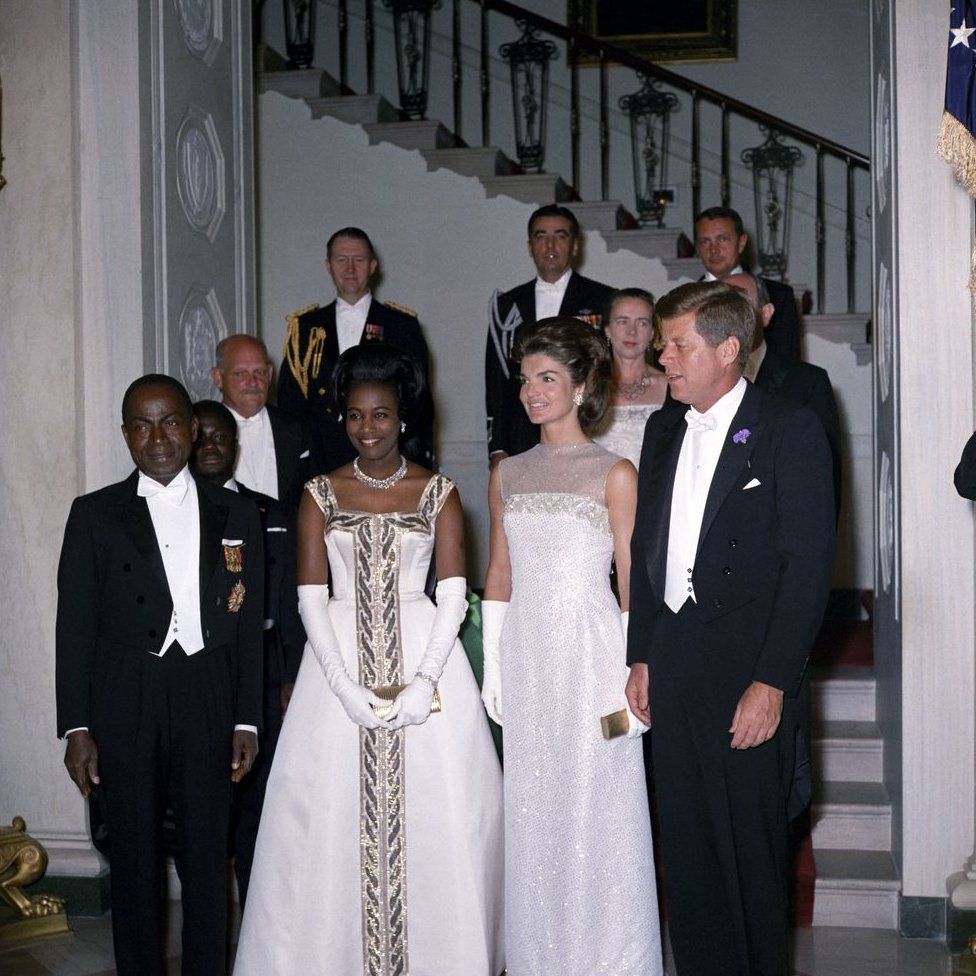
The visits were all highlighted in the media and the public was encouraged to come out and cheer.
Kennedy and his guests would be driven through streets festooned with welcome banners and cheering crowds and, weather permitting, in an open-top car.
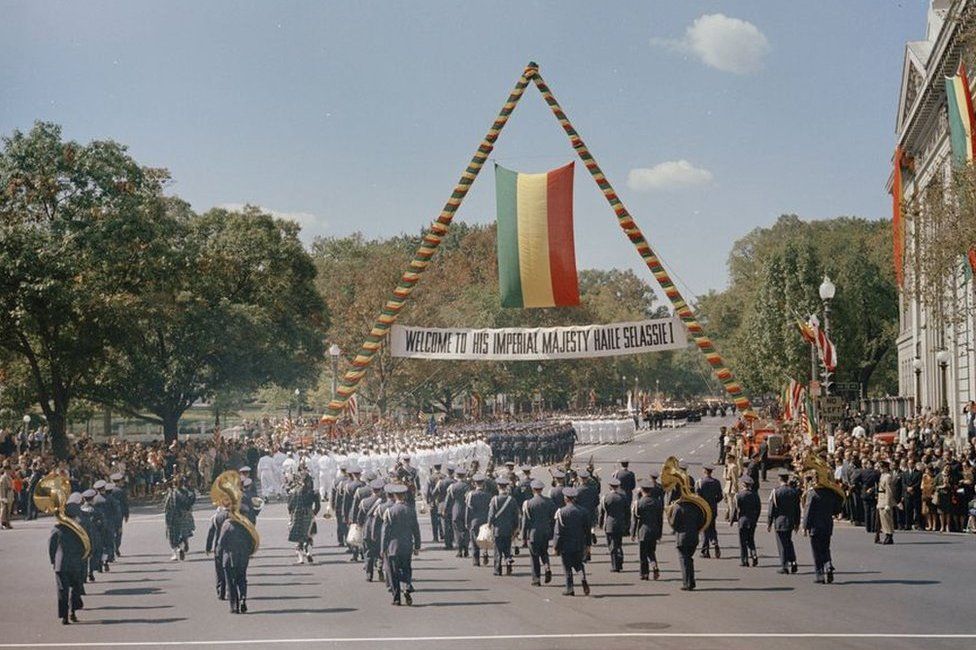
Of course, there was an element of realpolitik in all this. The Soviet Union was making similar overtures to African states seeking to distance themselves from former colonial masters.
On assuming office, Kennedy knew he had to act quickly to make friends with the emerging African nations.
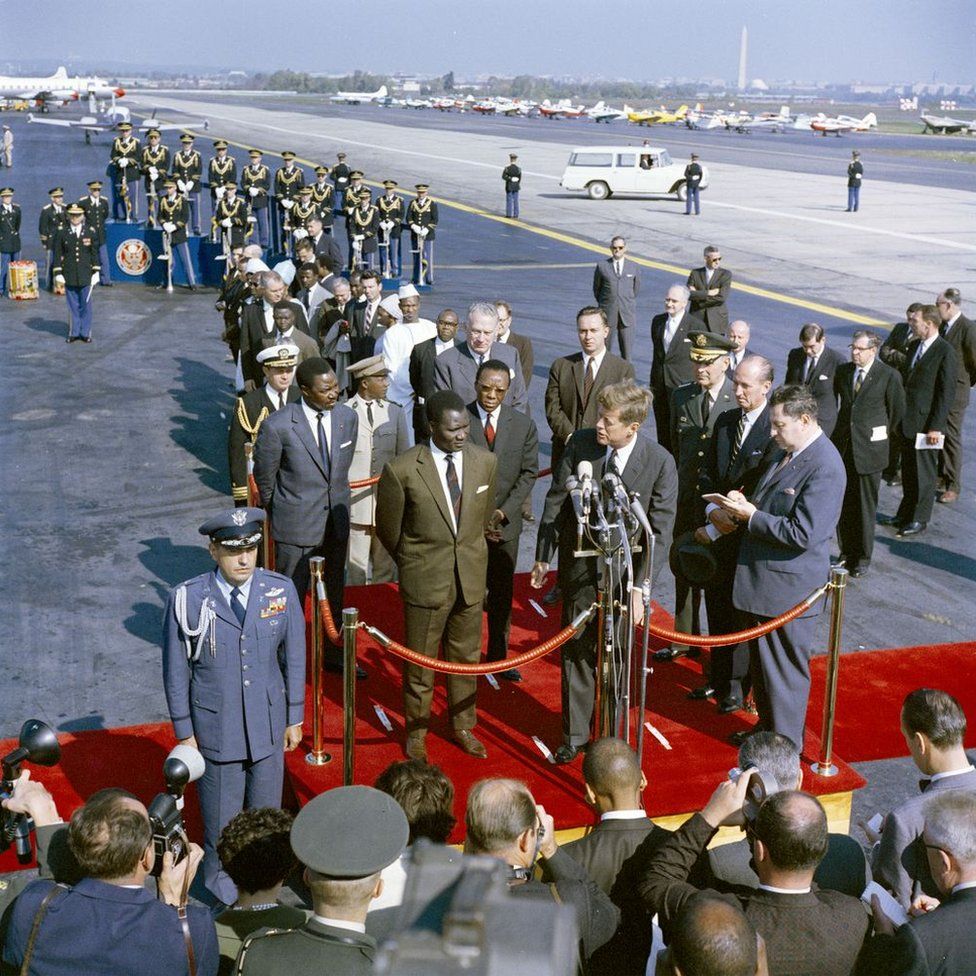
In the Oval Office, he told the National Association of Colored Women's Clubs: "I believe that... if we live up to the ideals of our own revolution, then the course of African revolution in the next decade will be towards democracy and freedom and not towards communism and what could be a far more serious kind of colonialism."
A month after his inauguration, he asked Vice-President Lyndon B Johnson to go to Senegal to meet President Léopold Sédar Senghor, who he saw as a key ally in trying to get Francophone countries on-side.
Then another month later, Kennedy launched the Peace Corps - which sent young Americans across the globe - and in August 1961, invited to the White House the first set of volunteers getting ready to head to Ghana and Tanganyika.
The assassination of Congolese independence hero, Patrice Lumumba, with suspected CIA involvement, three days before Kennedy took office is a reminder that Cold War battles with the Soviet Union were also being played out on the continent.
But I would argue that Kennedy was genuinely interested in the development and advancement of the continent. African leaders who fought hard for independence were not naïve and took Kennedy at his word: that the relationship could be mutually beneficial.
His untimely death was keenly felt in Africa - especially as his successor, Johnson, did not share his drive for cementing relations.
Now, 60 years on, President Joe Biden is starting to shape his policy towards Africa.
In a statement earlier this month, he said the US was ready to be Africa's "partner, in solidarity, support, and mutual respect".
Biden's words echoed Kennedy's commitment - now we are waiting to see if the actions match the rhetoric.
Latest Stories
-
Imprisonment should be rehabilitative, not punitive – Ghana Prisons boss at UNGA
6 minutes -
Ga Adangbe traditional priests petition Mahama over McDan aviation licence revocation
17 minutes -
Anti-LGBTQ Bill: NDC’s arrogance is worrying – Hassan Tampuli
28 minutes -
Let’s give OSP time to mature, not to scrap it – Hassan Tampuli
31 minutes -
Nigeria convicts 386 Islamist militants in mass trials
36 minutes -
Djibouti president wins election with 97.8% of vote, state media says
41 minutes -
We don’t have mandate to deduct tax from rent allowance of security services personnel – Interior Ministry clarifies
55 minutes -
Ablakwa receives Presidential Special Envoy on Reparations to advance global agenda
1 hour -
Christina Koch becomes first woman to travel around the moon on Artemis II
1 hour -
Epstein survivors’ calls to meet King Charles and Queen harder to ignore as US visit approaches
1 hour -
UN Secretary-General names Ghana’s Anita Kiki Gbeho as South Sudan envoy
2 hours -
Mali withdraws recognition of Sahrawi Republic, backs Morocco’s autonomy plan
2 hours -
Gov’t distributes over 8,500 laptops to One Million Coders project
2 hours -
Julius Debrah, ‘man to beat’ as NDC’s James Agbey dismisses Musah Dankwah’s polls
2 hours -
GPRTU in Savannah Region to protest alleged eviction in Damongo
2 hours