

Audio By Carbonatix
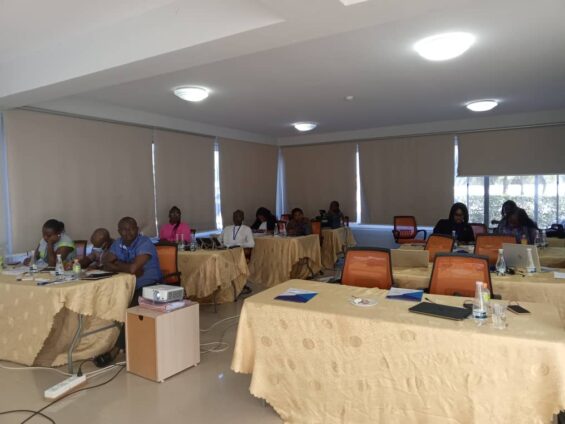
A three-day journalism fellowship has kicked off in Accra, empowering journalists to effectively utilise mass and social media to advocate for enhanced financing of epidemic preparedness through improved reporting on public health emergency financing.
The fellowship seeks to enhance public understanding of public health emergency financing through accurate and in-depth media reporting in Ghana.
The fellowship organized by SEND Ghana with funding from the Global Health Advocacy Incubator (GHAI) seeks to equip 12 selected journalists to advocate better financing for epidemic preparedness and response and raise public awareness.
SEND Ghana's Country Director, Harriet Nuamah Agyemang emphasizes the importance of empowering journalists through capacity-building initiatives, recognizing their pivotal role in shaping policies and driving positive change.
By bringing journalists together, SEND Ghana aims to sensitize them to critical issues and enhance their skills, ultimately leveraging their influence to inform and transform policy decisions.
Experts say journalists can effectively promote national interests and support development when guided by objectivity, accuracy, and neutrality.
CHAI's In-Country Coordinator, Stephen Atasige, states the significance of the fellowship, stating that journalists play a vital role in shaping the narrative through their storytelling and article writing
“Journalists keep the momentum. We can’t continue to do business as usual we need to be deliberate,” he said.
Public health emergency financing refers to the financial resources and systems dedicated to preparing for, responding to, and recovering from public health crises, such as infectious disease outbreaks, natural disasters like floods, droughts, biomedical threats among others.
Key aspects of public health emergency financing in Ghana include funding sources, resource allocation, health infrastructure, surveillance and detection, community engagement, research and development.
To address these challenges, Ghana needs sustainable, transparent, and equitable public health emergency financing mechanisms.
Medical practitioner, Dr. Konadu Asiedu says health financing goes beyond infrastructure or workforce. To ensure sustainable healthcare financing, he said, Ghana should aim to meet the Abuja Declaration target of allocating 15% of its annual budget to the health sector.
“This could reduce reliance on donor funding and enhance service delivery.”
Latest Stories
-
Let your reasoning and fairness define your legacy – Mahama to new justices
1 second -
Mahama charges new Supreme Court justices to protect judicial independence
10 minutes -
Mahama swears in three new Supreme Court justices
15 minutes -
TUC calls for urgent review of Labour Act to strengthen workers’ rights
31 minutes -
AMA proposes city-to-city partnerships with Russian cities
39 minutes -
Ghana pushes China for deeper mining partnerships, value addition
49 minutes -
UTAG-KNUST escalates Pro-VC, Dean appointment dispute to University Council
52 minutes -
DKM boss Delle K. Martin withdraws from Nandom NPP primaries
58 minutes -
Ghana to pre-qualify local companies to manufacture vaccines for African market
1 hour -
Handcuffs won’t cure it: The incentive behind Ghana’s ‘insult economy’
1 hour -
Northern Regional Minister praises GROW 2 Project for transforming women’s agriculture in Northern Ghana
1 hour -
GCB extends CSR to communities through staff- led initiatives
1 hour -
Electricity generation falls 3.99% in July 2026 despite year-on-year growth – PURC
1 hour -
Bawumia wishes PRESEC, Augusco and Accra Academy well ahead of NSMQ final
2 hours -
Mahama commends GoldBod’s GH¢896m profit, urges sustained growth
2 hours